1. Open the barrel
Before opening the barrel of container paint, check in detail the type, brand, color (Color Chart number), and date of manufacture of the container paint marked on the barrel, and confirm that they meet the specified requirements before opening the barrel. If the above marks on the paint bucket are blurred or the Color Chart number does not match, you should carefully check the relevant records in the warehouse, and open the bucket after confirming that it is correct.
The same is true for diluents. For example, KCC's epoxy zinc-rich primer and epoxy zinc-rich shop primer have different diluents, which should not be confused during use. The thinner used by KCC for epoxy zinc-rich shop primer is 053BS, while the thinner for epoxy zinc-rich primer is 053.
2. Dilution and mixing
Container coatings are different from ship coatings. During construction, a certain proportion of diluent must be added and stirred evenly before use. Especially for epoxy zinc-rich shop primers, the added diluent is generally as high as 150%-200%.
Each container coating has a corresponding thinner and also stipulates the maximum dilution pull. In actual operation, it should be in accordance with the provisions of the container coating product manual. Using the wrong thinner or excessive dilution will reduce the construction performance and intrinsic quality of container coatings. For the operation of two-component container coatings, components A and B should be stirred separately, then mixed and diluted in proportion.
In recent years, in order to improve the construction performance and coating quality of container coatings, many coating factories have divided the diluents of the ring-neon zinc-rich primer into two types: winter use and ordinary type. The volatilization rate of the epoxy zinc-rich primer thinner for winter plastic is relatively high. Table 5-1 is the name and function of the epoxy zinc-rich primer winter and ordinary thinner for 3 paint companies. Second, when encountering special For example, when the temperature in midsummer is above 30 ℃, or the exhaust air in the spray booth is out of balance, the inner and outer paint films tend to become very rough. KCC has various summer thinners for container coatings. If there is no special thinner, the paint company needs to send technicians to do a good job of word test, change the thinner type and dilution rate of the inner and outer paints, and then ensure the quality of the coating film.
High-pressure airless paint spray pumps such as GRACO and WIWA sometimes have a paint heating device . If the heating device is turned on, the viscosity of the paint will be reduced, and the thinner can be added less or even not, which not only reduces environmental pollution, but also improves the paint. Excellent leveling, improve the fullness and gloss of the coating film.
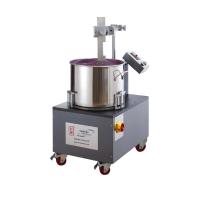
Epoxy zinc-rich primer has a high zinc content, so it needs to be stirred while spraying to prevent zinc powder from settling. For coatings packed in 180L vats, a dedicated air mixer should also be equipped. In addition to American GRACO and other companies producing mixers, my country's Sichuan Chongqing Changjiang Machinery Factory and Tianjin Pneumatic Tool Factory also produce this special equipment.
For example, if the pigments of the container paint are seriously precipitated rather than hardened, if they cannot be stirred up, the upper layer of paint cannot be used only, and the bottom plate should be discarded. In this way, the performance of the paint will change, and the quality cannot be guaranteed. For such container coatings, if it occurs within the validity period of storage, it should be returned to the coating factory for replacement. Precipitated, hardened and gelled container coatings cannot be forcibly diluted and used, and should be discarded.
3. Maturation period and use period
The epoxy zinc-rich primer, epoxy primer, and epoxy interior paint for thousands of containers are all chemical coatings. They are two-component coatings, that is, the base material and the curing agent are packaged separately and mixed when they are used. Before mixing, the base material (A) and the curing agent {B) should be stirred separately in advance, and then mixed while stirring until the whole is uniform. After the A and B component paints are mixed, they will undergo a chemical curing reaction. In order to ensure its construction performance and curing performance, a pre-reaction period of 20-30 minutes is required before the paint is used, which is also called the aging period. It should be according to the container coating product manual. Requirements order to guarantee the specified curing time.
It is also due to the film-forming mechanism of the chemical reaction of the two-component coating that the components A and B must be used within a specified time after mixing. If the amount exceeds this specified time, the coating will lose fluidity and even cure. This period is called the application period (or use period) of the two-component coating. Generally, the pot life of two-component coatings is about 8 hours at a temperature of 20°C; when the temperature exceeds 30°C, the pot life of two-component coatings can only be controlled at about 4 to 5 hours. The paint that has exceeded the pot life needs to be discarded, otherwise the quality of the paint film will be seriously affected. Therefore, in production, it should be mixed in proportion according to the quantity of boxes and the amount of paint required, so as not to cause waste.