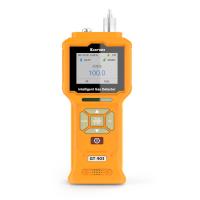
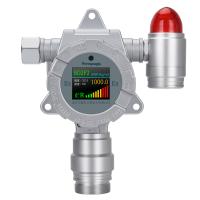
氨气检测仪在养殖产业链的应用随着国内养殖规模的扩大越来越广泛了.
养鸡业:
养鸡场鸡舍中氨气对鸡的影响。由于鸡粪中产生大量氨气,所以当鸡舍空气中氨气达20ppm(相当于15.2mg/m3),持续6周以上,就会引起鸡肺充血、水肿、鸡群食欲下降,产蛋力降低,易感染疾病;如达50ppm,数日后鸡发生喉头水肿、坏死性支气管炎、肺出血,呼吸频率降低,并出现死亡。所以,鸡舍空气中氨浓度要求控制在20ppm以下。
养猪业:
2005年9月2号,对消臭管设置前该农场的规模为1200头母猪,而因为断奶猪多系统衰竭综合症等疾病废死率达到40%的农场进行了回访。从消臭管设置一个月后开始,每月猪的腹泻密度就降低了,废死率也开始逐渐减少,成长速度也开始加快。2006年出栏25000头,2007年出拦30000头,现在的总废死率不到5%。日本的平均出栏体重是110kg。现在农场养到165天,最多180天就出栏了。该农场所有猪圈内部的氨气指数都在10ppm以下。
猪圈内部的氨气测定结果是:密闭的崽猪圈的指标是10ppm,其它的猪圈指标都是5~7ppm,几乎没有什么气味了。PS: 美国国立职业安全与健康研究所的检定的氨气最大许用值是11ppm。该研究所的工作人员According to毒性气体的安全使用基准,According to对猪的生长健康有没有影响及猪圈内工作者的健康带不带来影响的最大基准,得出氨气的指标对于猪来说是11ppm,工作人员是7ppm,二氧化碳的指标是1500ppm,颗粒指数是1.23mg/m3。
In recent years, domestic pig farms are facing the continuous expansion of breeding scale, but it is difficult to reduce the stocking density, facing the pressure of environmental protection (a large amount of feces and waste water odor needs to be properly discharged) and the frequent occurrence of respiratory diseases, etc., and more and more Tricky, relying entirely on drugs and vaccines cannot solve major disease problems. At present, many professionals and pig farm owners are paying more and more attention to the improvement of the breeding environment. At the same time, they have a clearer understanding of the threat of harmful gases such as ammonia, especially Large and medium-sized pig farms are indeed facing these problems that need to be solved urgently. In the face of this problem, Shenzhen Yuante Technology has launched a new type of ammonia Detector for farms after painstaking research. This ammonia Detector The price is reasonable, which breaks the phenomenon that any ammonia Detector in the market costs more than 4,000 yuan, and solves the headache of the pig farm owner.
The harm caused by ammonia to pig farms may be far beyond our imagination, including adverse effects on the growth and development of pigs, respiratory resistance, estrus, pregnancy and childbirth. Because of this, developed countries such as Europe and the United States have long Pig farms are required to strictly control the ammonia in the house. The European Union requires it to be controlled below 10PPM, and the United States requires it to be controlled below 15PPM. Decomposition, in the colder seasons (winter and spring), in the closed delivery room and nursery house for heat preservation, a large amount of ammonia, hydrogen sulfide and carbon dioxide are produced every day, and they accumulate continuously in the house, and the concentration gradually increases , especially harmful.
There are two main sources of ammonia in farms:
1. The source and harm of exogenous ammonia gas
Source: Exogenous ammonia (hydrogen and oxygen in the pig house) mainly comes from the degradation and decomposition of a large amount of feces and urine excreted by the pigs every day. Normally, the utilization rate of the pigs for the ingested feed is only 60%- 70%, that is, about 30-40% of nitrogen is excreted through pig feces. These wasted nitrogen sources, namely excrement, will degrade continuously and produce various annoying harmful gases, mainly ammonia , hydrogen sulfide, methane, skatole, etc. It is estimated that 50-88 kg of pigs excrete 4-6 kg of feces and urine per day, containing 25-49 grams of nitrogen, of which about 60% of the nitrogen becomes ammonia, that is, the daily output of pigs The ammonia gas produced should be about 20 grams. In the colder season (winter and spring) in the closed delivery room and nursery for heat preservation, a large amount of ammonia, carbon dioxide, and hydrogen sulfide are produced every day, and It keeps accumulating in the house, and the concentration gradually increases, which is especially harmful
2. The source and harm of endogenous ammonia
Here, endogenous ammonia is the ammonia in the blood, and there are three main sources: 1. Pathogenic bacteria in the intestinal tract decompose incompletely digested nitrogen-containing compounds (such as polypeptides, small peptides and amino acids in chyme) or intestinal mucosal exfoliation , the ammonia gas produced is absorbed through the intestinal mucosal epithelial cells, enters the blood circulation through the portal circulation, and increases blood ammonia. Amines or ammonia from amino groups, and ammonia from amidohydrolysis of amino acids.
Notes on the installation of ammonia Gas Detector:
1. Do not install the ammonia Gas Detector in a place where there is too high a concentration of smoke, jet insecticide (evaporator), or flammable solvent (paint), otherwise it may cause an alarm.
2. Do not install the ammonia Detector in places with large air flow such as exhaust outlets, ventilation fans, and room doors, as this may affect the accuracy of the ammonia Detector.
3. Do not install the ammonia Gas Detector in a place with a lot of water vapor and water droplets (relative humidity is 90%), otherwise if the water vapor is too high for a long time, the ammonia gas sensor will be damaged.
4. Do not install the ammonia Detector in places where the temperature is below -30°C and above 50°C.
5. Do not press the ammonia Gas Detector in a place with strong electromagnetic force.
6. After the ammonia Gas Detector generates a concentration alarm signal, the output control signal (AC 220V) is locked. Even if the gas concentration does not continue to exceed the limit, the controlled equipment cannot automatically restore the state before the alarm, and manual restoration is required ( Press the reset button or self-test button for 3 seconds).
7. The ammonia Gas Detector should be installed in a higher place of the farm, because the concentration of ammonia gas is lighter than that of air.
8. When the alarm is issued, the ammonia concentration has exceeded the set alarm concentration. After confirming that the cause of the ammonia concentration exceeding the standard is eliminated, press the reset button to clear the alarm data.
9. The power-off time of the ammonia Gas Detector is too long, and it is normal that the first power-on may sound an alarm.
10. After the position of the ammonia Gas Detector is fixed, please do not move its position arbitrarily, so as not to damage its accessories.