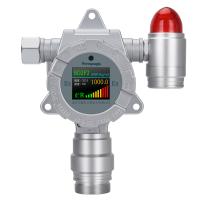
Combustible gases are gases that may be encountered at any time in industries such as chemical, petrochemical, and coal mines. The most common ones are alkane gases, such as methane (gas), propane, etc. Of course, other organic and inorganic gases like benzene, carbon monoxide, ammonia, etc., can also be called combustible gases within a certain concentration range, but because They are very toxic at the same time, and they will pose a hazard to the health and life of on-site workers before their concentration reaches the explosive limit. The health and life of the staff pose a hazard, so we classify these gases more as toxic gases than simply as combustible gases. For example, the gas that is often used in urban life is mainly composed of carbon monoxide (accounting for about 80%), and the rest is hydrogen (accounting for about 20%). If only from the perspective of energy combustion, carbon monoxide is completely combustible gas, but carbon monoxide accumulates in the air to a very small concentration, such as 600 × 10-6, which will seriously affect human health, and 1000 × 10-6, which is one thousandth of the volume concentration, is enough to kill people. At this time, it is far from enough to only regard carbon monoxide as a combustible gas. According to the national standard GB 5044-83, carbon monoxide should be detected as a poisonous gas.
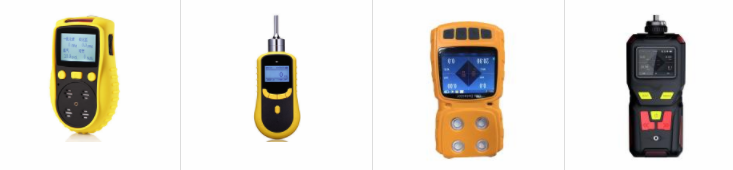
Now there are many manufacturers and various models and specifications to meet the requirements of various test occasions, so how to choose the range of the gas alarm? Two principles should be followed: one is enough, and the other is safety.
The on-site gas leakage environment is very complicated. Under stable conditions , it is better for enterprises to first use some analytical instruments, such as Fourier transform infrared, gas chromatography, and mass spectrometry. These instruments can provide the most accurate and highly selective gas concentration The data can reflect the on-site concentration in time, and we can use this as the basis for judging the selection of gas alarms. Otherwise, if you choose blindly, it is a waste to choose too large a range, and it cannot meet actual needs if you choose too small.