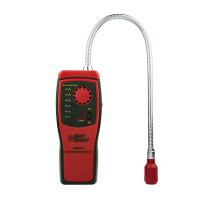
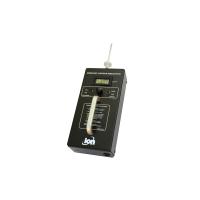
Portable Gas Detectors and alarms commonly used in petrochemical enterprises include single Gas Detectors (such as those designed to detect combustible gases, oxygen , hydrogen sulfide and other single gases) and composite (can measure two or more gases) Detectors and alarms . "Four gas" Detectors .

According to the hazards, we can divide toxic and harmful gases into two categories: flammable gases and toxic gases. Due to their different properties and hazards, their detection methods are also different. The key part of the portable Gas Detector is the gas sensor. The gas sensor is based on the detection principle. Can be divided into 3 categories:
(1) Gas sensors using physical and chemical properties, such as semiconductor , catalytic combustion, solid thermal conductivity and other gas sensors.
(2) Gas sensors using physical properties, such as heat conduction, cross-interference, infrared absorption and other gas sensors.
(3) Gas sensors using electrochemical properties, such as constant potential electrolysis , Galvanic battery, diaphragm ion electrode, solid electrolyte and other gas sensors.
Although there are many types of gas detection sensors, each type of sensor has its own advantages and limitations. After comparing the field use of petroleum and petrochemical enterprises for many years, it is considered that the most widely used gas detection sensor with good comprehensive indicators The method is the catalytic , and the electrochemical method for toxic gas and oxygen detection.
1 catalytic combustion
The catalytic combustion type is to use the sensing element to generate catalytic combustion when it contacts flammable gas, so that the temperature of the sensing element rises, and the gas concentration is measured by detecting the change of its resistance The advantages of the catalytic combustion type gas sensor are high precision and stability Well, the output signal has a good linear , and is less affected by the ambient temperature and humidity. The disadvantage is that the catalyst is easily poisoned and fails.
2 Electrochemical sensors
Electrochemical sensors use electrochemical principles to detect gas concentrations, and can be roughly divided into:
(1) The gas is directly oxidized and reduced in a device that maintains a , and a current change is generated in an external circuit to realize sensing.
(2) The gas is dissolved in the electrolytic solution to form the ionization , and the sensing is realized by generating a potential change through the action of the electrode.
(3) The reaction between the gas and the electrolyte solution generates changes in to realize sensing and other types. Among the chemical formula detection methods, the constant potential electrolytic formula (using the first principle) has been widely used, which has the advantages of high sensitivity, high selectivity, little influence of interfering gases, and the shortcoming of short life.