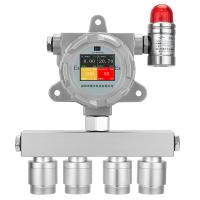
There are various forms of operating sites in limited spaces, and the hazards are concealed, coexistent, and sudden, which is a high-risk operation. Therefore , before operating, operators need to undergo professional training and strict operating approval, and must fully grasp Safety emergency measures such as inspection preparation, isolation and removal, detection and analysis, ventilation, proper protection, operation monitoring, and evacuation from the scene.
check ready
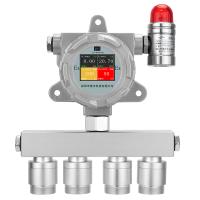
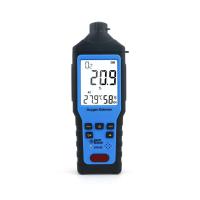
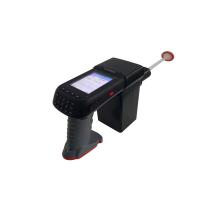
Before operating in a limited space , the operator should first clarify the specific tasks of the operation, possible risk factors, and protective measures to be taken; secondly, the operator should prepare equipment that meets the requirements of national standards, mainly including gas detection Equipment, respiratory protective equipment , ventilation equipment, lighting equipment, communication equipment, tripods, safety belts, etc. When combustible gas and explosive dust exist in a limited space , equipment and combustible gas alarm devices that meet explosion-proof requirements should be used ; operators should also conduct to ensure that the Detector Within the specified validity period, the safety protection equipment is qualified, the inspection report is complete, the anti-riot equipment has a certificate of conformity, emergency rescue equipment is equipped, and the equipment is running without failure, etc.
quarantine clearance
Limited spaces such as tube wells, sewage tanks, septic tanks, and biogas digesters are connected to the outside world by pipes. Toxic and harmful substances from the outside world may enter the operation area at any time , threatening the safety and health of the operators. The workplace is separated from the entire toxic and hazardous place, and then safety protection measures are taken within a limited range to ensure safe operation. For example, close or cut off other ways that hazardous gases or vapors may flow back into limited spaces , and post warning signs; take effective measures to prevent the influx of free-flowing substances such as harmful gases, dust, sewage, etc.; separate limited spaces from all necessary Heat source isolation; set up necessary isolation areas or barriers, etc.
Before entering a limited space, effective measures should be taken outside the limited space as far as possible to remove or control all dangerous . For example, use Vacuum Pumps and hoses to drain away sludge or accumulated water; tilt the storage tank to drain away sludge; use the discharge port at the bottom of the tank to empty; use water vapor, inert gas pressure cleaning and forced ventilation from a limited space , etc. .
Detection analysis
After the above measures are completed, before entering the limited space, it is necessary to detect and analyze possible hazards in the limited space according to the conditions of the operation site and the surrounding environment, determine whether the concentration of toxic and harmful gases exceeds the standard, and evaluate the degree of danger of the operating environment. Take targeted protective measures. Detection indicators include oxygen concentration, flammable and explosive substances (combustible gas, explosive dust) concentration, toxic gas concentration , etc. Without inspection, you cannot enter the limited space . The following points should be paid attention to in the inspection:
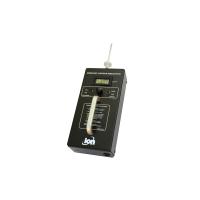
●Detect boot. Start the self-test in a clean environment , and then check whether the instrument has power. If the battery is found to be insufficient, replace the battery or activate another detection and alarm instrument in a safe environment immediately .
●Initial environment detection of oxygen, combustible gas , toxic gas concentration. Oxygen concentration, no matter the oxygen-deficient or oxygen-enriched environment is very dangerous to the life safety and health of the workers, and the sensors equipped with the detection equipment need to work normally under a certain oxygen concentration; generally, the concentration of combustible gas in a limited space reaches or When it exceeds 20% of its lower explosion limit, it is forbidden to enter; when a gas has dual properties of , the concentration value corresponding to the hazard caused by the substance should be compared, and the lower value should be selected for detection.
●Detection point setting. The detection location needs to be selected correctly to ensure the detection of the entire limited space, otherwise the gas hazards may not be found , resulting in accidents. The detection points include the entrance and exit of the limited space, especially when the limited space is just opened, this position should be detected first ; the entrance of the input pipeline in the limited space; the position where personnel work; different height positions in the limited space ; Location where (vapor) may accumulate.
● Detection timing. Gas detection should start from before the operation to the end of the operation, throughout the whole process of the operation. Inspection before operation, opening the entrance and exit cover of limited space, after ventilating, cleaning and purging the limited space , inspection is required before entering the new workplace; real-time inspection during operation, due to the internal environment of the limited space and the complexity of the operation, the operation process In the process, it is necessary to continuously detect changes in the concentration of toxic and harmful gases in a limited space in real time, and take necessary measures at any time.
●Test records. Truly record all test results, including the type and concentration of hazardous gas; the location where it exists and the required air volume.
ventilation
Ventilation is an important part of ensuring safety and emergency operations in limited spaces. Regardless of whether the gas detection is qualified or not, ventilation is required, especially for cleaning, painting, and electric welding operations of harmful substances.
1. Correctly connect the fans, ducts, generators and other equipment. The fan must be connected with the air duct to effectively send fresh air to the working surface. However, pure oxygen must not be used for ventilation. If the test is in a flammable and explosive environment, an explosion-proof exhaust fan must be used.
2. After determining the scope of the limited space, first open the entrance and exit of the limited space, cover plates, etc. for forced ventilation, so as to quickly eliminate toxic and harmful gases in the limited space. Sufficient ventilation the hazardous substances to meet the requirements for safe breathing. If there is only one entrance and exit in the limited space, a section of ventilation placed directly at the bottom of the limited space for ventilation.
3. Be sure to pay attention to the source of fresh air when ventilating , and avoid placing the fan near the exhaust pipe of the internal combustion engine that is starting, etc. where exhaust gas or other harmful gases .
Proper protection
In order to ensure the safety of working in a limited space, before entering the limited space, the operator needs to fasten the seat belt, wear a safety helmet, wear respiratory protective equipment, and set up and use the tripod and working ladder correctly according to the needs of the operation.
1. Correctly support and use a tripod. Set up according tothe tripod , and connect and fix the tripod fulcrums with chains or ropes . Install the winch (retractable fall arrestor ) on one of the legs of the tripod, and connect the connector of the guide rail to the hanging point on the top of the tripod . The rope in the winch goes around the guide rail and is perpendicular to the ground. Check the firmness of the tripod and winch . If there is no winch, a qualified safety rope can be used instead. The tied safety rope (or tripod cable) should not be untied in principle, and a section of the rope is connected to the D-ring on the back of the safety belt.
2. Wear full-body safety belts and safety helmets . Check whether the seat belt and connector are secure , put your legs into the two leg belts of the full-body safety belt, and pass your arms through the two shoulder belts; adjust the position of the leg belt and shoulder belt, and tighten the leg belt and shoulder belt , fasten the chest belt; move your body and check the tightness of the seat belt. Check whether in good condition, and tighten the strap after putting on the safety helmet to prevent it from falling.
3. Wear respiratory protective equipment correctly. Correct selection of respiratory protective equipment requires wearing positive pressure protective equipment for compressed air or a full- face long-tube breathing mask. It is strictly forbidden to use filter gas masks; correctly connect the components of respiratory protective equipment , including masks, filters, and guides. Trachea , air guide tube and valve body, air guide tube and air source; check the integrity of respiratory protective equipment, including whether the mask is intact, whether the air guide tube is damaged and leaking, and whether the air source is sufficient.
homework monitoring
Due to the complex , regardless of whether the test results are qualified or not, at least one person who has received professional training and holds a valid certificate will supervise the entire operation process at the limited space operation site. The guardian detects the gas situation in the limited space in real time, keeps in touch with the operating personnel at any time, and is responsible for emergency rescue, and cannot leave work without authorization . When working, operators need to carry explosion-proof lighting and explosion-proof communication equipment, and keep in touch with the guardians at any time. Once the signal is interrupted or the Gas Detector alarms, they need to evacuate the limited space immediately. Non-explosion-proof electronic products such as mobile phones or ignition sources such as lighters are not allowed. Without permission on the job site, open flames are strictly prohibited .
When an accident occurs in a limited space, the guardian should call the police immediately. Rescue can only be carried out on the premise of doing a good job of self-protection and wearing necessary breathing apparatus and rescue equipment . Do not rush to rescue, causing unnecessary casualties.