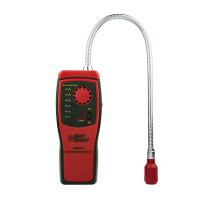
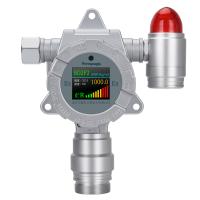
For different production occasions and detection requirements, it is very important to choose a suitable Gas Detector . Generally, the following principles can be followed
1 Confirm the type of gas to be detected
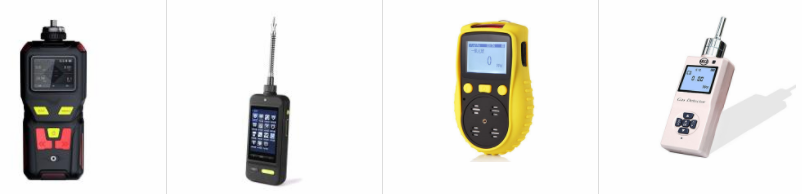
The types of gases encountered by each production department are different, and all possible situations must be considered when selecting a Gas Detector. If there are a lot of methane or other less toxic alkanes in the environment , it is undoubtedly the most appropriate to choose a combustible Gas Detector. If there are toxic gases such as carbon monoxide, hydrogen sulfide, ammonia, chlorine, etc., it is necessary to select a specific toxic Gas Detector to ensure the safety of on-site personnel. If there are more organic toxic and harmful gases, considering the low concentration that may cause personnel poisoning, such as aromatic hydrocarbons, halogenated hydrocarbons , ammonia (amines), ethers, alcohols, fats, etc., photoionization Detectors should be selected , and combustible Gas Detectors should not be used. In some areas with a small number of people and inconvenient , or where gas leakage is irregular (such as confined spaces such as tanks), infrared Gas Detectors are a better choice. If the gas types cover the above types of gases, you need to choose a composite Gas Detector.
2 Confirm the concentration range of the gas to be detected
All kinds of Gas Detectors have their fixed detection range, and only by measuring within their measurement range can the accuracy and reliability of instrument measurement be guaranteed. If the measurement is carried out beyond the measurement range for a long time, it may cause permanent damage to the sensor. For example , a combustible Gas Detector (measurement range 0-100%LEL), if inadvertently used in an environment exceeding 100%LEL, has the potential to effectively burn out the sensor. Toxic Gas Detectors, such as carbon monoxide Detectors (measuring range 0-1000 μmol/mol), will also cause damage if they are used at a higher concentration for a long time.
3 Confirm the occasion to be used
If entering a confined space, such as reaction tanks, storage tanks or containers, sewers or other underground pipes, underground facilities, agricultural closed granaries, railway tank cars, shipping cargo holds, tunnels and other workplaces, before personnel enter, it is necessary to detect Whether it contains harmful gas or flammable and explosive gas exists, and it is required to be tested outside the confined space. At this point, it is necessary to choose a multi-Gas Detector with a built-in sampling pump. Because the gas distribution in different parts (upper, middle and lower) in the confined space has a great relationship with the gas type. For example, combustible gases have a relatively light specific gravity, and most of them are distributed in the upper part of the confined space; carbon monoxide and air have similar specific gravity, and are generally distributed in the middle of the confined space; while gases with a larger specific gravity such as hydrogen sulfide exist in the lower part of the confined space . At the same time, oxygen concentration is also one of the types that need to be detected.