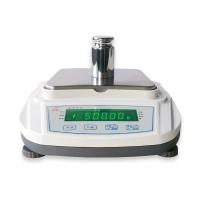
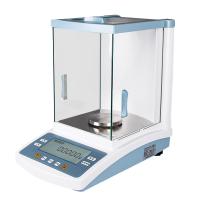
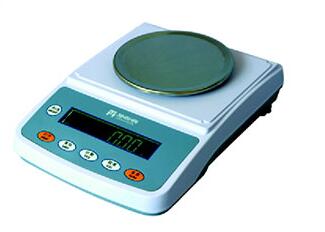
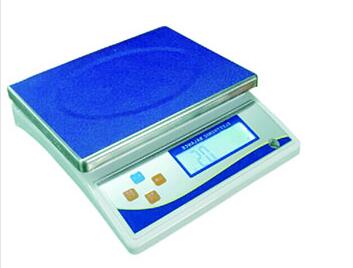
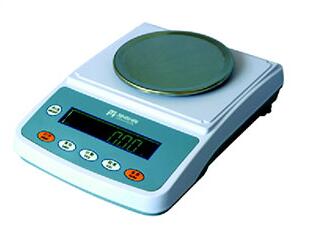
Shanghai Jinghua Analytical Balance is an instrument required for measurement and testing, and is widely used in measurement and testing technical institutions. In order to improve the use level of Shanghai Jinghua Analytical Balance, here, the author briefly talks about the correct use and maintenance of Shanghai Jinghua Analytical Balance.
1. Principle and basic composition
Analytical balances are commonly used in laboratory instruments to measure the mass of objects. Understanding how it works and its basic composition is an important prerequisite for proper use and maintenance. Its principle is based on the principle of leverage, using the method of weighting two objects to measure the mass of the object. It is mainly composed of columns, beams, suspension systems, bases and braking devices. Vertical columns are fastened to the base to support the beams. The lower part of the column is equipped with an indexing plate and the top is equipped with a bracket to support the crossbar when the balance is not in operation. Use a knife in the middle of the beam. In the balance work, the blade is placed on the blade bearing connected to the top of the lifting rod as a fulcrum; the two knives are respectively equipped with two side knives on both sides of the knives as key points and force points to bear and transmit the load respectively.
2. Use and maintenance of electronic analytical balance
1. Shanghai Jinghua analytical balance should be placed in a dry place without direct sunlight and not easy to be exposed to heat or cold, and there should be no harmful gas or water vapor in the laboratory; a desiccant should be placed in the balance, and it needs to be replaced regularly to ensure that the air in the balance is dry ; The workbench needs to be flat, firm, and strong; the balance and weights must be kept by a special person, and they must be kept intact and clean.
2. It cannot be moved frequently. When it is necessary to move, it is necessary to remove the balance plate and beam parts before moving; check the balance parts regularly and keep them clean; if there is dust on the parts, gently clean them with a soft brush , be careful not to turn the screw or damage the blade.
3. If the balance is found to be malfunctioning, damaged or suspicious, stop using it immediately, do not disassemble or assemble parts arbitrarily, and actively inspect and check.
4. Before weighing, take off the balance cover and put it on the countertop at the right rear of the balance box; before use, check the balance use records to understand the use of the balance before that, and check the color-changing silica gel Whether it is valid, whether the balance is in a normal state, if necessary, use a soft brush to clean, adjust the zero point of the balance and check the weight.
5. It is not allowed to weigh objects that are too cold or overheated. The temperature of the object to be weighed should be consistent with the temperature in the balance box; the sample should be placed in a weighing vessel to prevent contamination of the balance; paper should be used when taking and placing the weighing vessel. strip.
3. Electronic Analytical Balance Faults and Troubleshooting Methods
1. The reason why the light bulb is always on and sometimes dark: the power supply voltage is insufficient; the voltage required by the light bulb does not match the output voltage of the transformer. The other is the permanent lamp. The reason: mainly because the two power contacts are pasted together. Troubleshooting method: Separate the power contact sheets that are pasted together by hand, bend them, and increase the elasticity and gap of the contact sheets appropriately.
2. The height of the tray is inappropriate. Fault performance: the pan support is too high, when the balance is closed, the weighing pan is lifted upwards, sometimes causing the lifting lugs to fall off; the pan support is too low, and the weighing pan is still swinging freely after closing the balance. Remedy: You can take off the weighing pan, take out the pan support, and adjust the position of the screw on the rod under the pan support to change the height of the pan support to a suitable level.
3. The pointer jumps. Fault performance: When the beam is lifted, if the distance between the knife edge of the fulcrum knife and the knife pad is not equal, the pointer will jump when the balance is turned on. Remedy: Loosen the screw in front of the left arm of the cross bracket, and then use a special wrench or stick to adjust the height of the small pillar until the pointer no longer jumps.