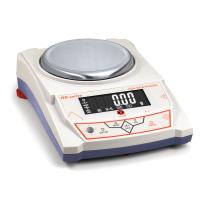
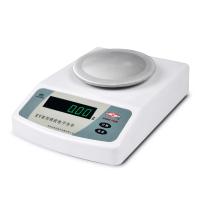
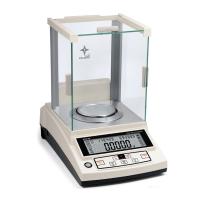
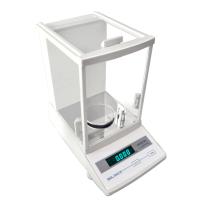
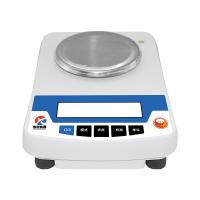
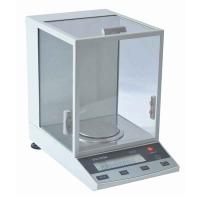
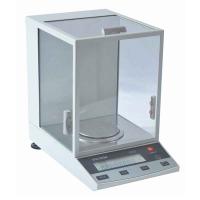
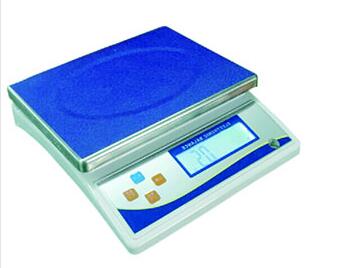
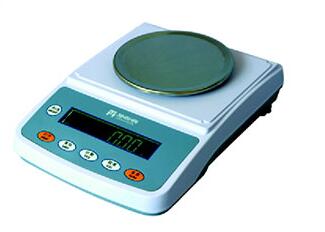
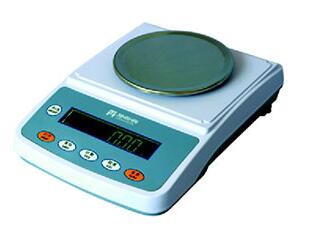
Different from other types of balances, Shanghai Jinghua electronic balance adopts modern electronic control technology for weighing, regardless of the control method and circuit structure, the weighing principle is based on the principle of electromagnetic force balance. It is characterized by accurate and reliable weighing, fast and clear display automatic detection system, simple automatic calibration device and overload protection device.
The electronic balance is an important feature for measuring the quality of the measured object. It does not need to measure the weight of gravity, but uses the electromagnetic force and the gravity balance principle of the measured object to measure. The weighing pan is connected to the coil by support links, and the coil is placed in a magnetic field. In the weighing range, the measured weight mg passes through the action of the connecting rod on the coil, and then if the current passes in the magnetic field, the coil will generate an electromagnetic force F with an upward direction, which can be expressed as follows: F = KBLI
Among them, K is a constant (related to the unit used), B is the magnetic induction intensity, L is the length of the coil wire, and I is the current intensity passing through the coil wire. The electromagnetic force F and the gravity mg of the measured object on the weighing pan are equal in size and opposite in direction to reach a balance, and at the same time, under the action of the elastic reed, the weighing pan support returns to its original position. That is, the current I flowing through the electrified coil in the magnetic field is directly proportional to the mass of the object to be measured. As long as the current I is measured, the mass m of the object can be known.
If the object to be weighed is added or removed from the weighing pan, the electronic balance will be in an unbalanced state, and the transient displacement of the coil in the magnetic steel will be detected by the position Detector, and a change will be generated by the PID regulator and the preamplifier Output, after a series of processing, the current flowing through the coil changes, so that the electromagnetic force also changes and offsets with the measured object, so that the coil returns to its original position and reaches a new equilibrium state. This is the principle of the electromagnetic force automatic compensation circuit of Shanghai Jinghua electronic balance. The change of current shows the quality of the object being weighed through numbers.
During the balancing process of the sensor and the circuit, the temperature during the working process, or some parameter changes of the sensor with the working time, as well as environmental factors such as airflow, vibration, electromagnetic interference, etc., will cause the electronic balance to drift and cause measurement errors. Among them, the influence of airflow, vibration, electromagnetic interference and other ambient temperature can be constrained by the conditions of the electronic balance to minimize its influence. The temperature drift mainly comes from the influence of the ambient temperature and the balance of its internal impact, and the complicated reasons for its formation, and the drift caused by it, need to be suppressed.