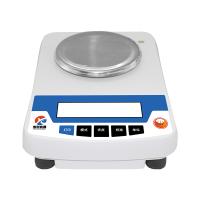
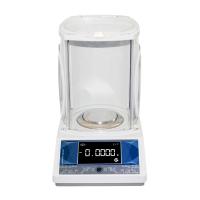
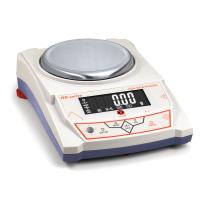
The surface tension coefficient σ is the partial derivative of the Gibbs free energy G to the area S under the condition that the temperature T and the pressure p do not change: where the unit of the Gibbs free energy is the energy unit, so the unit of the surface tension coefficient is energy/area. Among them, the coefficient of surface tension of liquid is used as a basic test in university physics laboratories, and is generally used in teaching materials for measurement by pull-off method and capillary method. Regarding the use of electronic balances to measure the surface tension of water, this paper mainly redesigns the experimental scheme based on the pull-off method. The test results are remarkable, which reduces the experimental error, simplifies the difficulty of the test, and effectively avoids the need to measure the surface tension of water with a Jolie balance. It is difficult to keep the scale line on the mirror ruler coincident with the fixed reference line in the dynamic state, which will easily cause the water film to break in advance and cause large experimental errors.
How does Electronic Balance measure the surface tension of water?

Guess you like it


Relevant knowledge
- 1Water surface tension measurement based on Electronic Balance
- 2Proper Use of Electronic Balance
- 3Comparison of Liquid Surface/Interfacial Tension Testing Methods: Plate vs. Ring Method
- 4Selection guide for Surface Tensiometers
- 5Application principle and precautions of platinum ring Surface Tensiometer
- 6Coating surface tension and its effects
- 7Coating process surface tension factor
- 8Three commonly used detection methods for surface tension
- 9Ceramic ink-jet surface tension, viscosity and solutions
Author:
张广平; 李高清
Source:
用电子天平测定水的表面张力
Products