overview
Whether in the form of tile or adobe blocks, stone, brick, or concrete, large-scale construction has been omnipresent in history. These materials have been used in Native American homes in the American Southwest, Egyptian pyramids, medieval castles and churches, and keep indoor temperatures cool even on the warmest of days.
While it's understood that quality can help improve comfort, these materials are primarily because they're readily available and understood by designers and builders. Architecture has changed dramatically over time as building materials, construction techniques, and culture in the workplace change. U12-006 The advent of steel, Portland cement, float glass, elevators, and air conditioning has resulted in high-rise, glass-filled buildings with a visual connection to the outside world despite the environment and servers standing together.
challenge
As we progress through the knowledge economy, technology advances in the workplace, and occupant densities increase. The combined paradigm shift in buildings and workplaces has resulted in buildings using a significant amount of energy, accounting for 41 percent of U.S. annual energy needs and 75 percent of U.S. electricity demand. In addition, energy consumption is closely related to greenhouse gas emissions, and a reduction in energy consumption directly reduces greenhouse gas emissions into the environment U12-006.
The emphasis on low-energy building has come throughout recent history, with each update adding more tools to the toolbox. The OPEC crisis back in the 1970s spawned a short-lived sustained movement, with massive construction briefly back busy but being abandoned as fossil fuels became easier.
At this time, encapsulated phase change material solutions being introduced into the construction industry are unreliable, but due to a limited number of heating and cooling cycles and poor packaging, there is a tendency to leak. Over the past decade and a half, high-performance buildings have returned to the forefront due to national security, energy independence and climate change concerns.
A marked difference from the sustainable movement of the 1970s, is now the use of technology to develop and veterinarily effective solutions. Sophisticated building energy models are created to illustrate the benefits or harms of low-energy strategies, greatly reducing the risks associated with adopting atypical solutions. In essence, we demonstrate that through the use of high-performance software, solutions that have been successfully solved for centuries are still applicable in the modern world.
So how and why do masses help keep us comfortable, and if it really works so well, then why do we even need phase change materials?
The energy total U12-006 is from high to low or hot to cold, while the mass needs to be cooler than the space to absorb heat from occupants, equipment and sunlight. The high density of mass and temperature difference creates a reservoir of "cooling" and absorbs indoor heat with a minimum temperature increase to the surrounding space.
Absorbs heat and then releases it at night to help warm the space, or deny to cool U12-006 night air to recharge the mass and start the next day afresh. In climates where nighttime temperatures drop below daytime maximums, the VW can recharge by simply opening the windows and closing the windows on cooler nights when the temperature begins to climb.
Concrete is ubiquitous in modern architecture and can provide substantial construction for constructions commonly found in ancient buildings. But even in green building design, exposed concrete interior surfaces are often the exception rather than the norm.
Often, the purpose of carpet, drywall, acoustic ceilings, and other finishes is to disguise concrete building components, effectively eliminating the thermal benefits of using concrete as the building's primary structure. Now that we've hidden this resource, can we use thermal storage in a way other than exposing every concrete surface?
Solution U12-006
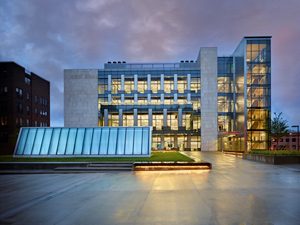
Solutions has developed a bio-based phase change material (PCM) called biopcm, using the concept of mass-thermal storage and release to harness the energy associated with phase transitions. The stage of change of matter that turns liquid into vapor when it changes from solid to liquid. Much greater energy can be absorbed or released and much less volume is required to achieve the same heat capacity than when heated or cooled alone. One inch of phase change material is effective on 12 inches thick concrete and can be easily placed on interior walls and ceilings. Phase-change materials in buildings could be the equivalent of ice in a refrigerator. Ice absorbs heat and melts, changing phase from solid to liquid, while maintaining its contents at a constant temperature U12-006, at the freezing point of water. The ability of ice to absorb heat through melting is far greater than the heat capacity of cold water, and expands the effectiveness of water as a cooling medium. Once the ice has melted, the water begins to warmly accompany the contents of the chest. When it was first developed, ice was used to cool early New York skyscrapers, in a park at One Bryant Park, and newer green buildings such as the Bank of America building. Biopcm uses palm oil and soybean oil as medium than water, with a melting point near 72°F, a temperature more suitable for people than cold beverages. In the refrigerator, the temperature in the room would stay at 72F around the melting point of the oil until the capacity of the phase transition was exceeded and all the oil had melted. With phase change materials, the need for cooling can be reduced, and the effectiveness of natural ventilation strategies can be extended. Unlike ice, due to its relatively high melting point, PCM can be charged for two days when exposed to cool night air. biopcm produces large sheets of oil encapsulated in pockets, resembling a sheet of unbroken ravioli. Sheets can be nailed to the wall with the ceiling assembly nailed. The UW School of Molecular Engineering and Science is made up of research laboratories, open office graduate workspaces, and faculty offices. Due to the very different uses and space air-conditioning strategies required, the laboratory components are separated from the offices by glass walls. Standard means of laboratory air conditioning, frequent ventilation air changes to remove airborne contaminants. It was here that the architects made the first building of U12-006 with phase change materials applied to the walls and ceilings. PCM is not the coolant, but plays an important role in the overall natural ventilation strategy in non-laboratory spaces. Office areas are naturally ventilated by operable windows and exhaust stacks to remove heat from people, equipment and the sun. While Seattle's climate is fairly temperate, a buffer zone is needed to ensure comfort on warmer days. Phase-change materials are used to expand the capacity of natural The wind strategy, in which the majority of the building is covered with concrete completes a suitable research facility. The combined reduction in energy use of the natural ventilation strategy results in a nearly 98% reduction in fan and cooling energy compared to conventional cooling systems. The laboratory space is more energy intensive, resulting in an overall building energy saving of 32% compared to conventional baseline construction. Because biopcm is an innovative product new to the market, a monitoring program was developed to measure the temperature of the PCM over time to confirm that the PCM was behaving as expected. The ability to understand the full benefit of PCMs is limited by the lack of true controls and experimental conditions. Fang didn't want to create a sacrificial space completely without the purpose of PCM control and run the risk of compromising occupant comfort. Instead, the PCM was excluded from the office and a snail cavity in the ceiling section. The aim is to use data collected in regions without PCM as a comparison and extrapolate to understand the impact in the larger environment. Occurrence of HOBO U12 data logger U12-006, a company based in Massachusetts, was placed in the adjacent wall hole and PCM, also in the ceiling
The HOBO U12-006 data logger is used to record temperature measurements every 15 minutes. Using the accompanying Hoboware® professional graphing software, the analysts found initial data showing that the biopcm solution effectively accommodates temperature fluctuations in space. In Washington, electricity is cheap compared to most of the United States. In places where energy is more expensive, phase change materials are used together with complementary strategies such as natural ventilation to provide significant savings in operating costs, potentially over the life of the building, without compromising occupant comfort. For example, if nighttime temperatures are low, you can offset the expensive afternoon peak cooling costs by freeing up cooling captured in the PCM the night before. For more information, please contact Beijing North Dahe Instrument Co., Ltd. If building usage prohibits opening windows at night, the building ventilation system can blow cool air through the space, using trough electricity to charge PCM and offset hourly cooling at peak rates.
