Description: The Freshwater Trust, a freshwater conservation organization, ensures the protection and restoration of natural and scenic rivers in the Pacific Northwest through monitoring with temperature loggers UTBI-001.
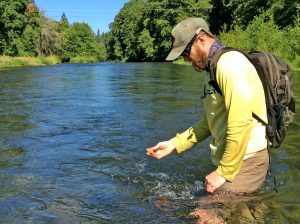
When the West is called "wild," it probably doesn't just mean cowboys and outlaws, but perhaps dense forests, rugged mountains, and rushing rivers.
Characteristically defined area, freshwater conservation organization The Freshwater Trust is ensuring the conservation and restoration of natural and scenic rivers in the Pacific Northwest through monitoring using temperature loggers UTBI-001.
By planting trees, building log plugs, enabling farmers and ranchers to invest in conservation treatments, and reconnecting channels to bring livestock from streams, the Freshwater Trust is improving water quality and quantity in Oregon and Idaho. But what members of the group do isn't necessarily all that unique; it's how they do it.
They use science and technology to ensure that every action has quantifiable results for the waterways they are committed to protecting. Conservation they call it "quantitative", and the method requires all project sites to collect data so they can measure the way they improve a watershed.
This is where the American Onset Temperature Logger UTBI-001 comes in handy. This summer, the Freshwater Trust deployed 15 temperature loggers UTBI-001 on Oregon's Applegate River, a 51-mile tributary of the Mighty Rogue River, to understand how its riverine revegetation project will affect water temperature over time.
Over the past three years, the Freshwater Trust has planted more than 25,000 trees and shrubs in Applegate to create shade and offset the impact of warm water being discharged by a sewage treatment plant in the nearby city of Medford. The organization then quantifies the amount of shade planted vegetation and shade converted into credits, purchases and the amount of its obligations under the Clean Water Act to mitigate warm water. Often referred to as "water quality deals," this natural infrastructure solution is another city to build cooling towers or ponds.
With these loggers, we're able to better understand how our replanting programs affect water temperature over time," said Julia Bonds, scientific director for the Freshwater Trust. "When collected, we'll know the river is the hottest And the coldest place, how the temperature changes throughout the day. We will also be able to compare conditions year-over-year as the trees continue to grow. Honestly, not only can we know where we're making an impact, but we're also able to improve the way we do repairs with this type of information. "
The tidbits are housed in PVC tanks attached to rocks with iron wire and deployed across the river by a staff of scientists. The logger will record water temperature measurements every 15 minutes until retrieved in the fall, and will be redeployed in the spring.
"Once we retrieve them, we will download and analyze the data," Bond said. "Over time, we'd like to see more shade and less warming as trees grow."
More shade hospitable conditions for cold-water fish such as chinook salmon and winter steelhead. The historically cold Rogue River has warmed, and water treatment plants returning to the river could add an additional 0.18 degrees Celsius to the temperature. Although there is little difference between humans, this increase in temperature will affect the salmon and trout that make rivers home. Warmer rivers have less oxygen, causing the eggs to hatch before they hatch, reducing survival rates.
"In addition to providing shade and refuge for fish, the trees we plant will filter pollutants like agricultural runoff and actually cut carbon in the atmosphere," Bond said. "Those are two benefits that Medford will never provide with holding ponds anymore."
Long-term monitoring plays a key role in helping the Freshwater Trust ensure its projects achieve the expected results.
"If we didn't monitor the trees we put in the ground, study the rivers we tried to improve, we couldn't possibly guarantee that what we were doing was having a positive impact," Bond said. "We insist on having a tangible impact. We don't just want to talk about it. We want the data to back it all up."
The Freshwater Trust will be monitoring and planting along the Applegate River for the next 20 years.
"We strongly believe that all restoration work should be followed by data and analysis, with a laser focus on results," Bond said. “What we do is such a small example of what we want to see in freshwater conservation around the world. Restoration follows with such knowledge and insight that it is possible, and through our monitoring work from our projects, we will learn with the whole community By sharing these findings we can all continue to improve our restoration efforts for these freshwater systems."



