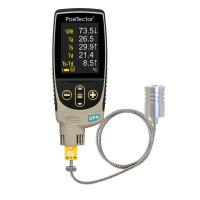
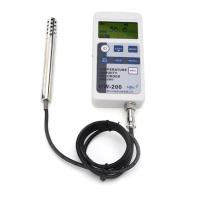
Introduction: The Idemitsu Museum of Arts in Tokyo, Japan uses a Bluetooth temperature and humidity logger (BLE) MX1101 to monitor the temperature and relative humidity of the museum, and optimize the storage conditions of works of art including paintings, calligraphy, and ceramics.
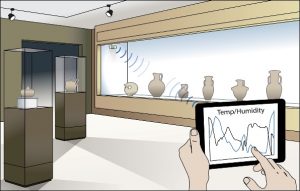
The exhibition hall of the Idemitsu Museum of Arts, which opened in 1966, is located on the 9th floor of the Imperial Theater, overlooking the Marunouchi Imperial Garden, Chiyoda-ku, Tokyo. Special exhibitions are held 6 to 7 times a year, and the Idemitsu Museum of Arts theme exhibitions include collections of Japanese painting and calligraphy, and East Asian ceramics. Other museum attractions include a year-round exhibition of major works by Georges Rouard (1871 – 1958), the French master of religious painting whose "Passions" series depicts the last days of Jesus Christ. Features of the museum include the Fragment Room, which displays fragments of pottery collected into kilns in Asia and Egypt.
To ensure that these valuable assets are preserved for view and enjoyment for current and future visitors, the Museum takes great vigilance in maintaining an appropriate indoor climate for the safe storage of artworks. Temperature and relative humidity (RH) need to be closely managed. Exceeding these limits can damage workpieces and cause deterioration. High RH can trigger mold formation and cause certain materials to deform and corrode, while warming can cause heat loss.
"The environment inside the museum may be affected by the outside temperature and humidity and change with the seasons," according to a representative of the Idemitsu Museum of Arts. Therefore, it is important for us to monitor the environment constantly in order to keep it constant. The data is very useful for controlling air conditioning systems in response to subtle environmental changes. "
challenge
Museum collections of art that are made of paper - such as paintings and antique documents - make them particularly vulnerable to climate change. In particular, the museum has several Japanese-style paintings that are subject to temperature and humidity extremes. Special care was also required to protect the museum's wood and metal art from high humidity, preventing deterioration and corrosion.
To store works of art, the museum has a warehouse, which is located away from the exhibition facilities and also needs to be maintained in good environmental conditions. Challenges arise when artwork needs to be moved to warehouses and exhibition facilities, as temperature and RH need to be carefully controlled during transport.
In monitoring the indoor climate of museums, museums traditionally simulate equipment such as hygrometers. Then, starting 10 years ago, the museum switched to portable data loggers for more accurate measurements and better management of data files.
However, after deploying data loggers, museum curators still face challenges with the retrieval of temperature and RH data.
"For the first data logger, wire connections were necessary to set up and read the data, requiring us to open the display case every time the data was retrieved," according to the rep. During this process, internal environmental conditions may change, which we want to avoid. Also, collecting and reading is work and time-consuming. "
In addition, the downloaded data loggers placed in the museum's Japanese tea room exhibit constituted unique inconveniences. Because the alarm sounds mainly if someone crosses a certain barrier into the room, the alarm clock needs to be disabled every time the data is offloaded.
solution
Allows for more seamless data access and greater efficiency in uploading and managing data, which translates to museum HOBO series MX1101 data loggers with Bluetooth Low Energy (BIE) technology, deploying 20 data loggers in galleries, Japanese tearooms and showcases , and 15 MX1101 data loggers in the museum's warehouse.
The Bluetooth temperature and humidity logger (BLE) MX1101 can quickly and wirelessly transmit environmental data from the data logger to mobile devices without the need to connect cables, log in to the Internet, or install computer software.
The museum solution brings considerable benefits in terms of convenience and efficiency, greatly reducing the time associated with manual data collection. The compact and lightweight design of the MX1101 also proves very useful for monitoring temperature and RH conditions when artwork is being transferred.
Importantly, the MX1101 logger enables museum staff to access data from loggers without opening the display case, avoiding potential interference from the internal environment of the case.
"It took an hour to set up and read the MX1101 data logger, but now we can do it in 15 minutes," said the representative.
Since the data can be accessed from as far as 100 feet away, visiting museum staff can now upload data from the Japanese tea room without entering the actual space, avoiding the need to shut down the room's alarm system.