The Vermont Community Foundation (VCF) is a tax-exempt public charity based in Middlebury, Vermont. VCF oversees 600 funds and ranks in the top 10% of community foundations nationwide. It manages more than $15.4 million in assets and awards $10.5 million in grants annually. With an eye on the future, VCF is developing a plan to reduce its carbon footprint, as part of investing in environmental protection. Already, part of the energy consumption is waste generated by living tissue, plus staff recycle food scraps and other organic materials in their own composting system.
challenge
VCF sits in a three-story, 9,000-square-foot facility that generates $25,000 in annual bills. Three dollars per square foot is a lot to pay, especially considering that the air conditioning system is relatively new. Because Minder does not provide natural gas utility service, building a closed-loop water source heat pump system is more expensive energy: electricity and fuel propane. The VCF calculations will cost $465,000, adding a conservative 3% per year to the total energy cost over the next fifteen years. To get a handle on building energy use, VCF called Kilawatt Technologies, a specialist energy management consulting firm located in Shell, Vermont. The goal is clear: determine which energy-efficient equipment fits the equipment needs, and calculate the potential return on investment in new equipment.
solution
UX90-004M, UX90-004, UX90-001M, UX90-001, UX120-017, UX120-017M
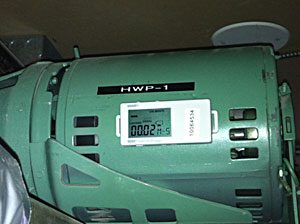
To achieve these goals Kilawatt Technologies takes a data-driven approach, deploying multiple portable data loggers throughout the facility. Energy consumption data was collected over a three-week period, resulting in more than 250,000 measurements, including temperature, relative humidity, carbon dioxide levels, motor run time, and power usage. Four types of temperature readings were collected: zone temperature, heat pump exhaust air, boiler, and main heat pump cycle heat injection. “We use records that allow us to collect a large amount of diverse data in a short period of time,” said Steven Antinozzi, operations officer at Kilawatt. "Fortunately, the device is available at a reasonable cost, making our data-driven strategy possible." Antinozzi and his team use a variety of deployment techniques, depending on the installation site and available surfaces. For example, they value ONSET's HOBO® ux90 motor on/off data loggers UX90-004M, UX90-004, UX90-001M, UX90-001 for direct use of loggers integrated with rare earth permanent magnet circuit motors. For this deployment, they don't need a current transformer, because the rotation on the motor creates a magnetic field. Monitors the on/off cycle and run time of the magnetic field. Log area temperature, engineer additional Onset U12-015-03, U12-001, U12-015-02, U12-015, U12-006, U12-008, U12-011, U12-012, U12-013, The U12-014 Recorder is discreetly in the office area. They attached the data loggers to the vents of the metal ceiling with strips of self-adhesive to magnetize the unit. Engineers placed these data loggers, recording the temperature and setbacks monitored every fifteen minutes. -
result
In graphs and studying temperature data, Kilawatt engineers learned that the boiler fires at full power when the outdoor ambient temperature is 60°F. In addition to the high-current LEDs, the data can reveal that the cooling tower runs at the same intervals as the boiler. This is understood to be due to overheating of the cycle. The data also shows:
The facility does not operate the heat and circulation pumps during evenings and weekends.
Inconsistent temperature in office area Thermostat settings U12-015-03, U12-001, U12-015-02, U12-015, U12-006, U12-008, U12-011, U12-012, U12-013 , U12-014.
When CO2 spikes, the building is occupied, indicating poor ventilation.
Ring motors, the maximum load operating point of the equipment, are at nights and weekends when the building is empty. These motors consume 13000 kWh/year.
The heat transfer boiler is large enough to heat the equipment.
