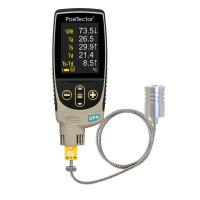
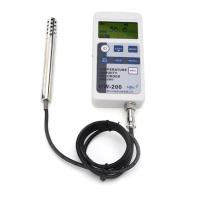
Although modern business manages primarily to insulate itself from the weather, agriculture remains an exception, relying heavily on nature to provide rain, sun, heat, cold, or storm. Weather not only directly affects crop production, but also the development of insects and diseases that attack them. Over the past 25 years, as part of an overall IPM (Integrated Pest Management) strategy, growers have considered weather and pest-related tools to manage risk by paying close attention to weather information and using it to predict when, for example, pesticide spraying or plant It should be protected from frost and watered. Therefore, monitoring key meteorological parameters, such as temperature S-TMB-M002, S-TMB-M006, S-TMB-M017, soil moisture S-SMC-M005, S-SMD-M005, rainfall S-RGA-M002, S- RGB-M002, S-RGC-M002, S-RGD-M002, wind speed S-WSB-M003, wind direction S-WDA-M003, S-WSET-B, S-WCA-M003, S-WCF-M003, atmospheric pressure S-BPB-CM50, S-BPA-CM10, air temperature and relative humidity S-THB-M002, S-THB-M008, photosynthetically active radiation (PAR) S-LIA-M003, total solar radiation S-LIB-M003, leaves Surface humidity S-LWA-M003, etc., can provide key information for agricultural enterprises.
Using weather information to help make pest management decisions includes collecting accurate data and analyzing it to aid in key management decisions. Analysis is done using models, mathematical calculations and logical formulas using weather data and other information. The model will suggest whether some action should be taken. For example, apple growers can determine whether they need to use a model for fire blight treatment. They collected temperature, dew and rainfall each day, as the trees went into flowering, and took this to determine whether streptomycin spray was needed. Fire blight can kill trees and wreak havoc, so streptomycin should be used if there is a risk of infection. On the other hand, it wastes money and increases the likelihood of unnecessary streptomycin applications and the fire blight pathogen becoming resistant to the antibiotic. Using a model such as MARYBLYT enables growers to know when treatment is necessary and when it is not. Models have been developed for many important pest and disease problems, as well as frost forecasting, timing harvest and irrigation, or optimizing fertilizer application.
In pest management, reducing pesticides often depends on accurate weather information. This is the cornerstone of an IPM. It is equally important for organic producers. Growers using IPM or organic methods often receive premium prices for their produce. Increasingly, European and other foreign markets require food to be grown with minimal use of pesticides. Off-the-shelf weather and decision support can thus reduce costs for pest management and improve yields and markets for agricultural products by reducing inputs.
However, growers often do not use these valuable decision support tools. Despite technological innovations, growers often find it difficult to obtain the meteorological data they need, and it is important to use it in decision support models. Most growers don't want to be bothered and download the complexities of data and operating patterns. Weather is useful, and instruments need to function accurately, day and night. Data is easy to use and understand from the grower's instrument or computer form. Maintaining a weather station and accessing data adds tasks to an already full day's work. Sometimes, it involves technical expertise. When asked, most growers said that when they made these forecasts using model-based forecasts it would be as easy to operate as suggested. But they find themselves collecting and analyzing information too difficult and/or time-consuming on a regular basis.
Accordingly, newsletters and other grower information sources publish information based on weather data from selected locations or regions. Subscription services, such as Skybit, have also emerged, and these provide growers with information interpolated from outside National Weather Service weather stations.
This information is usually useful, but from changing conditions, or delays in delivering it, can be inaccurate advice. To take full advantage of the power of climate models, growers need systems that collect accurate data and processes specific to their farms, to provide timely and easy-to-understand recommendations.
New advances in wireless technology, robust weather monitoring hardware and web-based software have made it possible. Weather data can be obtained from a farm, often sent to a central computer server, which can be processed in a forecast model, which then makes recommendations in the form of web pages accessible to each grower.
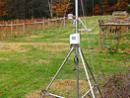
In Massachusetts, we are currently evaluating two Onset HOBO wireless weather stations U30-NRC, U30-GSM/RX3000 (RX3003-00-01), U30-ETH/RX3000 (RX3001-00-01), U30-WIFI /RX3000 (RX3002-00-01) is now located at the University of Massachusetts Research and Education Center in Belchertown Orchard in Cold Spring, Massachusetts, and others at the Tougas Family Farm in Northboro, Massachusetts. Both systems are currently online and weather data is transmitted to the Internet through integrated wireless communication modules. As mentioned earlier, most growers don't want to deal with the complexities and modes of operation of retrieving data. Instead, they want to just go to a page in the morning, find out what's going on in the field based on environmental conditions, and take action. Our recent remote system deployment made all of this possible, and is a great example of the types of technological tools that growers can take advantage of today. We are currently soliciting funding to develop the application(s), which collect currently available weather data, run insect and disease models, and then output the results in a user-friendly and immediately accessible web page(s).
From a research point of view, easy access to information sites from different fields is also very valuable. We are able to get a real-time view of field conditions, while being able to collect long-term data that can be used for trend analysis and correlating insect and disease events with field weather information. Therefore, we can use this information to adjust current models and new developments.