Onset's HOBO® data loggers U9-001/UX90-001, UX90-001M are part of a landmark National Energy Efficiency Retrofit Study, a $5 billion federal aid program that played a role in the success of the Low-Income Home Energy Efficiency Improvement Fund key role.
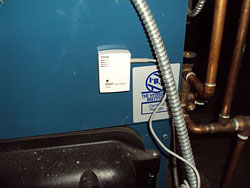
Known as the National Energy Conservation Assistance Program Assessment, the effort marks two decades in which the federal government has gathered timely technical data addressing household energy consumption and energy efficiency factors in the federal winterization program. The purpose of this study is to evaluate the impact of energy saving on household energy use and to characterize the effects of cold protection and heat preservation on indoor air quality.
Not only will the low-income home energy retrofit study help the federal strategy, but it will also provide good practice for the larger energy efficiency industry
Managed by Oak Ridge National Laboratory, the research, which looks at efficiency gains, was funded through the Energy Conservation Assistance Program (WAP). Information is received from more than 900 local energy conservation agencies and hundreds of utility services in the home
As part of the evaluation, a field study investigates energy-efficient homes that rely on non-metered fuel heating (propane and fuel oil).
Energy Center Madison, Wisconsin, a basic research and education company, was part of the team selected to perform the evaluation. The Energy Center installed several hundred HOBO® data loggers UX100-003 (older model U10-003) on premises that use a lot of fuel such as propane and oil. This includes condition monitoring heating system runtime loggers, temperature and humidity logger UX100-003 (older model U10-003) to characterize the air conditioning of the space, and thermocouple temperature loggers UX100-014M, UX120-014M, UX120-014 (U12 -014) Monitoring two heating systems

The study focused on low-income homes in the Midwest, Northeast and South, where Testers wanted to determine whether homes heated with propane and oil achieved comparable energy savings with natural gas heating
In the autumn of 2010, the HOBO installed by the Energy Center was selected to record data loggers U12-006 (UX120-006M), U12-008, U12-012, U12-013 (UX100-003), in the home heating system running 8 to 12 weeks ago the home was full weather. At the same time, the Energy Center records the data for a similar period of time to protect against cold and keep warm. Many households are not controlled, and insulation is also included. Data loggers will be retrieved and data analyzed in the spring of 2011 to establish energy savings in home heating.
The importance of data loggers UX100-001, UX100-003, UX100-023, UX120-006M for the study of thermal insulation cannot be overemphasized because it is difficult to measure the use of heating energy in homes using bulk fuels. These households do not receive bills showing monthly consumption patterns as the households do use metered natural gas. Analyzing fuel deliveries can only yield distorted results. For example, one home might fill its gas tank to the top for the winter, while another might only partially fill it, then top it off with a wood-burning stove.
Moving into the home, the main goal of the energy center is to determine when the heating system is running. The researchers installed data loggers on the main heating system's current sensors CTV-A, CTV-B, CTV-C, CTV-D, CTV-E, in any space heater or wood, commonly used temperature data loggers. Additionally, they placed temperature and humidity loggers in the central thermostat.
The Energy Center also utilizes HOBO U9-001/UX90-001, UX90-001M status loggers to record the heating system once per duty cycle in each home.
We want to know when the fuel is being consumed, which is not the same as monitoring a heating phone or a fan running," said Dan Cautley, the Energy Center's senior project manager. "To get the burner timing, we're looking at the gas valves in the propane system The power line, and in the oil system, we are monitoring the power of the oil solenoid valve, or when there is no solenoid valve, the burner power. In each case we install a current switch in the appropriate line, and connect the switch with the usual stereo jack cable status Recorder. "The actual time recorded by the status Recorder is 1 second, when the current switch is closed and opened, providing time stamps to record fuel consumption.
In addition to the status loggers U9-001/UX90-001, UX90-001M, the Energy Center installed a HOBOUX100-003 (older model U10-003) temperature/humidity logger in each home as the main temperature logger. This gives information on the actual space temperature settings during the study period, which can be used to improve the variable-basis day analysis used in the study. -
We try to screen homes that have significant auxiliary heating sources such as wood or stand-alone space heaters, but it’s impossible to do that completely,” Cautley said. “Since auxiliary heaters may not have motorized valves or nozzles, we cannot rely on state records U9-001/UX90-001, UX90-001M monitor them. Instead, we decided that regular readings on a temperature logger UX100-003 (older model U10-003) would give us an average snapshot of how much supplemental the system was operating.
