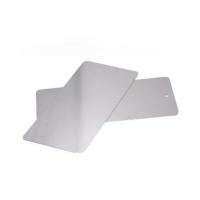
The packaging materials of tinplate seat food-grade beverages are widely used in food, chemical, industrial and other industries, such as food cans, beverage cans, grease cans, grease cans, chemical cans, spray and other miscellaneous cans. Its main feature is to support the protection of the physical and chemical properties of the contents. Therefore, the quality standard of tinplate is very important for the packaging and protection of the content, so a correct understanding of the quality and standard of tinplate is the basis for the understanding of can making, and it is one of the main keys to success or failure.
Tinplate three-piece cans, are airtight packaging containers for canned food and canned beverages. In recent years, its annual consumption is about 40 ~ 600,000 pieces, tinplate three-piece can manufacturing industry, since the introduction of the first resistance welding production equipment in 1978, 20 years, due to the rise of domestic equipment factories, as well as a large number of introductions, so far there are nearly 600 canning production lines in the country, with a rated production capacity of 25 billion / year. The production capacity far exceeds the actual demand, therefore, many production lines can not be started normally, and disorderly competition is inevitable.
The rapid growth in quantity certainly reflects the progress of our society, but this excessive growth is often accompanied by a lack of understanding of the intrinsic quality of products. But the core quality of any empty can is corrosion resistance, that is, for the food or beverage it is packaged in, it is not only leak-proof and non-spoilage, but only the slightest possible corrosion (the consequences of this "existing" corrosion, within the limits of national food regulations), and this is not an easy task. Every year, the quality problems of canned food and beverages and their empty cans are sent to me only to be technically tested and adjudicated, and there are no less than dozens of cases, and even hundreds in some years, which should attract the attention of the whole industry. Only by deeply understanding the advantages and disadvantages of each step of the can-making process, the meaning of each index of the printing and coating process, and the importance of the quality of the main can-making materials from the perspective of "corrosion resistance" can we say that we can truly grasp the quality of empty cans.
The quality of the empty can depends on the quality of the can-making material and the level of the can-making process, the cost of an empty can is 60%~80% of the material cost, mainly the value of tinplate, so the correct understanding of the quality of tinplate and its standards is the basis of the understanding of can-making, and is one of the main keys to success or failure.
1. Tinplate is a high-tech product
As a packaging material for canned food and beverages, tinplate is scrapped after a single use, giving people the illusion that it is not worth paying attention to, which is actually a big fallacy, because:
1. The steel used to make tinplate is required to be strictly controlled in the smelting of various residual metal and non-metallic impurities, and its control methods, indicators and detection methods have not yet been fully mastered in CHINA.
2. In the operation and control of the subsequent hot rolling, cold rolling, previous cleaning, quenching and tempering, annealing, leveling and other processes, the quality problems of tinplate that may be caused (or affected) are numerous, and most of these problems have not been thoroughly understood.
3. In the cleaning, tinning, soft melting, passivation, oiling and other electrotin plating processes, dozens of related technical topics, most of the tinplate factories in CHINA, are only preliminary, far from handy.
A tinplate cold rolling production line, with a length of more than 1000m, it rolls 1.5 ~ 1 .7m wide strip plates, and the speed of each second is 30m/s (this is only a medium speed), and the thickness of its products is mostly in the range of 0.25 ~ 0.17mm (in the 90s, developed countries in the United States and Japan can easily roll out thin plates with a thickness of 0.14 ~ 0.075mm), this kind of high-speed, high-precision (the average thickness error of each point shall not exceed ± 4%), strong power, extremely powerful equipment, The surface finish of its products also needs to reach the mirror surface, which is of course high-tech.
2. Tinplate is a complex technical product
To say that tinplate is a complex technical product, it can be explained by the number of technical indicators that are tested at the time of delivery, first of all:
1. Analysis and inspection of steel base composition, including: residue analysis of at least 8 elements such as carbon, copper, chromium, molybdenum, nickel, silicon (Si), manganese (M n), phosphorus (P), sulfur (S), etc., as well as the determination of other metal and non-metal inclusion content;
2. Metallographic examination: a total of 5 structural tests of microstructure, cementite, purity, grain size and alloy layer;
3. Mechanical property test: the gauge has hardness and cupping value(Recommended Instruments:Cupping Tester), tensile force, rebound, aging, bending, roughness, thickness a total of 8 items;
4. Corrosion resistance (intrinsic quality) testing: including the determination of tin layer thickness, alloy layer thickness, oxide layer, passivation layer, oil film amount, ATC (alloy tin galvanic current), ISV (iron dissolution value), P LV (acid leaching time lag value), TCS (grain size), sulfur resistance, weldability, adhesion, health inspection and other 13 items;
5. Thin plate shape inspection: straight angle, sickle bend, side wave, medium wave, warpage and other 5 inspections.
A total of 40 inspections are carried out at different frequencies when the products leave the factory, which shows that the connotation of the quality of tinplate is beyond the general imagination.
3. The standard of tinplate is not a very standard standard
As a product of high technology or complex technology, the product standard of tinplate should be the same as other product standards, that is, the standard should include the main technical indicators, testing methods, delivery methods and conditions, as well as storage and transportation requirements, etc., but throughout the current tinplate standards of various countries (including the current international standards ISO 11949-95, ISO 11950-95, ISO 11951-95), except for the American standards (AS TM A 623M to A 626M -95), In terms of the main technical indicators and testing methods, except for the plate shape index, the rest of the technical indicators are only guaranteed by various countries for the amount of tin plating and the degree of tempering.
Comparing the items guaranteed by the standard with the number of items inspected by the manufacturer at the time of delivery, anyone will find that the number and content are staggeringly different. Why is that?
First of all, let's start with the tinplate standard in the United States.
Until now, the qualified tinplate of the United States is still an important material and is not allowed to be exported (Russia's first-class tinplate also has regulations that are not allowed to be exported), and its tinplate standards are formulated under the auspices of its Ministry of National Defense, and the declared reason is that the millions of tons produced by themselves are not enough, and they still need to be imported by Japan, Germany and other countries. But scrap tinplate from the United States is available in the international market. Ten years ago, the American ± (Waste) iron on the market in CHINA was just that.
Therefore, the ASTM standard in the United States is actually a domestic regulation, which has detailed provisions on the composition of tinplate steel base (original plate) and the four main internal technical indicators (referring to ATC, ISV, P LV, TCS) and the corresponding test methods. In addition, the 4 tinplate standards in the United States need to be used in combination. This guarantees that the purchased qualified (genuine) tinplate has the necessary corrosion resistance.
Although the Japanese tinplate standard in the 60s, it still retains the restrictions on the composition of the steel base and the limit on the surface quality conditionHowever, in the version of the 70s and the 80s that is still in force today, that is, JISG 3303-87, not only the expression (limit) of the composition of the steel base has been abolished, but other restrictions have become wider and wider.
Japan is currently producing more than 2 million tons of tinplate, making it the world's second largest producer of tinplate, and its exports are mainly to Asian countries (the term for the internal coordination of tinplate manufacturers is the "Asia-Pacific exclusive area"), so this standard was formulated for this purpose? It is reported that tinplate production plants in some countries classify their products according to high-low qualityThere are 6 grades, and only 3rd and 4th grades are available in Asia.
In the past, CHINA imported tinplate, mostly in a concentrated and large quantities. Therefore, in addition to the requirements to comply with a certain national standard, the contract also attaches other technical requirements. Nowadays, buyers often do not attach technical requirements. Therefore, the quality of the purchased tinplate often has defects of one kind or another, which is a very noteworthy thing.
Nowadays, the "shape" of the problem has changed somewhat, there are a total of 6 tinplate factories in CHINA that do not produce raw plates, although they do not import tinplate, but they all need to import raw plates, and the quality of raw plates is the soul of tinplate quality. How many necessary quality inspections have they carried out after importing the raw boards? As far as we know, there are not many, i.e. they do not meet the level of inspection items and frequency required to fully control the quality of the raw board (some factories only carefully inspect after they have discovered or caused problems). Most of these tin plating factories operate in joint ventures (or even wholly-owned) with large overseas factories, and when they encounter problems with raw plates, they mainly rely on overseas.
In short, whether it is domestically produced or purchased from abroad, the core quality of tinplate is not fully in our hands, and this situation should be gradually changed as soon as possible through the concerted efforts of all parties ±.
Fourth, the discussion of tinplate standards in various countries
With the exception of the United States, the content of tinplate standards in various countries (including ISO standards) is becoming more and more consistent.
1. Roughly the same, and more reasonable and clear points:
(1) All define low-carbon cooling with a thickness of 0.14 —0.49mm
Rolled tinplate is called cold-rolled electroplated tinned thin steel plate, which is commonly known as tinplate;
(2) It is stipulated that grade A tin with a purity of 99.85% or more is used as one of the raw materials;
(3) The dimensional tolerance is specified as -0 and +3mm;
(4) The allowable maximum values of roughly the same thickness tolerance and plate shape deviation (such as shear slope, side wave, medium wave, warpage, etc.) are specified;
(5) It is stipulated that the qualified products should be able to be printed and coated on the whole board;
(6) All stipulate a uniform tin plating cascade and the corresponding minimum allowable tin plating. Namely: steps: 1.1, 1.7 (1.5), 2.2 (2.0), 2.8, (4.0), (5.0), 5.6, 8.4, 11.2g/m2 and the corresponding minimum allowable value;
(7) All stipulate the measurement and detection method of unified tempering degree (measuring the surface Rockwell hardness HR30T or HR15T), and its grade division and marking method, such as T 52, T 54, T 57, T 61, T 64, DR8, DR9, DR9M and so on.
2. Where each standard is ambiguous:
(1) Try to avoid the characteristics and components of the steel base (original plate) (strangely enough, when a large number of formal supplies are made, there is often a composition table);
(2) The requirements, indicators, and tests for surface properties, characteristics, defects, etc., should be discussed as little as possible;
(3) There are subtle differences in the deviation of the mechanical properties of the thin plate (first of all, it is reduced to a degree of quenching and tempering), and the description of each standard.
The above three points are related to the corrosion resistance and machinability of tinplate, and are one of the main contents that need to be further specified in detail through the additional document clauses of the supply and demand contract. This is because:
First, the advantages and disadvantages of the steel base composition (including its processing methods), especially if the limit of the content of some harmful non-metals and metals is not in place, the corrosion resistance of the thin plate and the formation of a good alloy layer and good mechanical properties (machinability resistance, etc.) in the post-electroplating soft melting, are impossible to talk about.
Second, surface properties, which consist of three aspects, namely: (1) the tolerable limits of various surface defects (for their definitions and causes, see "Japan Iron and Steel Association Guidelines ISIJ T R009"); (2) Requirements and numerical limits for surface roughness, oil film content, oxide film amount, surface chromium content, etc.; (3) Specific statements and agreements on printability.
If the above three points are not stipulated in the annex of the agreement, there will inevitably be problems in the application of tinplate.
Thirdly, the deviation of the tempering degree from the range is too large, which is only one of the manifestations of poor and uneven mechanical properties (the curvature of the orchard is large and small), and sometimes there is the Lǜder effect, that is, the ridge along the perimeter of the garden when the can is rounded.
It can be seen that if there is no additional document in the supply and demand contract to stipulate the needs of the buyer in the above three aspects and other aspects, then the quality of future can making will not be based on science but on luck, which is not serious and unfair communication.
5. Empty tank standards
The international and national and regional empty can standards only involve the unification of size, shape and specification, so as to facilitate the exchange of products and the generalization of can-making equipment. None of these standards deal with the corrosion resistance and suitability of empty cans, and this part of the content only exists in the non-public or semi-public technical documentation of national regulatory agencies and canning factories and canning factories. Therefore, collecting such data and accumulating the corrosive power of various canned food and beverages in CHINA and the corresponding technical specifications of empty cans is a basic technical work of the canned food industry and the empty can industry.
In addition to a round tank size standard in line with international standards, CHINA's published size standards have not yet formed a complete series of standards for various types of empty cans. However, we have a national standard GB 14251-93 with the quality level of sealing as the main content, which details the indicators and detection, identification and discrimination methods that should be achieved in this regard, and it is being widely used.
In recent years, the State Light Industry Administration has also instructed us to work with the Packaging Corporation to formulate a national standard for "easy-to-open three-piece cans" mainly used for beverages, which will be released soon.
This standard, in addition to stipulating the size series of large and small empty cans in accordance with international practice, also emphasizes the need to select different tinplate and aluminum materials for making caps (or bottoms) and the corresponding thickness of the inner coating film of the can body, bottom and lid according to the corrosive properties and corrosive force of the contents, and stipulates the testing methods.
This standard also limits the defect currents for empty cans and easy-open lids. In the case of a three-piece can, its size reflects the apparent quality of the weld and re-coating tape, i.e. the presence or absence of burrs and the good and bad of the covering. It does not reflect the further hidden problems of the weld and the patch, such as the weld has transverse cracks, incomplete welding, insufficient thickness of the patch coating, and even insufficient curing.
The standard also imposes qualitative and quantitative limits on some of the major perceptible defects caused by cans and materials.
The release and implementation of this standard will be helpful to the canning industry and can point out some directions of efforts. But it would be unrealistic to think that it would solve all problems. Good can making comes from an understanding of the materials used to make cans and the impact of each step of processing on quality, as well as an in-depth understanding of the technical characteristics of the packaged food and beverages, and from the correct understanding and mastery of corrosion and corrosion prevention.
As the intermediate processing of materials and empty cans, or printing and coating process processing, CHINA has also formulated corresponding internal coating and external printing standards for them, the core content of these standards. The internal coating aspects are: 1) degree of curing, 2) thickness, 3) adhesion, 4) corrosion resistance and 5) processability; The external printing is: 1) resistance to mechanical and cooking processing, 2) adhesion and scratch resistance, 3) artistic requirements for color and overprinting. These intermediate processes are also very important for the quality of the empty cans. Over the years, there have been many problems in this regard. But the occurrence of these problems, as well as the occurrence of problems in canning, mainly depends on the ability and attitude of our processing personnel. This shows that we are still in a position to take the initiative. However, the problem of materials is often beyond the scope of our subjective initiative, and it takes long-term and unremitting efforts to get rid of passivity.
6. Future prospects
The empty can industry, since the 60s in the world, and since the 80s in CHINA, there have been two major changes, one is to eliminate the unhygienic, resource-intensive, slow (40 ~ 50 cans/min) soldering cans, and instead use resistance soldering cans, the speed of canning has almost jumped 10 times in 20 years, that is, about 700 cans/min in the late 80s; Second, a large number of aluminum sheets are used to make food and beverage cans and lids. Driven and squeezed by these two trends, tinplate, the main material of food cans, is also being continuously improved, so that its total global output has always been maintained at the level of 10 million ~ 13 million tons per year.
Over the past 20 years, the progress of tinplate manufacturing technology and quality has been huge, not only thinner and thinner (from 0.25 ~ 0.23mm commonly used in the 60s and 70s, to 0.20 ~ 0.21mm commonly used today, and 0.17 ~ 0.19mm commonly used abroad), the width and sheet area are getting larger and larger, and the tin plating is also becoming less and less (from 8.4g/m2 ~ 11.2g/m2 commonly used in the 60s and 70s to 2.8g/m2 or less today). And the corrosion resistance of the qualified products has been improved compared with the original tin plating. These are the contributions of the continuous improvement of dozens of processes such as steelmaking, casting, rolling, tinning, various cleaning, soft melting, passivation, oiling, drying, traction and even shearing in the field of tinplate manufacturing, and hundreds of important patents have been proposed and implemented.
The American standard of the 70s, which did not propose the tinplate of K and J grades and their quality indicators. At that time, K iron was only a prototype product discovered by the American scholar Kamm in 1962. But by the late 70s, that is, for the first time officially entered the American standard. I remember that at that time, France supplied a small amount of K-grade iron to our country, but it did not attract the attention of all parties in our country (because the small number of trials at that time did not show obvious superiority).
Since the 90s, we believe that tinplate (in a broad sense) has undergone two significant changes: the first is that because the continuous casting steel can be made to reduce its inclusion to the level of tens of PPm, it can be rolled out of the original plate thinner than 0.10mm, and the second cold-rolled tinplate can also be used to make drawing two-piece cans with tinplate as thin as 0.19mm and hard as DR9 grade.
The second is to eliminate the tin layer of tinplate, and instead use the original plate (steel base) or chrome plated plate (commonly known as T FS or ECCS board) to "paste" 1 ~ 3 layers of polyester film with a thickness of about 20 microns by thermal composite method. The English name of this material is Laminated Steel, which is translated as "laminated iron" in Chinese.
The emergence of this material is expected to effectively solve the contradiction that since World War II, tin as a strategic resource, produced in developing countries, needs developed countries, but strangely, after entering the 90s, Britain and its partners have mastered the production technology of laminated iron, and are not in a hurry to promote, which may be related to the current large number of equipment needs to be idle for this purpose, as well as the resource utilization policy of developed countries.
Contrary to the attitude of the United Kingdom and its partners, Japan's Toyo Seikan (Toyo Seikan) has joined forces with Japanese Toyo Steel Sheets, and since the early 90s, it has been vigorously researching the use of laminated iron to make cupping cups (this material, because of the non-conductive polyester film, which cannot be welded into three-piece cans, so a large number of resistance welding machines cannot use it), the corrosion resistance of this kind of cans is excellent (because the thick polyester film almost completely blocks the corrosion of the metal by the contents), and the harmful polymer monomers that migrate from the film to the food are also greatly reduced. Japan calls this kind of cans T ULC (T oy o's Ultim ate Lig htw eigh t Can), and its output has grown from 1992 to more than 6 billion pieces / year in 1998, that is, about 15% of all 40 billion metal cans in Japan.
It should be pointed out that in the first half of this year, CHINA's Lianjian Group Co., Ltd. has built a production line in Shanghai for two-piece cans of laminated iron, the equipment is provided by the United States, and the laminated iron is supplied by the United Kingdom, with a production capacity of 1800 cans per minute.
With the rapid development of canning and packaging materials, under the current foundation of the national economy, An'an does its own thing, that is, to ensure the quality of our main can-making materials——— tinplate, which is one of the main tasks of our canning industry, although it is mainly the responsibility of cold-rolled tinplate factories, tin-plating factories and import merchants, but cans and printing and coating factories also have the responsibility to study corrosion, gradually improve the establishment of testing methods and skills for materials, put forward more detailed iron indicators, parameters, and cooperate with both sides to promote the improvement of tinplate quality.