1 Overview
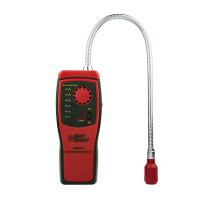
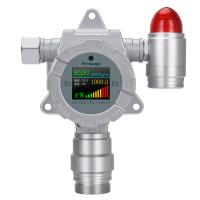
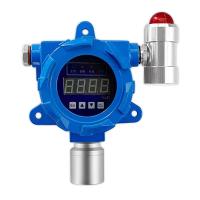
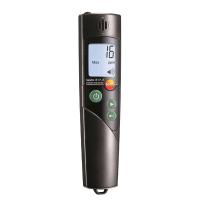
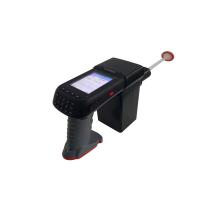
A variety of Gas Detectors are used to detect the concentration of combustible gas and toxic and harmful belongs to safety testing equipment and is a measuring instrument for compulsory verification. It is widely used in petroleum and petrochemical, aviation, chemical industry, metallurgy and civil safety. In the field of detection and other fields, there are many types of gas detection alarms, a wide range of applications, short service life of sensor elements, and large performance differences. The performance and quality of gas detection alarms are directly related to the personal safety of employees at the job site, and are one of the guarantees for safe production. Therefore, adopting scientific and reasonable detection methods for different instruments is an important measure to ensure personal safety, property safety, and production safety. A variety of Gas Detectors are generally composed of a detection system, an amplifier circuit, an alarm system, and a display button module. The main working principle is to convert the signal detected by the gas sensor into an electrical signal, and then convert the electrical signal into the concentration of the gas .
2 Calibration of multi-Gas Detectors
A variety of Gas Detectors are safety testing equipment. In order to ensure the safety of users , they need to be verified or calibrated before use. At present , there are many kinds of Gas Detectors on the market, and the verification and calibration methods are different . Carefully read the instructions and verification procedures, and take the correct method to calibrate the instrument. For example, Japan’s Shincosmo 302M needs to be connected to a PC with calibration software installed through a USB data cable to calibrate each gas separately: ISLPC data transmission software, infrared link device and Data line, set the concentration of the calibration gas, transfer the set data to the instrument and save it, and then calibrate the instrument.
Verification conditions, according to the requirements of the regulations, the ambient temperature needs to be kept at (0 ~ 40) ℃, the relative humidity is less than or equal to 85%, no electromagnetic interference, the gas flow controller needs to meet the instrument verification requirements, and the pump suction type needs to be equipped with bypass flow Make sure that the bypass flowmeter in the flow controller has a flow to vent. The gas flow should be well controlled so that the intake flow is consistent with the pump suction flow of the instrument. The flow rate of the diffusion type should be in accordance with the requirements of the instrument manual. If there is no specific requirement in the instrument manual , it is generally controlled within the range of (250 ± 50) mL/min. Matters needing attention, use a suitable calibration gas hood for different Detectors. A suitable calibration gas hood has a great influence on the verification and calibration results. For semiconductors and catalytic combustion, the calibration gas needs to be air, and the calibration concentration , the instrument has a fixed calibration point, and it is necessary to prepare the corresponding standard gas for calibration according to the fixed standard gas concentration of the instrument, such as Industrial Scientific M40, this type of instrument has a fixed calibration value, and the combustible gas calibration point is 25 or 50 % LEL with a calibration point of 100ppm for carbon monoxide and 25ppm for hydrogen sulfide. The calibration points of some Gas Detectors can be adjusted within a certain range, such as Draeger ’s X-am 2000, combustible: (40 ~ 100)%LEL, oxygen: (10 ~ 25)vol%, carbon monoxide: (20 ~ 999) ppm, hydrogen sulfide: (5 ~ 99) ppm. For Gas Detectors with adjustable calibration points, they should be calibrated according to the calibration concentration required by the regulations.
Frequently asked questions, some instruments have set a calibration period. When the instrument is used for more than the calibration period, the instrument will alarm or display a fault. At this time , the instrument needs to be recalibrated, such as the GasAlertMicroClip of BW Company; if exceeds the measurement range or If there is a negative drift, a fault will be displayed. When the oxygen concentration is lower than 10 vol%, the flammable may display a fault. For gases beyond the measurement range, the sensitivity of the gas may temporarily increase. It is necessary to wait for the instrument to recover for a certain period of time before calibrating or Calibration; for gas , the sensor is generally invalid or needs to be recalibrated, such as X- am 2000; after starting up, a certain gas channel shows a fault, and the sensor is not installed properly or the sensor is invalid.
references
[1]JJG 915-2008 "Carbon Monoxide Detection and Alarm Verification Regulations". Issued by the General Administration of Quality Supervision, Inspection and Quarantine of the People's Republic of CHINA. Beijing: CHINA Metrology Press, 2009.
[2]JJG 693-2011 "Certification Regulations for Combustible Gas Detection and Alarm". Issued by the General Administration of Quality Supervision, Inspection and Quarantine of the People's Republic of CHINA. Beijing: CHINA Metrology Press, 2011.
[3]JJG 695-2003 "Verification Regulations for Hydrogen Sulfide Gas Detector". Issued by the General Administration of Quality Supervision, Inspection . Beijing: CHINA Metrology Press, 2004.