1 Working principle of combustible gas detection alarm
In the design of the combustible gas alarm, both the sensor and the single-chip microcomputer are the core components of the instrument. The flammable gas concentration signal is converted into a voltage signal , and after passing through the preamplifier circuit, it directly outputs a digital signal or outputs a voltage signal suitable for the single-chip microcomputer through A/D conversion, and then sends it to the In the single-chip microcomputer, the analog voltage signal needs to be processed by linearization data , and then the voltage signal is converted into the corresponding hexadecimal concentration value. Finally, the concentration value is sent to the LCD display for display. When the detected toxic and combustible gas concentration exceeds the upper limit alarm setting value, the alarm will send out an audible and visual alarm, and the display will display the corresponding status [1]. The new simple combustible Gas Detector mainly refers to portable/ handheld Gas Detector. It mainly uses gas sensors to detect the types of gases existing in the environment. It adopts professional imported electrochemical sensors, which apply the principle of controlled potential electrolysis. Different gases can be measured by changing the sensors of different gases and changing the value of the polarization voltage by using a specific electrode and applying a certain polarization voltage . The gas to be measured reaches the working electrode , and redox reaction occurs . At this time, the sensor will output a small current, which is proportional . After amplification, the voltage and current are converted, and the content (ppm value) within the detection range of toxic and harmful gases is converted into a 4-20 mA standard signal output [2].
2 Classification of combustible gas alarms
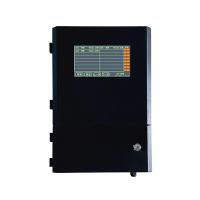
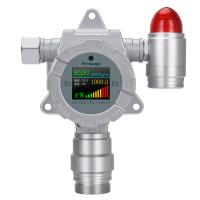
According to the use environment, it can be divided into industrial gas alarm and household gas alarm. According to its own form, it can be divided into fixed combustible gas alarm and portable combustible gas alarm. The industrial fixed combustible gas alarm is composed of an alarm controller and a Detector. The controller can be placed in the duty room and mainly controls each monitoring point. The Detector is installed in the place where combustible gas is most likely to leak. Its core components For the built-in combustible gas sensor, the sensor detects the concentration of gas in the air. The Detector converts the gas concentration detected by the sensor into an electrical signal, which is transmitted to the controller through the cable. The higher the gas concentration, the stronger the electrical signal. When the gas concentration reaches or exceeds the alarm point set by , the alarm will Send out an alarm signal, and start external equipment such as solenoid valves and exhaust fans to automatically eliminate hidden dangers. Taking RK-4000 combustible gas alarm detection as an example, the combustible gas alarm is a fixed gas alarm; it belongs to the split-line combustible , mainly composed of RK-4000 Detector composition. RK-4000 combustible gas alarm controller is designed by high-end CPU and high-precision A/D converter . When the detected gas concentration exceeds the alarm setting value, the instrument will send out sound and light early warning and alarm, and at the same time start externally controlled fire fighting equipment or other safety protection equipment, so as to prevent or reduce the continuation of the on-site danger level and achieve the purpose of automatically eliminating danger. of. Main features: professional micro-processing technology, intelligent menu design, provide more built-in functions highlight LED display [3], with concentration display and time query function, eight-way Detector automatic patrolcheck. Widely used in gas, petroleum, chemical, coal, electric pharmaceutical, metallurgy, coking and other industries where production, storage and transportation, use of flammable, explosive or toxic gases.
3 Problems to be paid attention to when using gas alarm
3.1 Pay attention to regular calibration and testing
Toxic and harmful Gas Detectors are the same as other analysis and detection instruments , they are measured by relative comparison method, the instrument should be zeroed at any time, and the instrument should be calibrated frequently. It should be noted that many Gas Detectors can replace , but this does not mean that a Detector can be equipped with different Detector probes at any time. Whenever the probe is changed, in addition to the sensor activation time , recalibration of the instrument is required.
3.2 Pay attention to the detection interference and service life of the sensor
Generally speaking, each sensor corresponds to a specific detection gas, but any Gas Detector cannot be absolutely specific. Therefore, when selecting a gas sensor, it is necessary to understand as much as possible the interference of other gases to the sensor, so as to ensure its accurate detection of a specific gas. All kinds of gas sensors have a certain service life, that is, life. Generally speaking, in portable instruments, LEL sensors have a longer lifespan and can generally be used for about three years the lifespan of electrochemical sensors depends on the dryness of the electrolyte, so if they are not used for a long time, seal them at a lower temperature It can extend the service life to a certain extent in the environment [4].
3.3 Pay attention to the concentration measurement range of the detection instrument
Carbon monoxide alarms, hydrogen sulfide alarms, carbon monoxide Detectors , oxygen alarms, and various toxic and harmful Gas Detectors have their fixed detection ranges. Only when the measurement is completed within its measurement range can the instrument be accurately determined. If the measurement is performed beyond the measurement range for a long time, it may cause permanent . If the fixed instrument sends an over-limit signal , the measurement circuit should be closed immediately to ensure the safety of the sensor.
4 Example of Combustible Gas Detection——Hydrogen Gas Detection
4.1 Necessity of hydrogen detection
Because hydrogen is colorless and odorless, the flame is transparent when burning, so its existence is not easy to be detected by the senses. In many cases , ethanethiol is added to the hydrogen to be detected by the senses, and at the same time it can give the flame a color. Although hydrogen is non-toxic and physiologically inert to the human body, if the hydrogen content in the air increases, it will cause hypoxic asphyxia. As with all cryogenic liquids, direct contact with liquid hydrogen will cause frostbite. The overflow and sudden large-scale evaporation of liquid hydrogen will also cause the lack of oxygen in the environment, and may form an explosive mixture with air, causing combustion and explosion accidents.
4.2 The extra-column effect of the dead volume of the hydrogen Detector
The make-up gas is a gas that enters the hydrogen Detector directly from the outlet of the chromatographic column , also called make-up gas or auxiliary gas. Packed columns do not use makeup gas, while capillary tubes mostly use makeup gas. This is because the carrier gas flow rate in the capillary column is too low to meet the good operating conditions of the hydrogen Detector. After adding a carrier gas directly into , the ZR-LDE electromagnetic flowmeter can ensure that the hydrogen Detector works in a high-sensitivity state. Another important function of the makeup gas is to eliminate the extra-column effects of the dead volume of the hydrogen Detector. After the separated compound flows through the column, the volume expansion may occur due to the increase in the volume of the pipeline , resulting in a slow flow rate, which causes the band to broaden. Adding makeup gas eliminated this phenomenon. The make-up gas flow is measured with a soap film flowmeter at the outlet of the hydrogen Detector . Note that other gases should be turned off when measuring the makeup gas flow rate. When using a chromatographic column with an inner diameter below 0.32, the carrier gas in the column may not be turned off. At this time, the flow rate measured by the ZR-LDE electromagnetic flowmeter is the carrier gas and tail gas in the column The sum of blowing air flows.
4.3 Prevent the hydrogen Detector from being polluted
Hydrogen is a colorless, odorless, harmless, flammable and explosive gas, and there is carbon monoxide and air. It can explode spontaneously, and when the mixing ratio with chlorine is 1:1, it can also explode under light. In order to prevent the hydrogen Gas Detector from being polluted, the temperature setting of the hydrogen Gas Detector should not be lower than the maximum temperature of the actual . Once the hydrogen Detector is polluted , the sensitivity will decrease or the noise will increase, and the ignition will fail. The way to eliminate pollution is to clean, mainly to clean the surface of the nozzle and the gas pipeline. The specific method is to remove the nozzle, soak it in different solvents in turn , and ultrasonicate it in an ultrasonic Water Bath for more than 10 minutes. You can also use a thin stainless steel wire to pass through the hole in the middle of the nozzle, or use an alcohol lamp to burn off the oil in the nozzle to achieve the purpose of effective cleaning. Sometimes after a long time of use, carbon will accumulate on the surface of the nozzle, which will affect the sensitivity . It can be removed by lightly sanding the surface with fine tissue paper. After cleaning, dry the nozzle, and then install it on a hydrogen Detector for measurement.
5 Conclusion
The alarm of combustible gas can realize the safety , so it is necessary to continuously explore and study its new development and application technology, and gradually improve the accuracy and timeliness of combustible gas detection.
references:
[1]Li Zubin, Jiang Jianwei, Wenfeng. Development of automatic [J]. CHINA Testing Technology, 2008 (04): 65-66.
[2] Yu Chunsheng, Wang Chaohui, Jiao Binliang. Combustible gas detection device with wireless transceiver function [J]. Sensors and Microsystems, 2010 (06): 83.
[3]Mu Ke, Han Zhigang. Design of digital detection system for toxic and harmful gas alarm [J]. Journal of Liaoning Petrochemical University, 2012 (01): 46-47.
[4] Zhang Hongjian, Ye Dunfan, Ni Xiaoyong. Combustible gas sensor TGS813 application in multi-channel data acquisition circuit [J]. Foreign Electronic Components, 2007 (11): 57.