Usually, in the process of ink printing, we sometimes encounter the phenomenon of streaks or light colors in the printing. This phenomenon is called the failure of the inking and ink-off roller in the industry. The reason for this failure is that the printing The overall gelation of the ink is caused by the swelling of the pigments and fillers in the ink system .
Explain from a theoretical point of view: the yield value of the ink is too high, and the ink is too short to become cheese-like. From a practical point of view: there are too many pigments and fillers in the ink to gel the ink or water enters the ink system during storage, resulting in partial flocculation. For a long time, people have continuously stirred the ink in the ink fountain for swelling or gelling , or installed an agitator in the ink fountain, and also put an iron rod on the ink of the ink fountain to push the ink to the ink fountain roller to keep the ink printing . fluidity. Most operators like to use medium and high viscosity varnishes or thinners to adjust the ink (but this needs to be used as needed, otherwise it will continue to swell or gel). However, some printing manufacturers pour out the ink and replace it with ink with good fluidity and strong water resistance before printing. Looking at the above faults, the author discusses, analyzes and puts forward opinions on how to troubleshoot the fault.
The relationship between ink gelation and acid-base
The gelling problem of ink is often encountered in early oil-based (oxidative drying and penetrating drying ) inks, and occasionally in solvent-based (volatile drying) and water-based inks. It needs to be known that the cause of gelation is very complicated (including the process of ink manufacturing, such as the first and last addition of drier, etc.). With the development of science and the application of new materials, we have strengthened the research of scientific theory and the control of the quality of ink component materials.
When the composition and structure of ink have changed today, various disadvantages will appear at any time, but they will be controlled. The cause of gelation, the industry believes that there are the following six:
1. The resin molecular weight of the ink system is too large (viscosity is too high);
2. There are too many solid components (even the resin binder with low viscosity is no exception );
3. The acid value of the ink system is too high;
4. Pigments and fillers are alkaline;
5. The content of desiccant is too much or the order of addition is improper (for example, there will be two results before and after ink production);
6. There are too many solvents in the ink system, especially fast-drying solvents;
It can be seen from the above six reasons: the first two belong to the category , and are extremely easy to avoid and exclude for an experienced ink manufacturer or package printing operator. The latter four reasons belong to the category of chemistry (reaction) . When we explore the last four reasons, we will also find that the temperature of the dispersion process is too high, the volatilization of solvents, and the improper application of auxiliary additives may also cause the tendency of ink acidification. For example, rosin resin will gel, pile up and be difficult to ink when printing with high-pigment tank ink to produce solvent-based flexible quick-drying ink. In addition, attention should also be paid to the pros and cons of strongly acidic carbon ink pigments and the acid value of rosin. This is enough to explain that acid [acid is electrophilic, is electron acceptor (proton donor)] base is nucleophilic, is electron donor (proton acceptor), and the resin of so-called amphoteric solvent (both proton Donor, water, alcohol, carboxylic acid and nitrocellulose, etc., which are proton acceptors), followed by an aliphatic hydrocarbon solvent that does not form hydrogen bonds, neutral pigments and amphoteric pigments, etc. The relationship is already evident. That is to say, when the acid-base properties of the pigment are not compatible with the acid-base properties of the binder , we can use a variety of resins to match the acid-base properties of the pigments and fillers to balance or choose an appropriate solvent to compensate or Improvement, which is a conventional remedy.
When we explore in the chemical (reaction) category, we will find that when the stoichiometric concentration reaches a certain value (strictly speaking, a very narrow concentration range), various macroscopic properties will change suddenly. From a microscopic point of view, the active molecules of the ink system at this time begin to associate to form aggregates of different sizes. Such aggregates are called micelles or micelles, also known as association colloids. An important characteristic of micelles is the result , which greatly increases the solubility of insoluble or slightly soluble substances— commonly known as swelling, thereby accelerating the chemical reaction. The mechanism of the reaction is very interesting . It may be closely related to the binder, especially the pigment dispersion process.
Methods to eliminate swelling and gelation
In addition to the reasons mentioned above, the drier in the ink system can also directly affect the viscosity, swelling, and sinking of pigments and fillers during the storage of the ink . For example, high-viscosity alkyd resin and basic pigment zinc oxide are ground together in the presence of a drier, which will promote gelation and swelling of the ink during storage . This is due to the reaction of free fatty acids and basic pigments during thermal processing . Therefore, when making ink from high-viscosity ink raw materials, lead, cobalt, and manganese driers should not be added during the grinding process. However, the swelling tendency can be reduced after adding 1% benzoic acid . Another disadvantage of the drier is that it can accelerate the sedimentation of the pigment during the storage . For example, when titanium dioxide is used to make ink, zinc naphthenate is added during grinding , and the pigment is easy to settle and form hard lumps. Therefore, adding will lead to poor storage of the ink, and it is easy to swell, gel and sink to the bottom.
In recent years, people have proposed various remedial measures of one kind or another around the ink swelling, gelation and precipitation caking . However, its solution often only attracts people's attention after the failure occurs. This is a passive operation method, which not only increases the production cost of the packaging and printing manufacturers and delays the time, but also brings certain processing difficulties. Over the years, people in the industry have researched and found out that salt- based pigments react with linking materials with high acid value or containing free fatty acids to form soap according to the phenomenon of gelation, change, thickening, and agglomeration of the ink system. Due to the agglomeration and gelation of the binder itself, the ink system has absorbed moisture, the pigment content is too high, the used binder and pigment are unbalanced (improper), the additive miscibility between the binder and the oil is poor, and the high polymer binder The absorption of the acid-soluble structure by the pigment will also accelerate the gelation, etc. Generally, there are four general elimination methods as follows:
1. Add aliphatic hydrocarbons, esters, ketones, etc. to dilute when the ink is too thick or gelled due to excessive polymerization of the linking material .
2. Add rosin to the gelled ink that reacts into soap and dissolve it in linseed oil, and use its high acid value substance to remove it.
3. Adding metal salts of ferric acid into the ink is the usual method used in the past.
4. Ink can be controlled by adding inorganic salts.
In response to the above-mentioned failures, the industry analyzed the ink formula structure , screened out the new materials of anti-expansion and gel breaker on the market for demonstration, and believed that it is an improvement produced by Yizheng Tianyang Chemical Factory (national inspection-free product) Phosphate ester coupling agent, in addition to its excellent dispersing performance on pigments , also has a special effect of "reviving" the swollen and gelled ink . For example, in the printing process, only 3-5% anti-expansion and gel breaker can be added to the swollen ink to suppress the above faults, restore the original structure of the ink , and return the viscosity. According to the characteristics of the anti-expansion and gel breaker produced by Yizheng Tianyang Chemical Factory , we only need to directly add 1.5-2.5% of the pigment and filler to the ink formula to avoid swelling and gel in ink printing. change. Toluene or xylene can also be used to dilute the product one to one and then add to the ink components to grind and disperse, which can not only greatly improve the dispersion of the pigment, but also prevent the ink from swelling during production, storage and printing. Streaks or light color failures caused by , gelation, and precipitation. At the same time, it can greatly increase the branching degree of the ink to increase the adhesion fastness of the ink film, and can reduce the baking temperature and blowing , thereby effectively promoting the normal printing fluidity of the ink. .
The relationship between ink gelation and viscosity
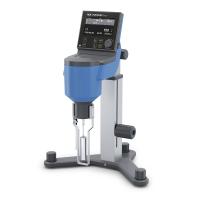
Then there is the problem of restoring the original structure of the ink, that is, to achieve the original viscosity . This shows that ink viscosity has a great relationship with gelation. The so-called ink viscosity refers to the physical quantity that measures the viscosity of ink called viscosity. There are many methods for measuring viscosity , generally there are capillary viscometer, small hole viscometer, rotary viscometer and rotating cone and plate viscometer.
Factors affecting viscosity are: viscosity is closely related to temperature, concentration , particle size, etc., and has little relationship with temperature and air pressure . The measurement accuracy and measurement unit of different measurement methods are different, and cannot be converted into each other. Ink is composed When these raw materials have been determined, the processing degree, method and composition of each component have been determined, the quality of pigment transfer is mainly related to the printing viscosity of the ink. Practice has proved that the ink printing viscosity has a certain range (11-24S, using Zahn Viscosity Cup No. 3), the greater the ink printing viscosity, the worse the pigment transfer effect. Because the role of the solvent is to dissolve the resin or additives and additives, give it fluidity, and make the pigment easy to disperse. When the printing viscosity of the ink is too high, the entire ink system is in an oversaturated state, and the fluidity of pigments and other substances is poor, and they cannot be evenly dispersed, but appear in agglomerates, which are easy to accumulate together, forming gelatinization, micelles, stacking, Aggregates such as swelling, so that the pigment cannot enter and exit the mesh smoothly. When the ink printing viscosity is too high, the pigment cannot even enter , let alone transfer. This is the so-called blocking phenomenon . Therefore, we only need to make the colloidal system composed of resin, pigment, etc. and organic solvent not be in an oversaturated state, but in a saturated or unsaturated state , so that pigments and other substances can be well dispersed in it to form a uniform and delicate Colloidal system, so that the pigment can go in and out of the mesh smoothly, and the problem of failure can solved. Some ink manufacturers suggest that the ink printing viscosity should be between 15 and 18S ( Zahn Viscosity Cup No. 3). But in practice, especially in high-speed gravure printing machines (printing speed is 100-260m/min), in order to ensure good transfer efficiencyInk printing viscosity is generally between 11 and 15S (Zahn Viscosity Cup No. 3) to find its satisfactory state point.
However, if the printing viscosity of the ink is too low, it means that the ink contains a lot of organic solvents , while resins, pigments and other components are relatively small, so that a smooth film cannot be formed during drying , and the printed matter will become white and dull. Matte, lack luster. Therefore, if the printed matter needs to have better gloss, it is generally necessary to consider using larger ink printing viscosity (13-19S Zahn Viscosity Cup No. 3). At the same time, under normal ambient humidity, the printing viscosity of the ink is above 16S (Zarn Viscosity Cup No. 3), and static electricity generally does not occur. Ink printing viscosity is below 16S (Zarn Viscosity Cup No. 3), as the viscosity becomes smaller, electrostatic phenomena such as whiskers, stripes, edge repulsion, flying ink, poor transfer, and extremely irregular will gradually decrease. occurred and aggravated. In view of the above-mentioned reasons, professionals in the industry believe that the satisfactory state point of ink printing viscosity is generally found between 11-17S (Zarn Viscosity Cup No. 3) . If static electricity occurs within this range, you can install a static removal brush, use an antistatic agent, etc. to eliminate static electricity, thereby promoting the normal printing fluidity of the ink. Prevent swelling and gelation, ensure the quality of printed products, improve effectiveness and yield , and create more benefits.