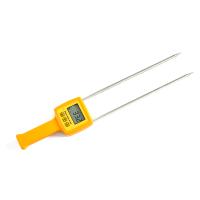
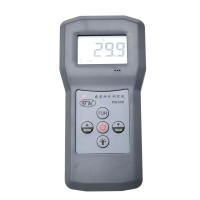
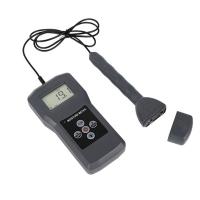
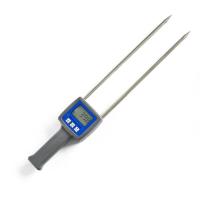
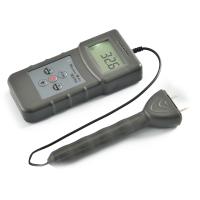
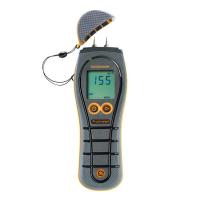
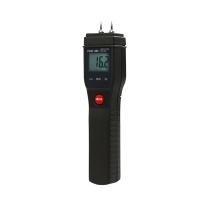
For lumber manufacturers, drying lumber is a daily process yet another one that can be maddeningly difficult to get just right. The importance of being able to monitor the shell and core moisture of wood panels in the kiln to be able to better optimize the wood drying process to maximize wood quality cannot be overemphasized. But how do you use a Moisture Meter in a kiln, let alone choose the right Moisture Meter for in-kiln moisture monitoring?
The answer to the first part of the above question is that you can't or at least shouldn't - try to use a wood Moisture Meter in a live kiln. At least, not directly. A hot water kiln is not suitable for a hygrometer, no matter how sturdy it is. Even though a wood Moisture Meter can take on the extreme conditions of a kiln, the person using it is at risk.
This is why in-kiln moisture monitoring tools exist, such as the KIL-MO-TROL system from Delmhorst. The KIL-MO-TROL system uses a series of insulated wires to remotely connect the wood Moisture Meter to the wood and planks that are drying in the kiln. The system allows woodworkers to test the moisture content of wood without ever stepping inside the kiln - creating real-time, real-time monitoring of the moisture conditions of the wood in the kiln.
However, getting the most out of an in-kiln monitoring system requires more than sticking probes randomly throughout the kiln. It takes choosing the right wood Moisture Meter for your wood and knowing how to select a sample and set up a probe so you can accurately measure shell and core moisture in your wood.
Choosing the Right Moisture Meter for Your Wood
When selecting a wood Moisture Meter to use with a kiln moisture monitoring system, it is important to consider the following factors:
The meter is compatible with your kiln monitoring system;
Calibration and species correction functions for wood Moisture Meters;
the overall reading accuracy of the meter; and
Temperature correction function of wood Moisture Meter.
Under normal circumstances, such as testing wood moisture content at room temperature, it is not important that the wood Moisture Meter has a temperature correction function. However, when testing moisture in a kiln, temperature extremes can affect the accuracy of the moisture content measurement to some degree - usually not by much, but enough to affect how you set the conditions in the kiln.
Species correction is important if the meter is not calibrated for the specific type of wood your lumber mill typically handles, or if you handle a variety of woods. Accuracy is important because using a wood Moisture Meter is not very good at giving you bad information about the moisture content of the wood.
Selecting a wood Moisture Meter that is compatible with your kiln moisture monitoring system is obviously necessary - but for some manufacturers this can be a difficult point. Delmhorst makes it easy to find KIL-MO-TROL compatible hygrometers by using the "Universal Probe Socket" design for all of the company's pin hygrometers and electrodes.
Any Delmhorst Moisture Meter with a universal probe socket can be connected to any Delmhorst probe - there is no need to pair a specific wood Moisture Meter model with a specific probe. Since all needle Moisture Meters from Delmhorst have a universal probe socket, they can be used with any Delmhorst electrode - including electrodes for the KIL-MO-TROL system.
One of Delmhorst's Moisture Meters for the KIL-MO-TROL kiln moisture monitoring system is the J-2000 meter. This particular wood Moisture Meter features species correction (for 50 different types of wood) and temperature correction - as well as the ability to store up to 100 cumulative moisture content readings. A built-in calibration check makes it easy to verify that the meter is providing accurate humidity measurements.
Kiln Moisture Monitoring Using Wood Moisture Meters
Once you have a wood Moisture Meter for your kiln moisture monitoring needs, how do you use it? The first step is to ensure that the kiln monitoring system is properly set up to obtain core and shell moisture readings at various points in the kiln.
The number of stations you set up, and the samples you choose, depends largely on several factors, including:
Total MBF of the kiln (1 MBF is 1,000 board feet)
which lumber has been sawn recently
The thickness of each piece of wood (as this affects the moisture content of any given sample).
Once a suitable sample has been selected, a set of insulated prongs should be inserted into the wood at each test station. One will collect data on shell moisture and the other will be driven deeper to collect core moisture data. Each station should be clearly labeled for later identification (station 1, station 2, etc.). This helps to improve record keeping in the future.
After selecting and installing an appropriate test sample, the wood Moisture Meter can be directly connected to the KIL-MO-TROL Kiln Moisture Monitoring System so the data can be read. Simply turn the dial to the desired test station and activate the meter. After each reading, record the number and turn the dial to the next test station and repeat until all test stations have been counted.
Using this information, you can adjust the kiln drying process to better balance shell and core moisture and avoid over drying the wood.