If you're an intrepid do-it-yourselfer getting ready to complete a major project involving wood, it's important to know how to measure the moisture content of wood for your DIY projects.
Whether you're making furniture or installing hardwood floors, moisture in wood is your main concern. Why?
For example, excess moisture can cause the wood to swell or warp. Or, if left alone for long periods of time, damp wood can even develop mold, essentially rotting from the inside.
With that in mind, how do you measure the moisture content of wood in DIY projects?
There are two methods, DIY applications of varying utility.
Method A: Oven Dry Test
One of the oldest methods of measuring the moisture content of any hygroscopic material is the oven dry test. This test has the two methods described in ASTM D4442, Method A and Method B (the "primary" scientific test and the "secondary" method, respectively).
The general strategy for oven drying trials is to dry the wood in a well-ventilated oven or kiln for an extended period of time. After each drying cycle, weigh the wood to verify its weight. Repeat the process until the weight of the wood stops changing.
By comparing the dry weight of the wood to the original weight of the wood, you can establish a very accurate original %MC for that wood.
For example, let's say you have a piece of wood that weighs 10 lbs, and put it through an oven dry test until it stops losing 9.5 lbs. In this case, the %MC of the wood is about 5%, since 0.5 lbs of the weight of the wood is water, and 0.5/10 = 0.05 or 5%.
In general, the oven dry test is considered an accurate method of determining moisture in hygroscopic materials such as wood - assuming the test is done properly.
However, DIYers generally dislike this method for the following reasons:
This is very slow. Testing for moisture by drying a wood sample can take hours, and the scour process destroys the wood by burning it.
Rendering tested wood was unusable in many instances. Although this process determines the %MC by water weight, overdried wood may not be usable for your original purpose due to heat exposure and rapid drying that may warp.
Not everyone has the right type of oven. A professional woodworker may only be able to use a kiln for drying wood, but a do-it-yourself stove may not have a vented oven, which is used to dry the wood evenly. Ovens that fail to maintain the proper temperature or provide adequate ventilation can skew test results.
These three issues alone are enough to deter most do-it-yourselfers from attempting the oven dry test method for woodworking projects.
However, there is a quicker way to check the moisture content of wood that is still reliable enough for your DIY wood project testing needs:
Method B: Wood Floors Using a Moisture Meter
Rather than spending hours carefully drying wood samples and weighing them to check their original moisture content, many DIYers are now using modern technology that allows them to quickly and accurately read wood %MC on the move.
There are many types of wood Moisture Meters, each with many different characteristics. These meters can be divided into two main categories by measurement method:
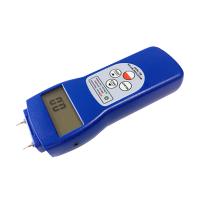
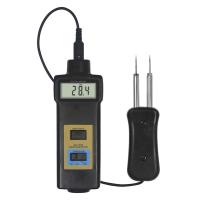
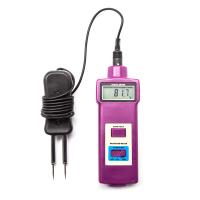
needle gauge. These devices use two or more electrodes to measure the moisture content of a wood sample. Since wood is a natural insulator and water is a conductor, the greater the resistance to electric current, the drier the wood and vice versa.
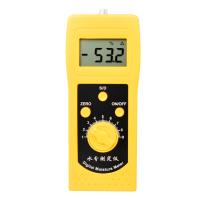
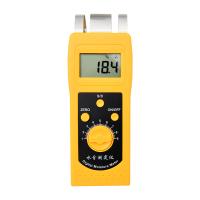
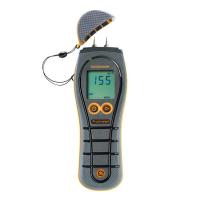
Needle-free Moisture Meter. These Moisture Meters, also referred to by some as "non-invasive" meters, use specialized scanning plates to pass electromagnetic waves through a sample of material and create a reading of the average moisture content in the scanned area.
These DIY Moisture Meter types have both advantages and disadvantages.
For example, pin gauges will leave tiny holes in the material they test because you need to penetrate the surface with an electrode to get a reading. On the other hand, pinless meters require full contact of the scanning plate with the material being scanned to obtain accurate measurements.
In most cases, using these meters is very simple.
To use a pin wood Moisture Meter, simply insert the pin into the material to be tested and activate the meter. The current will pass from one pin to the other and the meter will give a reading based on the resistance of the current.
With the pinless gauge, you simply press the base of the sweep plate firmly against the wood you are inspecting and activate the gauge. Again, the meter will run a scan and give you a readout you can use.
Pinless gauges are faster than pin gauges when scanning large areas because they can measure a larger area. Plus, they don't leave pinholes in the wood being tested - making them ideal for measuring moisture in beautiful hardwood floors.
Some gauges may have more advanced features based on their manufacturer, such as built-in temperature or wood species corrections. To use these features, you may need to consult your hygrometer's individual owner's manual.
All in all, a Moisture Meter is a fast, accurate, and convenient way for DIYers to check the moisture content of wood while on the go.