Leather has many different uses. From high fashion to furniture to car interiors, you can easily find a leather item or two just about anywhere. However, the process of making good leather goods is often long and involved - involving everything from shaving and preparing the leather to tanning, dyeing, shaping and retanning to achieve a specific finish or soften the leather.
Complicating matters further is the fact that there are many types of animal hides that can be used for leather - from common cow or pig hide to rarer, more exotic materials such as snake or crocodile hide.
One of the main challenges when it comes to tanning leather is that one mistake can ruin the product (or at least it can be difficult to fix). For example, if the wrong dye is applied, the leather will need to be bleached to remove the dye so it can be dyed again - this can affect the quality of the final finish by removing the leather's natural markings.
A common problem that can affect leather goods is the presence of leather - both in the air in which the leather and the finished product are stored. How does moisture in the air or in leather affect the quality and safety of leather goods? Some of the negative effects of moisture on leather are listed below:
Changes in the tensile strength of leather
Leather is generally very tough—after all, it's often used in wear-resistant applications such as motorcycle gloves, jackets, and other protective clothing to keep the wearer from falling in the event of a road rash.
Changes in ambient humidity conditions during tanning can have a dramatic effect on the tensile strength of the leather, making it easier or harder to break. This has been a well-known problem for decades. In fact, an old study on the effect of moisture on leather quantified the changes in tensile strength of vegetable and chrome tanned leathers that occurred at 21 degrees Celsius and under different ambient humidity conditions.
In this study, reduced humidity conditions negatively affected the ultimate tensile strength of the leather. At near 0 relative humidity (RH), vegetable tanned leather has a tensile strength of 4,630 lbs. Per square inch, the same leather has a tensile strength of 5,290 pounds per square foot at 83.8 RH. Inch - The difference in tensile strength of leather is close to 12.5%! Another test of chrome tanned leather showed a tensile strength of 3,170 psi. Inches near 0 RH, the tensile strength is 5420 psi. inches at 97.1 RH - about a 42% difference.
The importance of being able to maintain the proper moisture conditions cannot be overemphasized if you are to produce leather with the proper softness or strength for its intended use. Furthermore, the effect of humidity on chrome tanned leather is more noteworthy than on vegetable tanned leather.
mold and bacterial growth
One of the main reasons leather manufacturers tan leather is to turn organic degradable leather into an inorganic material that does not decay. However, prolonged exposure to high humidity can still promote the growth of mold and bacteria in the leather. Moisture inside the leather can also cause bacteria and mold to grow, which can corrode the material.
leather shrinkage
Leather is usually marketed based on its overall quality and surface area. In general, smaller leather pieces with holes or other quality issues are less important than larger pieces without defects.
The water in the tanned leather causes it to swell slightly, making the leather thicker. However, after the water is removed, the leather will shrink slightly. This can be a problem if the leather is sold in a water-swelled size but shrinks to a smaller size when it reaches the buyer.
To prevent potential problems, it may be necessary to check the moisture content of the leather prior to sale to ensure that the leather does not shrink after sale.
How to Check Leather Moisture Content
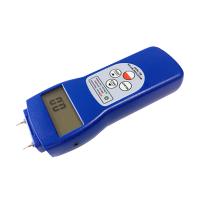
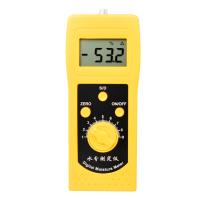
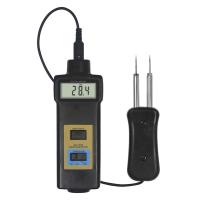
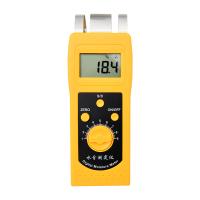
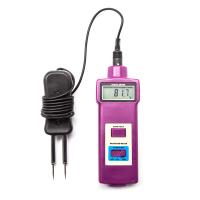
The quickest way to check the moisture content of leather is to use a specialized leather Moisture Meter. These hygrometers use a pair of electrodes to penetrate a piece of leather and pass a current between the two electrodes. The resistance to this current is used to determine how much moisture is present in the leather. The wetter the leather, the less resistance there will be.
By performing a quick moisture check on leather products throughout the tanning process, tanners can thus ensure that their products have the proper moisture content to maximize quality and prevent problems such as mold or bacterial growth during storage.
The process of using a leather Moisture Meter is simple: just place the needle/electrode of the meter into the leather and press the button. Once complete, the meter will give the user a measure of the moisture in the leather, which can be recorded and used to determine if the leather is too wet, too dry or just right.
How to Check Relative Humidity in a Tannery
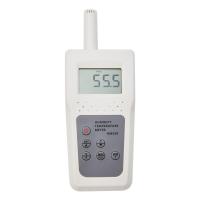
Given the effect of relative humidity on leather goods - especially chrome tanned leather, it is important to monitor RH as much as possible at the tannery. For this, special equipment such as a thermo-hygrometer is usually used.
To measure the relative humidity in a tannery, simply switch on the hygrometer, place it in a place with good airflow, for example near the center of the room, and activate it. A hygrometer will assess the RH of the room and provide a quick measurement that you can use to determine if steps need to be taken to adjust the humidity in the room.
While it may be tempting to place a thermo-hygrometer in the room to continuously read the tannery's RH levels, this is generally not recommended. Chemicals released from tanning vats can damage the RH sensor over time - this can make readings inaccurate. Simply use the hygrometer when necessary and store it in the storage case when not in use to extend the life of the hygrometer sensor element.