client needs
A customer asked NBCHAO: Spray conformal paint on the glass material, some places on the board will be coated with aluminum foil, and test the thickness of the conformal paint.
case analysis
The first point: determine the type of Thickness Gauge
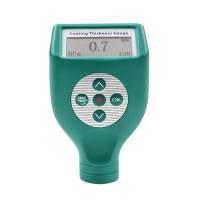
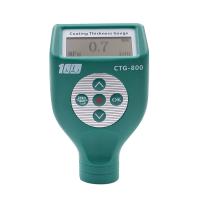
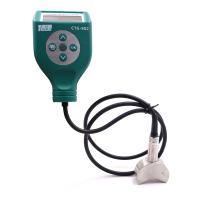
First measure the coating thickness of the three-proof paint film, so the choice must be a coating Thickness Gauge or an ultrasonic coating Thickness Gauge, not an ultrasonic material Thickness Gauge.
The second key point: choose the appropriate thickness measurement method
The thickness measurement principle of the Thickness Gauge is to choose according to the measured substrate material. In the case, the customer has two kinds of thickness measurement substrates, the first is glass material, and the second is aluminum foil .
1. If you want to measure the thickness of the paint layer on the glass material, you should choose an ultrasonic coating Thickness Gauge. At present, the ultrasonic Thickness Gauge that can be used to measure the coating on the glass substrate in CHINA is only the American Defelsko PosiTector 200 C series. Its thickness measurement range is 50~3800μm, and the accuracy is ±(2μm+3% of reading).

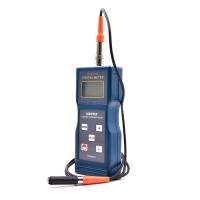
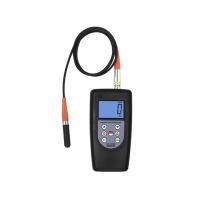
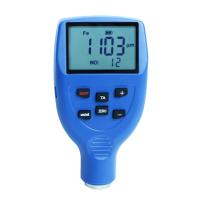
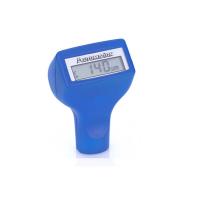
2. If the thickness of the paint layer on the aluminum foil is measured, the eddy current Thickness Gauge is selected. Aluminum foil is a non-magnetic metal substrate, so the principle of eddy current thickness measurement is used. However, there are 39 brands of eddy current Thickness Gauges available in NBCHAO Mall .

The third key point: the final choice of measurement area, thickness measurement range, and accuracy requirements
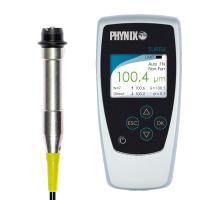
After determining the Thickness Gauge type and thickness measurement method, it is necessary to select the probe according to the size of the measured area, the range and accuracy of the thickness measurement, and the budget requirements to select the specific Thickness Gauge model. Since the customer has relatively high precision requirements for the product, the positector 6000 NS1 model was selected, the thickness measurement range is 0~1500 microns, and the accuracy is + (1 um + 1%) 0~50 um, + (2 um + 1 %) > 50um.