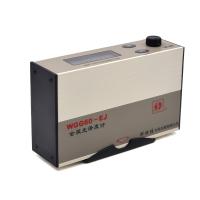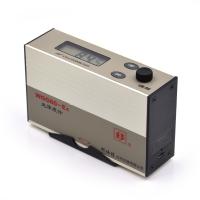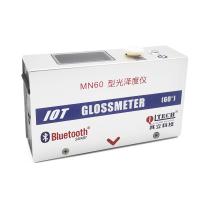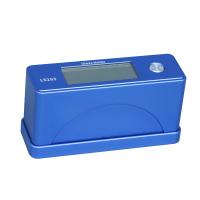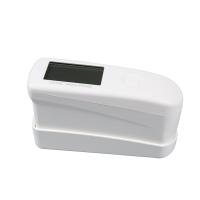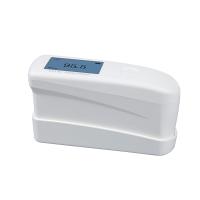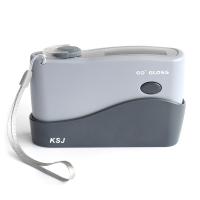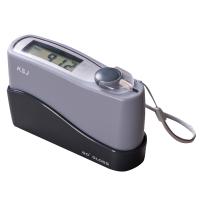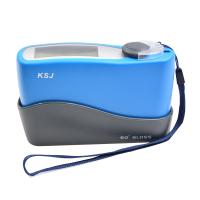
Gloss meter, as the name suggests, is a testing instrument used to test the glossiness of the surface of an object. It is widely used in automotive paint, furniture, electronic appliances, paint ink, paper, ceramics, marble and other industries. Gloss meter is divided into 20°, 45°, 85°, 60°, 75° according to different measurement angles. At present, NBCHAO Mall has 19 gloss meter brands for users to choose from, including imported and domestic products.
This article is compiled according to the common problems encountered by historical North and South Tide users when purchasing a gloss meter, and other users will refer to it in the future.
common problem
1. Can a gloss meter with an angle of 60° measure the gloss of orange paint or powder?
[Answer] First of all, all gloss meters need to require the tested items to be flat. After it is determined that the flat area is tested, it can be determined that it can be used. Furthermore, it is necessary to pay attention to the test caliber of the gloss meter, and the area to be tested needs to be larger than the test caliber of the instrument. Finally, if the gloss of the tested product is higher than 300, you need to use the smart NHG60 (test range 0-1000GU), otherwise you can use ordinary HG60 (test range 0-300GU).
2. I need to test the gloss of aluminum profiles for doors and windows, is the 3nh gloss meter suitable?
[Answer] Yes.
3. Will the strong light environment affect the measurement of the gloss meter? How to deal with it?
[Answer] The strong light environment will affect the measurement of the gloss meter. It is recommended to avoid the strong light environment for measurement. In addition, if you want to avoid the leakage of external light, you can use black flannelette around the measuring port to block the light.
4. Does Keshijia have a three-angle gloss meter that can calculate the haze value?
[Answer] Keshijia MG268-F2 model is a three-angle gloss meter with haze value calculation and percentage reflectance unit conversion functions.
5. Why is the gloss measurement divided into 20 and 60 degrees?
[Answer] A gloss meter measures specularly reflected light. What it measures is the light intensity over a small range of reflection angles. The light intensity depends on the material and the angle of incidence.
6. When to use 85 degree angle to measure gloss?
[Answer] 85° angle can measure low gloss surface (high diffuse reflection) or matte surface.
7. What is the glossiness standard of baking varnish products?
[Answer] Different products have different gloss standards.
8. It is used to measure paper gloss, which gloss meter should I choose?
[Answer] Choose a gloss meter according to the gloss level of the paper. A 20-degree gloss meter is used to measure high-gloss paper, a 60-degree gloss meter is used to measure semi-gloss, and an 85-degree gloss meter is used to measure matte surface paper.
9. What precautions should be taken when measuring paint gloss with a gloss meter?
[Answer] Please pay attention to the following points when measuring with a gloss meter: 1. The gloss meter is flat with the measuring surface, 2. The surface of the paint to be measured is dry, 3. When measuring the paint surface of a high-gloss paint, pay attention to maintaining the stability of the light source.
What is the difference between 10, 20°, 60° and 85°? How should I choose?
[Answer] The 60° method is suitable for the coating film of all colored paints, but the 20° and 85° methods are more suitable for the colored paints with high gloss or close to dull colored paints.
11. How to choose when measuring small-area devices and arc shapes?
[Answer] At present, there are some gloss meters with small apertures, such as WG60G gloss meter, the measurement aperture is only 1*3mm, so as to reduce light leakage as much as possible!
12. What kind of photoelectric gloss meter is used for gravure printing ink?
[Answer] The detection method of gravure printing ink can refer to GB/T 13217.2, which can be measured with a 60° gloss meter. If the surface gloss of the ink exceeds 70GU, it can be measured at 20°, otherwise, if it is lower than 10GU, it can be measured at 85°. If you have no idea before, please choose a 60° gloss meter first.
For more questions and answers about gloss meters, you can go to the product details page for more information.