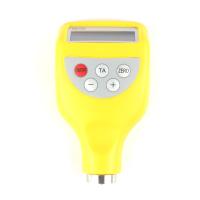
Conformal coating thickness is one of the important characteristics to ensure the long-term reliability of electronic devices. The importance of minimum coating thickness to provide the functionality required for conformal coating cannot be overemphasized, but if the conformal coating is applied too thick it can actually negatively impact your level of protection.
What conformal coating thickness should be used for good protection?
If we open the technical data sheet of any conformal coating, we will find the recommended coating thickness. It is usually specified as a thickness range rather than an absolute value. In order to understand why conformal coating manufacturers recommend a specific range, we need to look at some coating qualification standards such as IPC-CC-830, MIL-I-56058C or UL-746E.
These standards address various test methods for measuring conformal coating properties such as moisture and insulation resistance, dielectric withstand voltage, flammability (e.g. according to UL94), etc. All electrical, chemical and physical properties listed in the technical data sheets are measured and evaluated using these. standardized method. These measurements were carried out using different test samples coated with the thickness prescribed by the standard. The commonly used thicknesses are shown in Table 1.

Table 1. Conformal Coating Thicknesses Used for Standardized Test Methods
Coating Type Coating Thickness
AR - Acrylic 25-75 microns (1-3 mils)
UR - Polyurethane 25-75 microns (1-3 mils)
ER - Epoxy 25-75 microns (1-3 mils)
SR - Silicone 50-200 microns (2-8 mils)
XY-Xylylene 12.5-50 μM (0.5-2 mil)
SC-Styrenic Copolymer 25-75 μm (1-3 mil)
All coating material testing is performed within these thickness ranges, so it is a reference for manufacturers of conformal coatings to provide thickness ranges that guarantee given electrical and physical properties.
Indeed, the thickness values given in the technical data sheets are only recommendations and not requirements. In conformal coating applications, it is possible to deviate from these recommendations, but it is important to understand the potential consequences:
Low coating thicknesses, such as below 25 µm (1 mil), can be risky because dielectric strength and other physical properties are not tested according to standardized test methods. This doesn't mean that conformal coatings can't provide the protection needed for electronics, but standardized test methods don't extend to lower thicknesses.
A high coating thickness above the upper limit rarely provides additional protection to the PCB. Coating thicknesses above these upper limits tend to cause coating defects such as cracking, CTE mismatch and wrinkling and an increased likelihood of air pockets in the dried conformal coating film.
In conclusion, proper conformal coating thickness is an important one of all the variables in the conformal coating process. Since paint manufacturers perform all standardized testing within these ranges, the importance of maintaining conformal coating thicknesses within the ranges stated on technical data sheets cannot be overemphasized.
Also, contrary to this, the possibility of the aforementioned coating defects increases.