Methods for Measuring Conformal Coating Thickness
Proper, reliable function of conformal coatings is largely dependent on accurate coating thickness. Printed circuit boards (PCBs), associated wiring assemblies and similar electronic devices depend on accurate film thicknesses detailing their specific performance requirements. When determining coating thickness, it is necessary to keep in mind
If the conformal film applied is too thin, proper coverage is not possible as the PCB is susceptible to potential environmental risks,
Application of too thick a film can place disproportionate stress on components and solder joints, which can cause electronics-specific components to fail to function.
In either case, subsequent component non-functionality defeats the purpose of the coating.
Suggested coating thicknesses for the five main types of conformal coatings are provided in Table 1.
Table 1: Recommended Coating Thicknesses by Type
AR Type Acrylic 0.00118 to 0.00512 in.
ER Type Epoxy 0.00118 to 0.00512 in.
UR type polyurethane resin 0.00118 to 0.00512 in.
SR Type Silicone Resin 0.00197 to 0.00827 in.
Type XY Parylene 0.000394 to 0.00192 inches.
Quality Specifications for Coating Thickness
Every coating application has a quality specification for film thickness: the measurement of conformal films for PCBs is a key factor in conformal coating process control:
Coating thickness measurements are necessary to assess the adequacy of the coating's degree of protection.
Compare the actual recorded film thickness of the PCB to the specific job thickness requirements to ensure internal and international standards are met.
These specifications provide guidelines for measuring the thickness of conformal coatings and can be performed when the film is dry or wet. Typically, coating thicknesses are specified within the levels suggested in Table 1, depending on the material used for the film and the functionality of the particular component.

Dry film measurement
The PCB needs to be dry enough to be measured without damaging the conformal film. Several methods are commonly used to evaluate the coating thickness of conformal films. The easy way is to measure the PCB with a caliper, recording the existing dimensions before applying the conformal coating. Begin re-measuring the same area after coating and drying the assembly. Coating thickness was determined by averaging two measurements (before and after coating); film uniformity was assessed by standard deviation analysis. Conformal coating on both sides of the PCB requires dividing the total by 2 to accurately measure the thickness of the film.
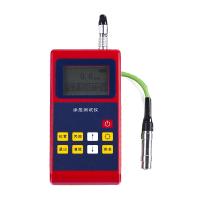
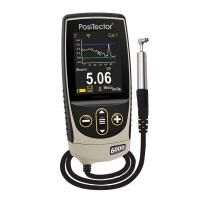
Test coupons yield reliable coating thickness measurements. Consisting of a non-porous material such as glass, metal, or very well, the same material as the PCB itself, test coupons are sprayed onto the PCB before and after a production run; they economically calibrate conformality for each condition coating thickness. Laying the test probe flat on the surface of the conformal coating produces measurements accurate to ±1 μm on films as thin as 25-50 μm. Micrometers and similar reliable gauges compare the PCB's cured coating to quality specifications; non-contact techniques use eddy current.
Wet film measurement
Wet film measurements allow operators to ensure quality control of coating thickness while the film itself is still wet. Wet film meters are used to measure conformal coatings that have not yet dried. Its general form is a comb with teeth unevenly separated from each other. Teeth are marked to measure in mils (1/1000th of an inch); teeth secured to wet conformal coatings record conformal coating thickness. For example, if a 1 to 10 mil wet film gauge used to measure a freshly coated wet PCB registers no coating on teeth 8-10, the conformal film is between 7-8 mils thick. This value is multiplied by the percentage solids in the coating; therefore, a coating with 20% solids will have a coating thickness between 1.4-1.6 mils. This equates to 35.56 - 40.64 microns @ 1 mil = 25.4 microns. Once mastered, wet measurements are relatively simple.
in conclusion
Measurement of conformal coating thickness on PCBs ensures compliance with internal and international standards, which is a key factor in conformal coating process control. Coatings on components that are too thin or uncoated—partially or completely—provide insufficient protection, limited insulation, and lack the remaining benefits of conformal coatings, regardless of material type. Often, the result of insufficient coating thickness is enough damage to cause PCB failure. Coatings that are too thick can also affect a component's ability to work, often causing significant stress on components and solder joints, which can also lead to failure. Therefore, it is necessary to select a thickness measurement method suitable for the covering material and the intended end use of the part to ensure the continued functional reliability of the product. The dry and wet methods described above yield a wide range of conformal coating measurement solutions.