When refinishing bathtubs or tile, it is important to follow the paint manufacturer's specifications for the thickness of the coat. It's not just a matter of applying the coating until it looks "good enough"; it's a matter of applying the coating until it hits the specs for great performance. If you don't follow this rule, you'll disappoint yourself, often in the form of failure.
When your bathtub and tile reclaimed coatings are applied at the proper thickness, the physical and protective properties of the coating material are optimized. Many problems can arise when you apply tub and tile surface coatings outside of the specified range. Here are some problems that can happen...
lack of coating thickness
In short, an insufficient coating thickness is "not applied enough". The goal here is to protect the substrate, and when not enough coating is applied, the "dry film thickness" cannot be achieved, thus resulting in performance thresholds below acceptable levels. Several problems can arise when coating films are applied below the recommended thickness range:
Brittleness of the coating
Physical properties suffer when you don't apply enough coats, which can cause the coating to become brittle, which can lead to cracking and delamination.
Substrate Visibility
If an adequate coat is not applied, the underlying substrate may be visible. How can this cause problems? Assuming you're applying the coating on top of an epoxy coating, the epoxy coating may chalk from exposure to light, which in turn can cause spotting and shorten the life of the coating.
Excessive coating thickness
Oftentimes, reconverters think they can just spray what they left in the container and they're just adding protection to the substrate. This is not true. In fact, more is "not better" and can lead to several failure modes.
run and sag
If too much coat is applied, it will run or sag on vertical surfaces. When the coating sags, it creates an uneven film surface with excess build-up in recessed areas and insufficient thickness in non-recessed areas. Insufficient thickness can result in what is discussed in "Lack of Coating Thickness" above.
cracks and delamination
When the coating is applied at a thickness higher than specified, it often leads to cracking, which in turn leads to delamination.
increased drying time
Drying and curing times are directly related to thickness. If too thick a coat is applied, it will delay dry time and cause debris to pick up, resulting in an unsightly appearance.
Improper curing
Coats applied too thick will not cure well. This can cause the fixture to be put into service before it has cured and eventually cause damage.
wrinkled
Too many coats can cause wrinkling. This means that the top layer of the coating (skin) dries, but the coating beneath the skin remains soft (uncured) due to less exposure to the atmosphere. When this happens, the surface shifts to create ridges and valleys in the coating known as wrinkling.
Prevent above by measuring coating thickness

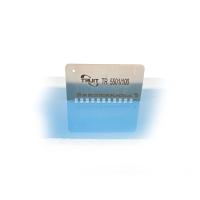
Coating thickness was measured using a "Wet Film Thickness Gauge". You will need to speak to the manufacturer of the tub refinish to obtain wet film thickness specifications for a particular coating, and if you have a technical data sheet for the product, the information should be there.
This may sound like a lot, but when you are first starting out on tub and tile refinishing; it is good practice to know your coating and its limitations. That doesn't mean you need to do this forever, but in the beginning it's safer than sorry. Like everything else, the more you groom, the better off you are. After a while, you'll know exactly how many coats to use and how many coats are needed to achieve the specified coat thickness.
in conclusion
The above are common examples of what can happen when you use tub and tile refinish paint outside of the prescribed limits. If you're not following the rules and experiencing performance issues, you need to consider whether to follow the manufacturer's thickness recommendations. Be objective when investigating failures and look at all the facts. If you find that coating thickness standards have been followed, review the prep work. You can read a great article about tub and tile refinish prep and coating failures here.