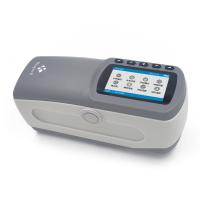
1. Classification of Colorimeters
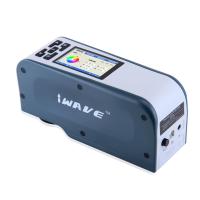
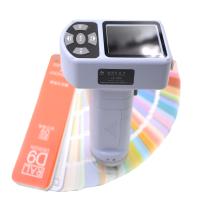
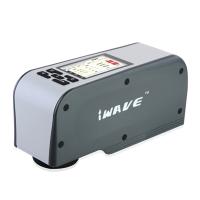
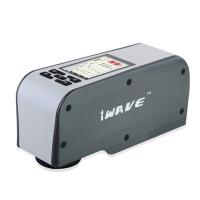
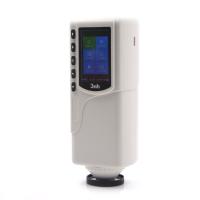
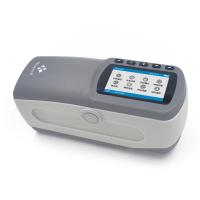
According to the performance parameters, accuracy range and use requirements, the Colorimeter can be divided into three types: the first is a handheld Colorimeter, also known as a color Colorimeter, which can directly read data, without connecting to a computer, without With software, easy to use, cheap, but low precision, it is widely used in the general field of color management; the second is a portable Colorimeter, also known as a portable Spectrophotometer , which can be connected to a computer in addition to directly reading data, with software, small size, easy to carry, high precision, moderate price; the third is a desktop Colorimeter, also known as a desktop Spectrophotometric color scheme instrument, which has a reading window, needs to use color measurement and color scheme software when connecting to a computer, has high-precision color measurement and color scheme functions, is large in size, stable in performance and high in price. At present, the most widely used by domestic printing companies is a portable color difference meter.
2. The principle of Colorimeter
The Colorimeter is an optical measuring instrument that simulates the human eye's induction of red, green and blue light. It can analyze the measured object from five angles, among which the habit is selected
Angles of 15 °, 45 °, 110 ° are analyzed.
All colors can be perceived and measured by any Lab color scale, the L axis is the brightness axis, 0 is black, 100 is white; the a axis is the red-green axis, positive values are red, negative values are green, and 0 is neutral color; b axis is the yellow-blue axis, positive values are yellow, negative values are blue, and 0 is neutral color. These rulers can be used to represent specimens
The color difference from the standard sample is usually identified by Δa, Δb, and ΔL. ΔE is defined as the total color difference of the sample, but it cannot indicate the offset direction of the color difference of the sample. The larger the value of ΔE, the larger the color difference. According to the Lab and Lch principles of the CIE chromaticity space, the Colorimeter can measure and display the color difference ΔE and Δa, Δb, and ΔL values between the sample and the standard.