Having trouble measuring your coating? We discuss how to measure thin film coating thickness.
At SilcoTek®, we specialize in applying ultra-thin coatings to stainless steel and other metal alloys, glass and ceramic surfaces. We routinely measure coating thickness as part of quality control and coating development. We understand that measuring thin silicon coatings can be tricky. Here are some tips on how to measure coating thickness.
In the early days of SilcoTek coating development (over 30 years ago), our knowledge of coating measurement techniques was limited to a few rather expensive test methods. We have found that other thickness measurement techniques do not have the precision and capability to measure ultra-thin silicon coatings on stainless steel. From the early days of trial and error coating development, we have learned what works and what doesn't in measuring CVD coatings.
Below are some examples of coating thickness measurement tools and methods.
Auger Electron Spectroscopy (AES)
This destructive technique is widely used in materials science to assess the composition of surfaces. It is also handy for assessing the precise depth of coating. The examples below show the composition and depth of Dursan coated samples. Note how the silicon/steel diffusion region is clearly delineated. Learn how SilcoTek creates diffusion zones by reading our coating techniques.
When a beam of electrons is focused onto a surface, AES technology measures the material that emerges from the surface. When sputtering material is emitted, an electron beam drills into the surface and passes through Detectors to measure material properties.

AES equipment is expensive and requires expertise to run. It can also be time consuming and destructive to surfaces, so AES is not a realistic quick measurement tool for field or production surface evaluation.
Sectioning and Optical Techniques
A proven method for assessing thickness. Cutting in half and measuring coating thickness optically can be an effective tool for micron-scale coating thickness measurement. However, it is difficult to measure the precise coating to the basal plane transition, and of course the test is destructive. Again not a realistic quick measurement tool. Accuracy is limited, especially when measuring sub-micron thick coatings.
F20 Thin Film Analyzer
SilcoTek's F20 Thin Film Analyzer is a benchtop tool that can be configured to measure film thickness (30Å to 350 mm), optical constants such as refractive index, extinction coefficient, and transmittance. SilcoTek uses it primarily as a fast, accurate and non-destructive method to measure surface thickness and ensure consistent coating quality. The analyzer relies on the refraction of light as it passes through thin surfaces, reflecting off the substrate and then passing through the coating again. This instrument measures the change due to refraction and correlates this change to a thickness standard. Substrate, surface roughness, and coating refractive index can play an important role in the effectiveness and reliability of this measurement technique.
X-ray fluorescence analyzers (XRF and ED-XRFA) and X-ray spectrometers
Mainly used in electroplating shops to measure the thickness of metal coatings, XRF can be a relatively low-cost method of measuring coating thickness. Bombarding the surface, coating and substrate material with X-rays produces X-ray fluorescence radiation. The coated surface will attenuate the substrate radiation, allowing the instrument to correlate the thickness between the coating emission and the substrate emission. The method is non-destructive and can be effective for submicron measurements. XRF can effectively measure most elemental and alloy materials, but not organic materials. This technique is commonly used in metal finishing operations.
Magnetic induction and pull-out gauges
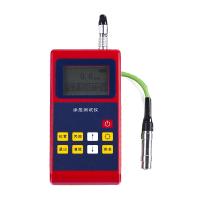
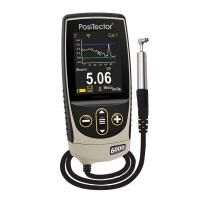
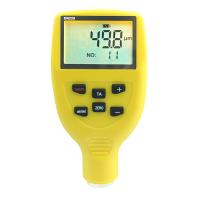
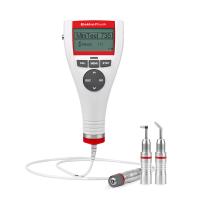
Magnetic-based pull-off or electromagnetic induction measurement tools rely on the difference between a magnetic base metal and a non-conductive coating such as paint. The thicker the paint, the less force it will take to pull the gauge apart. These can be effective field tests for rough assessment of coating thickness, but are not effective for extremely thin or conductive coatings. Electromagnetic measurement tools are accurate up to +1%.

Ultrasonic measurement
These handheld tools measure coating thickness on metal substrates, viz. For example, paint on wood surfaces. There is a quick, non-destructive method for measuring coating thickness, but it is not suitable for coatings on metal surfaces.
weight comparison
Basically measure the weight of the coated and uncoated parts. This method is a good method for measuring bulk coatings, but is not effective for precise thin film measurements or assessing precise thickness at specific locations.
ASTM method
Reading ASTM methods can be very helpful in determining and using approved thickness measurement methods for your industry and application. Some ways to help make thickness measurements easier are:
| ASTM method | describe |
ASTM E376-17 | Standard Practice for Measuring Coating Thickness by Magnetic Field or Eddy Current (Electromagnetic Test Method) |
ASTM D4138-07a (2017) | Standard Practice for Measuring Dry Film Thickness of Protective Coating Systems by the Destructive Cross-Section Method |
ASTM D7091-13 | Standard Practice for Nondestructive Measurement of Dry Film Thickness of Nonmagnetic Coatings on Ferrous Metals and Nonmagnetic Nonconductive Coatings Application to Nonferrous Metals |
ASTM D6132-13 (2017) | Standard Test Method for Nondestructive Measurement of Dry Film Thickness of Applied Organic Coatings Using an Ultrasonic Coating Thickness Gauge |
ASTM B748-90 (2016) | Standard Test Method for Measurement of Thickness by Measuring Sections of Metallic Coatings Using a Scanning Electron Microscope |
ASTM D8136-17 | Standard Test Method for Determination of Thickness and Thickness Variation of Plastic Films Using a Noncontact Capacitance Thickness Gauge |
ASTM D7378-16 | Predicted cured thickness of applied coating powders for thicknesses measured in standard practice |
ASTM B568-98 (2014) | Standard Test Method for Measuring Coating Thickness by X-ray Spectroscopy |
ASTM B567-98 (2014) | Standard Test Method for Measuring Coating Thickness by the Beta Backscatter Method |
ASTM E252-06 (2013) | Standard Test Method for Thickness of Foil, Sheet, and Film by Mass Measurement |
ASTM D5235-18 | Standard Test Method for Measurement of Dry Film Thickness of Microscopic Coatings on Wood Products |
ASTM D1212-91 (2013) | Standard Test Method for Measuring Wet Film Thickness of Organic Coatings |
ASTM D5796-10 (2015) | Standard Test Method for Measurement of Dry Film Thickness of Film - Film Rolls, Coating Systems by Destructive Means Using a Bored Apparatus |
ASTM D10 05-95 (2013) | Standard Test Method for Measuring Dry Film Thickness of Organic Coatings Using a Micrometer |
ASTM B487-85 (2013) | Standard Test Method for Measuring Thickness of Metal and Oxide Coatings by Sectional Microscopic Examination |