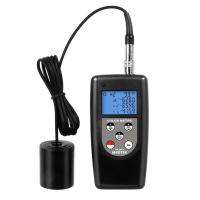
A Colorimeter is a light-sensitive instrument that measures how much color an object or substance absorbs. It determines color based on the red, blue and green components of light absorbed by an object or sample, just like the human eye. When light passes through a medium, part of the light is absorbed and, as a result, the amount of light reflected by the medium is reduced. A Colorimeter measures this change so that the user can analyze the concentration of a specific substance in the medium. The device works on the basis of the Beer-Lambert law, which states that the absorption of light transmitted through a medium is proportional to the concentration of the medium.

type
There are many different types of Colorimeters, including color densitometers, which measure the density of primary colors, and color photometers, which measure the reflection and transmission of colors. Styles include digital, also called laboratory and portable. Digital versions are often used for sampling in a laboratory setting or in the classroom for educational purposes. The portable version can be taken with you to test water and soil samples in the field, regardless of environmental conditions.
The Spectrophotometer , a type of photometer that measures light intensity, is often combined with a Colorimeter, but it is technically a different device. Both rely on the Beer-Lambert law to calculate the concentration of a substance in solution, but they do it in different ways. Colorimeters measure only red, green, and blue light, while Spectrophotometer s measure the intensity of any wavelength of visible light. In general, Spectrophotometer s are more complex and less robust than most Colorimeters; they should be handled with care and will require periodic recalibration.
How Colorimeters Work
At its most basic, a Colorimeter works by passing light of a specific wavelength through a solution and measuring the light on the other side. In most cases, the more concentrated the solution, the more light is absorbed, which can be seen in the difference between the light from the light source and the light passing through the solution. To find the concentration of an unknown sample, first prepare and test several solution samples of known concentrations. These are then plotted on a graph with concentration on one axis and absorbance on the other to produce a calibration curve; when testing unknown samples, the results are compared to known samples on the curve to determine the concentration. Certain types of Colorimeters will automatically create a calibration curve based on an initial calibration.
use
Colorimeters are used in a variety of industries and environments. The small, portable device can be used to analyze the color contrast and brightness on a TV or computer screen, and the user can then adjust the settings to obtain a very good quality image. In the printing industry, a Colorimeter is an essential element in a color management system. Other printing industry applications include checking the electronic components and quality of pulp paper and measuring the quality of printing inks.
Diamond merchants use Colorimeters to measure the optical properties of gemstones. In cosmetic terms, the device is used to measure the sun protection factor of products applied to the skin. Colorimeters can analyze skin color and tooth color to help diagnose certain diseases, and hospitals even use some type of device to test the concentration of hemoglobin in the blood.