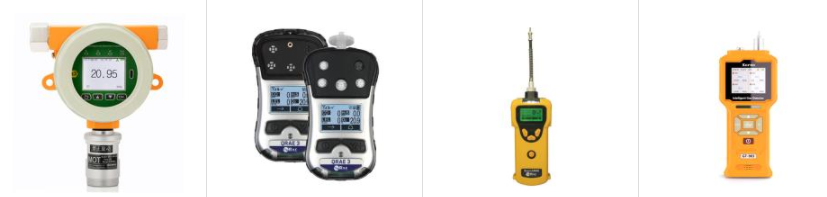
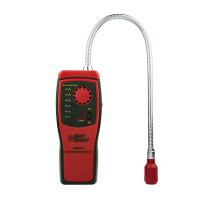
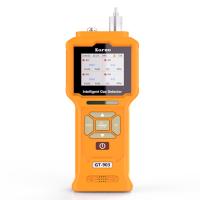
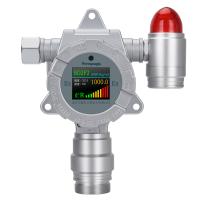
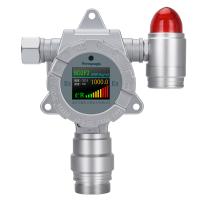
Some people think that a Gas Detector with a pump is much better - no pump means less accuracy, slower response, and doesn't detect much gas at all. Fact: Just because a Gas Detector has a pump doesn't mean it's more accurate, more responsive, or covers more area. But it will make some tasks easier and safer.
Exactly when and how to use the pump is a common question.
Why Use a Pumped Gas Detector?
Gas Detectors with pumps allow you to easily draw air into your location from unknown and potentially toxic or flammable atmospheres. You can then view the monitor's results in areas you know are safe.
The pump really keeps you out of harm's way.
Once you have evaluated the air sample using a Gas Detector with a pump and confirmed that it is free of any toxic or flammable gases, you can safely enter the testing area.
Pumped Gas Detectors keep you out of areas where potentially harmful gases may be present.
It is not uncommon for vessels to be lower and longer than 10 meters. In this type of confined space entry, a pump with a retractable probe allows you to slowly advance into the space using the front probe. This ensures atmospheric safety before the entrance.
Other times, the vessel may be tall and narrow, requiring entry from above. Using a Gas Detector with a pump and piping, you can check from above that the entire container is completely free of any harmful gases before entering.
In both examples, you allow the pump and sampling equipment to draw air into the Gas Detector before it enters, making the operation safer.
We have seen how a Gas Detector with a pump can make operation easier and safer. However, having a pump does not increase the detection range or effectiveness of the Gas Detector.
Whether you use a Gas Detector with a pump or a non-pumped Gas Detector, the sensors can only detect the gases they are in direct contact with.
Installing a pump on a Gas Detector will not increase the amount of gas seen by the sensor. Instead, the pump allows you to test the atmosphere at a distance from the Gas Detector.
So if you put two Gas Detectors side by side, one with a pump without a pipe connected to it, and the other with a pumpless Gas Detector, both will detect harmful gases quickly. Both will read the same.
What are the disadvantages of using a Gas Detector with a gas pump?
While a Gas Detector will detect gas in the same way, with or without a pump, a Gas Detector with a pump will definitely be larger and heavier.
Also, the pump will use some of the Gas Detector's batteries, reducing run time. Since workers typically wear Gas Detectors throughout the workday, which can extend to more than 12 hours, the importance of using Gas Detectors that are small, lightweight and operate throughout the shift cannot be overemphasized.
Most agree that it is better to keep the Gas Detector along with the pump where it is absolutely needed.
Additional considerations when using Gas Detectors with pumps
Once you have determined that you need a pumped Gas Detector, you need to make sure you are using the necessary accessories and protecting your pumped Detector.
If you're doing level entry or using a pump to inspect hard-to-reach areas, you'll want to use a probe. This could be a lightweight polycarbonate probe, an extendable stainless steel probe, or perhaps a probe designed to withstand high temperatures.
If you're doing vertical entry, you'll need some plumbing. Commonly you will use polyurethane and teflon lined tubing.
Polyurethane tubing is suitable for sampling gases, with the exception of chlorine, chlorine dioxide, hydrogen chloride, and volatile organic compounds (VOCs), which can be absorbed by the polyurethane tubing, causing inaccurate readings. Therefore, Teflon-lined piping is recommended for use with these gases.
Every time a Gas Detector with a pump and tubing is used, it is important to allow enough time for the gas sample to travel the length of the tubing and diffuse into the sensor.
A good rule of thumb is 6 seconds per meter of pipe, plus 2 minutes for the sensor to read and stabilize.
This means that if you have 10 meters of pipe attached to your pump, it will be 3 minutes before you get a gas reading at the end of that pipe.
Another important tip when using pumped Gas Detectors is to use dust filters and water stops at the end of the pipe or probe. In addition to preventing damage from dust and debris, it also prevents liquid from being sucked into the pump motor if the end of the pipe falls into any liquid.
Whether you work at a water treatment plant, verifying that tanks are free of gas prior to maintenance, or checking for leaks in the many hard-to-access valves and pipes in an oil refinery, using a Gas Detector with a pump will keep you out of harm's way.
For personal gas detection applications that do not require remote sampling, consider non-pumping Gas Detectors.