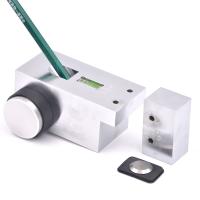
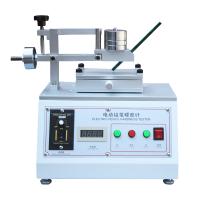
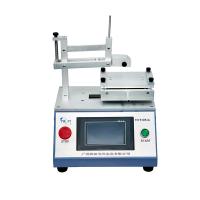
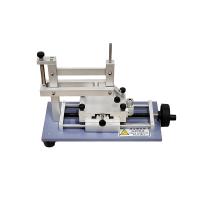
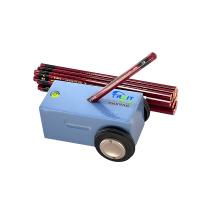
The pencil hardness test is an evaluation method used to determine the hardness of a material, usually a coating material. For the pencil hardness test, graphite pencils of different hardness are moved over the coated surface. Its hardness relative to graphite pencils is determined by the softest pencils, which will scratch the surface of the coating.
The test is popular in part because it's a portable process. Pencils are small, and if you use a mechanical stand to carry them, it's also usually compact and portable. Another reason is because it's simple. All that is required is a set of pencils and a person dragging the pencils through the coating material. These reasons make the pencil hardness test an excellent choice for testing coatings because it can be done quickly in the field.
Because of its simplicity, the pencil hardness test is subject to some variation from test to test and from Tester to Tester. It is absolutely critical that the pencil hardness test is performed the same way each time. Therefore, it is usually recommended to use some mechanical method for testing. The barrel is a mechanism that holds the pencil at a set angle and prevents it from slipping. Pen holders usually have wheels on them so that you can apply a smooth motion when trying to scratch the coating.
There is a range of pencils available, marked according to their graphite hardness. 6B is usually the softest pencil in a pencil Hardness Tester pack. Then, as the lead goes from 6B to 5B to 4B, the hardness of the pencil increases until they reach a single B. Then, the hardness continues as the pencil goes from HB to F to H to 2H to 3H and all the way to 9H. 9H pencils are usually the hardest.