Many custom medical carts are powder coated and as with any coating on any product, the powder coating we apply requires testing to ensure it will last.
Below is a description of some of the tests that our company typically uses to verify that powder coat coatings are within tolerances, cured properly, and ready to resist the environmental conditions your cart will be used in.
Adhesion test
The cross-hatch test is designed to test the adhesion of powder coatings to metal substrates. It is done by cutting a cross-hatched grid pattern all the way into the coating all the way to the substrate. Special pressure-sensitive tape is then applied to the cross-hatched area and quickly removed at an angle close to 180 degrees. The area is then inspected to see if any coating has been lifted off the substrate.
round shaft bending
This test checks the elasticity and adhesion of a powder coating to a substrate. The cured sample plate is placed into a small device that bends the plate onto itself. Coating should not crack or lose adhesion in flexed areas.
Impact test
Similar to the mandrel bend test, the impact test deforms a sample panel to test the adhesion of the powder coating. Place the sample plate in the testing machine and drop a ball on the testing machine to create a deep depression. Likewise, powder-coated finishes should not crack or lose bond to the substrate in the affected areas.
Durability Test
Salt spray test. This is a corrosion resistance test and is performed by marking a line or "X" on the surface of the finished powder coated panel. The panels are then placed in a chamber where a corrosive mist is applied. The panels are removed from the chamber at set intervals and the distance the coating "sneaks" away from the scribe line is measured and recorded. If the amount of creep does not exceed the allowable distance within a predetermined time interval, the panel passes the test.
MEK friction test
This test is used to ensure that powder coatings are properly cured to the substrate. Apply methyl ethyl ketone (MEK) to the surface of the part or panel and wipe with a cotton swab. Watch for degradation of the area or loss of paint adhesion to the substrate.
Color matching
Once our powder coated parts have cured and cooled in the oven, the finished color is compared to the approved color chip sample. This visual inspection is a common and quick way to check color. If discrepancies exist, the color can be measured using a spectrometer to provide data that can be compared to known samples and tolerance ranges for a particular color.
Gloss measurement
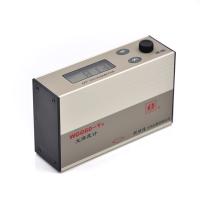
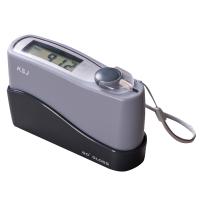
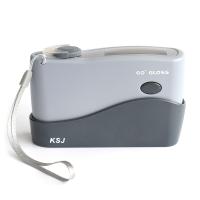
Verify the gloss of finished powder-coated parts by measuring the specular reflection of their surface. The test is performed using a gloss meter, which shines light onto the part's surface at a fixed angle and then measures the amount of light reflected from it. If the measurement is out of tolerance, it could be an indication that the powder coat has not cured properly.
Coating Thickness Test
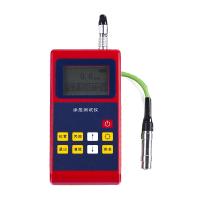
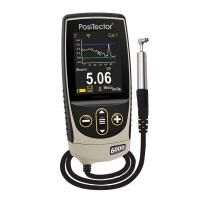
In order to obtain good coating performance, each powder needs to have a certain thickness range. HUI takes this measurement at two different stages in the powder coating process. Our powder room technicians use a dry sealer to take the first measurement as soon as the part comes out of the powder room. Technicians can then communicate to the painter whether they applied the correct amount of powder to the part.
This immediate feedback is beneficial because it catches possible lightly or heavily coated parts before the powder cures, and it is too late to fix the problem. After the part has cured, check the mil thickness again to confirm that the coating thickness is within tolerance for the specified powder.