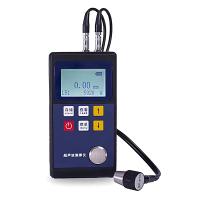
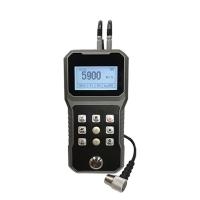
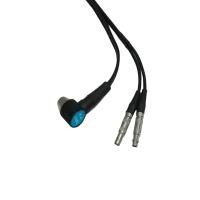
In the practical application of ultrasonic thickness measurement, especially in the detection of in-service equipment, if the indication value is distorted and deviates from the actual thickness, the result will cause hidden dangers in the pipeline equipment, that is, the pipe fittings will be replaced based on wrong data, resulting in a lot of material waste. According to our company's tracking and use of ultrasonic thickness measurement in the past few years, the phenomenon and causes of indication distortion are analyzed as follows:
1. Reason analysis of no indication value display or flickering instability: This phenomenon often occurs in field equipment and pipeline testing. After a large number of phenomena and data analysis, the reasons are summarized as follows:
(1) The surface roughness of the workpiece is too large, resulting in poor coupling effect between the probe and the contact surface, low reflection echo, and even failure to receive the echo signal. Most of the equipment and pipelines in service are corroded on the surface, and the coupling effect is extremely poor.
(2) The radius of curvature of the workpiece is too small, especially when measuring the thickness of small-diameter pipes. Because the surface of the commonly used probe is flat, the contact with the curved surface is point contact or line contact, and the sound intensity transmission rate is low (poor coupling).
(3) The detection surface is not parallel to the bottom surface, the sound wave encounters the bottom surface and scatters, and the probe cannot receive the bottom wave signal.
(4) Castings and austenitic steel have serious scattering and attenuation when ultrasonic waves pass through them due to uneven structure or coarse grains. The scattered ultrasonic waves propagate along complex paths, which may annihilate echoes and cause no display .
(5) The contact surface of the probe is somewhat worn. The surface of commonly used thickness measuring probes is made of acrylic resin. Long-term use will increase the surface roughness, resulting in a decrease in sensitivity, resulting in no display or flickering.
(6) There are a large number of corrosion pits on the back of the measured object. Because there are rust spots and corrosion pits on the other side of the measured object, the sound wave is attenuated, resulting in irregular changes in readings, or even no readings in extreme cases.
2. Analysis of the reason why the indicated value is too large or too small: In the actual inspection work, it is often encountered that the indicated value of the Thickness Gauge is obviously too large or too small compared with the design value (or expected value). The reason analysis is as follows:
(1) There is sediment in the measured object (such as a pipe). When the acoustic impedance of the sediment and the workpiece is not much different, the value displayed by the Thickness Gauge is the wall thickness plus the thickness of the sediment. (2) When there are defects (such as slag inclusions, interlayers, etc.) inside the material, the displayed value is about 70% of the nominal thickness (at this time, an ultrasonic flaw Detector should be used for further defect detection).
(3) The influence of temperature. Generally, the sound velocity in a solid material decreases with the increase of its temperature. According to experimental data, the sound velocity decreases by 1% for every increase of 100°C in a hot material. This is often the case for high-temperature in-service equipment.
(4) laminated materials, composite (heterogeneous) materials. It is not possible to measure uncoupled stacked materials because ultrasound cannot penetrate uncoupled spaces and does not propagate at a uniform velocity through composite (heterogeneous) materials. For equipment made of multi-layer materials (such as urea high-pressure equipment), special attention should be paid when measuring the thickness. The indicated value of the Thickness Gauge only indicates the thickness of the layer of material that is in contact with the probe.
(5) The influence of couplant. The couplant is used to exclude the air between the probe and the measured object, so that the ultrasonic wave can effectively penetrate the workpiece to achieve the purpose of detection. If the type is selected or used improperly, it will cause errors or the coupling mark will flicker, making it impossible to measure. In actual use, due to the excessive use of couplant, when the probe leaves the workpiece, the instrument indicates the thickness of the couplant layer.
(6) Wrong choice of sound velocity. Before measuring the workpiece, preset its sound velocity according to the type of material or reversely measure the sound velocity according to the standard block. When the instrument is calibrated with one material (the common test block is steel) and then measured with another material, it will produce wrong results.
(7) The influence of stress. Most of the in-service equipment and pipelines have stress, and the stress state of solid materials has a certain influence on the sound velocity. When the stress direction is consistent with the propagation direction, if the stress is compressive stress, the stress will increase the elasticity of the workpiece and accelerate the sound velocity; otherwise , if the stress is tensile stress, the speed of sound slows down. When the stress is inconsistent with the propagation direction of the wave, the particle vibration track is disturbed by the stress during the wave process, and the wave propagation direction deviates. According to the data, the general stress increases and the speed of sound increases slowly.
(8) The effect of metal surface oxide or paint coating. Although the dense oxide or paint anti-corrosion layer produced on the metal surface is tightly combined with the base material and has no obvious interface, the propagation speed of the sound velocity in the two substances is different, resulting in errors, and the error varies with the thickness of the covering. Also different. 3. Preventive measures and precautions for the distortion of the ultrasonic thickness measurement indication: Based on the analysis of the reasons for the distortion of the indication above, corresponding measures should be taken during the on-site inspection to prevent accidents or unnecessary waste. For this reason, according to the tracking and testing experience in the past few years, the following points are summarized as the preventive measures to prevent the distortion of the ultrasonic thickness measurement.
1. Correct selection of thickness measuring probe
(1) When measuring curved surface workpieces, use a curved surface probe sheath or select a small diameter special probe (φ6mm), which can accurately measure curved surface materials such as pipes. (2) For castings with coarse grains and austenitic stainless steel, etc., a coarse-grained special probe (2.5MHz) with a lower frequency should be selected. (3) When measuring high-temperature workpieces, a high-temperature special probe (300-600°C) should be used , do not use ordinary probes.
(4) When the surface of the probe is scratched, it can be polished with 500# sandpaper to make it smooth and ensure parallelism. If still unstable, consider replacing the probe.
2. Treat the surface of the inspected object
The surface is treated by sanding, grinding, filing and other methods to reduce the roughness. At the same time, the oxide and paint layer can be removed to reveal the metallic luster, so that the probe and the object to be inspected can achieve a good coupling effect through the coupling agent.
3. Correctly identify the material and choose the appropriate sound velocity
Before the measurement, it is necessary to find out what kind of material the measured object is, and preset the sound velocity correctly. For high-temperature workpieces, according to the actual temperature, the thickness value is corrected according to the corrected sound velocity preset or measured at room temperature. This step is very critical, and mistakes are often made due to ignoring the influence of this aspect in on-site testing.
4. Correct use of couplant.
First of all, choose the appropriate type according to the use situation. When using on smooth material surface, you can use low viscosity coupling agent; when using on rough surface, vertical surface and top surface, you should use high viscosity coupling agent. High temperature workpieces should use high temperature couplant. Secondly, the couplant should be used in an appropriate amount and applied evenly. Generally, the couplant should be applied to the surface of the material to be tested, but when the measurement temperature is high, the couplant should be applied to the probe.
5. Handling of special circumstances
(1) When the value is found to deviate significantly from the expected value during the test, an ultrasonic flaw Detector is used for auxiliary judgment. When it is found that there are corrosion pits on the back, the measurement of this area must be very careful, and you can choose to change the angle of the split plane for multiple measurements.
(2) When measuring a workpiece with a composite shape (such as a pipe elbow), the method introduced in [1, 1, (1)] can be used to select the smaller data as the thickness of the workpiece at the measurement point.
(3) The other surface of the workpiece to be measured needs to be parallel to the surface to be measured, otherwise a satisfactory ultrasonic response will not be obtained, which will cause measurement errors or no reading display at all.
(4) For laminated materials, composite materials and special internal structures, common instruments that use the principle of ultrasonic reflection to measure thickness are not applicable.