1.1 Applications
*Installed mechanical or permanent assembly components.
* Mold cavity.
* Heavy workpieces.
* Failure analysis of pressure vessels, turbogenerators and their equipment.
*Workpieces with very narrow test space.
* Bearings and other parts.
*A formal original record of test results is required.
*Material classification of metal material warehouse.
*Quick inspection of multiple measuring parts of large workpieces.
1.2 Product Features
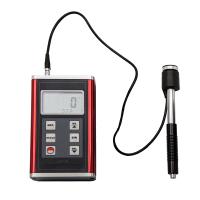
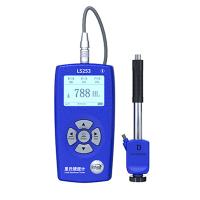
*Small size, easy to use in narrow space.
*The test material and test direction can be selected through the keyboard.
* It can realize mutual conversion between six kinds of hardness (HL, HRC, HRB, HB, HV, HS).
*The test results can be displayed repeatedly, and gross errors can be deleted.
*It can store 250 sets of measured values and test status, including material, test direction, hardness and other information.
* Allows user calibration to make measurements more accurate.
*With RS232 interface, it is convenient for computer communication.
* There is a backlight display, which is convenient for use in low-light environments.
*Manual and automatic shutdown function.
* Low battery voltage indication.
1.3 Main technical parameters
Display: 12.5mm LCD with backlight.
Accuracy: relative error ±0.8% (HLD=800), repeatability ±0.8%. Measuring range: 200-900 HLD
Hardness conversion: HL-HRC-HRB-HB-HV-HSD
Tested materials: 9 kinds
With RS232 interface
Can store 250 sets of measured values and test status
Impact device: D type, self-weight 75g
Power supply: 2 1.5V AAA batteries
Size: 146×65×36mm
Weight: 130g (excluding battery)
Working temperature: -10℃~+50℃
Storage temperature: -30℃~+60℃
Relative humidity: ≤90%
1.4 Measurement and conversion range

1.5 Product configuration

This article is mainly excerpted from " Leeb Hardness Tester Instruction Manual "