Q: Are there third-party results to support that Fence Electrode Technology is better than other available technologies?
A: Yes, Ion Science has been independently verified by the Maine Department of Environmental Protection (ME DEP). Contact info@ionscience.com for information.
Q: Can I detect individual chemicals with PID?
Answer: No, PID sensors are non-selective and non-discriminatory. If a chemical can be photoionized, then it will be sensed.
Q: Can I get a calibration certificate?
Answer: Yes. Please contact your local Ion Science Authorized Service Center. Note that there is a small fee.
Q: Can I get a replacement calibration certificate?
Answer: Yes. Please contact your local Authorized Service Center and request a replacement certificate. Please note that there is a small fee for this request.
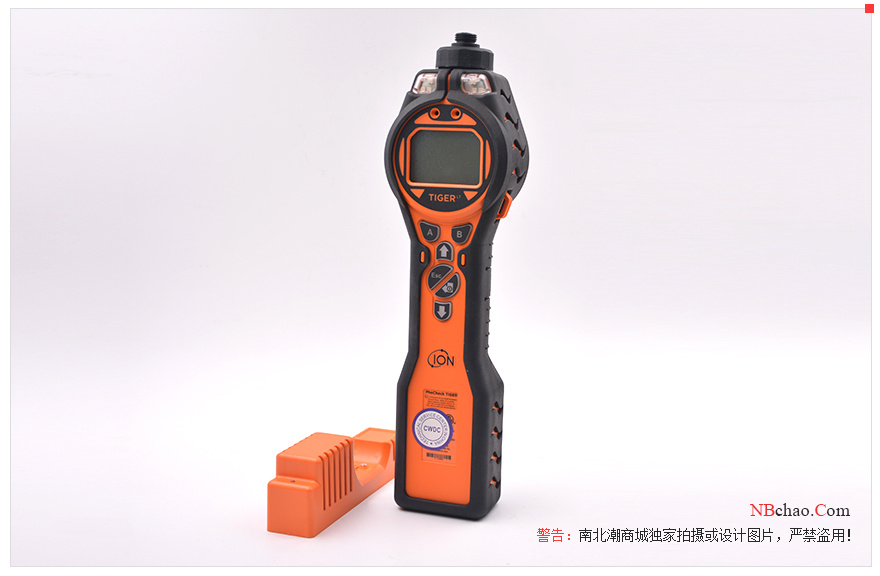
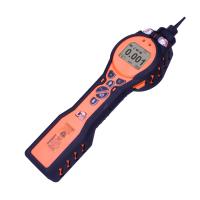
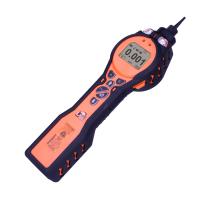
Q: Can I reuse the filter on the Tiger Gas Detector by turning it around?
A: We do not recommend switching the orientation of the filter as dirt/particles previously captured by the filter may be drawn into the instrument. After installing the filter, the orientation should remain the same.
Q: Can I get a copy of your instrument ATEX certificate?
Answer: Yes, please contact the customer service of the mall.
Q: Can I get evidence of IECEx certification?
Answer: Yes, please contact the customer service of the mall.
Q: Can I upgrade the firmware?
A: Yes, for Tiger Handheld VOC Monitor, Tiger Select Handheld Benzene Monitor, Tiger LT Handheld VOC Monitor and Cub Personal VOC Monitor. The instrument firmware can be upgraded through the PC software. Refer to the instrument user manual for more details.
For GasCheck G leak Detectors, GasCheck IS handheld leak Detectors and GasCheck Tesla helium leak Detectors, the firmware can be upgraded by your local Authorized Service Center
Q: Why can't I access factory calibration?
A: The factory calibration data is set during factory calibration and can be selected by the user at any time. Factory calibration can only be unlocked by an authorized service center.
Q: Does my Tiger gas detection instrument have peaking capability?
Answer: Yes. For details, please refer to the new user manual.
Q: How to operate/maintain 11.7eV lamps?
A: The typical lifetime of an argon lamp (11.7 eV) is several hundred hours. Argon lamps include high UV transmission windows made of lithium fluoride, which are susceptible to degradation by water vapor. Occasionally, exposure to high molecular weight VOCs, silicones or amines may reduce lamp output. However, lamps with lithium fluoride windows can only be cleaned by gently polishing the window surface with absolute ethanol or methanol on a cotton swab. Excess alcohol should be removed with lint-free paper towels. Argon lamps that are not in use should be stored in an anhydrous [anhydrous] environment to prevent the slow degradation of the lithium fluoride window caused by ambient moisture.
Q: How do I safely dispose of my instrument?
A: Ion Science is part of WEEE (Waste Electrical and Electronic Equipment). When meeting the WEEE Directive, our WEEE compliance partners collect our waste instruments and take them to registered recycling centres. The instrument is then broken down, recycled or disposed of properly. For safe disposal of old instruments, they can be returned to Ion Science (UK) for recycling. Note that shipping costs associated with returning tooling are paid by the sender. For more information, please contact the Ion Science UK office.
Q: How do I upgrade the firmware of my Tiger instrument?
Answer: The instrument firmware can be upgraded through PC software. Connect your Tiger to the Tiger PC and select "Install Upgrade" under the "Firmware" tab. Note that the data log will be deleted during this process, so important data files should be extracted prior to the firmware upgrade. Refer to the instrument user manual for more details. We recommend always keeping the firmware up to date to ensure new features and improvements.
Q: How to upgrade Tiger instrument function?
A: For information and pricing on feature upgrades, please contact your local reseller.
Q: How to upgrade Tiger PC software?
A: The Tiger PC software can be upgraded through the Tiger PC Help tab. Please select "Install Upgrade" and follow the on-screen prompts to complete the upgrade. For details on the changes, select Release Notes. We recommend that PC software is always kept up to date to ensure new features and improvements.
Q: How does PID work?
A: Photoionization detection, or PID, works by exposing a test gas sample to high energy UV light. In a process called photoionization, light selectively breaks down many volatile compounds, including most VOCs, into charged particles, or ions. The ions are attracted to the electrodes by the electric field, where they flow as small electric currents through the circuit. This current is proportional to the concentration of VOC. The MiniPID includes a third gate electrode (patented) to ensure that the amplified current does not include significant influence from other current sources such as water condensation on the walls of the PID housing.
Q: How does fence electrode technology improve PID?
A: The patented Fence Electrode PID from Ion Science eliminates the effect of water condensation on the PID response. This ensures a more stable response and clears the instrument in very humid environments.
Q: How often should my gas detection instrument be serviced?
A: Ion Science recommends factory service and calibration every 12 months. Please contact your local Authorized Service Center for more information. Between factory service and calibration, the user should implement a regular maintenance regime.
Q: How long should I let the Tiger unit charge?
A: The Tiger handheld VOC Detector should be charged for at least 7 hours before first use. To ensure a good charge, the Tiger should be turned off during charging. The Tiger will take longer to charge if you keep using it, but it shouldn't take any damage. Tiger should only be charged in non-hazardous environments.
Q: How often should I change the filter on my Tiger VOC gas detection instrument?
A: Filter replacement should be performed as part of routine instrument maintenance, or as soon as signs of contamination appear. Replacement frequency is typically after 100 hours, but this may vary depending on application and environmental conditions.
Q: Is Ion Science ISO certified?
Answer: Yes. You can view Ion Science's certificate of approval here: Ion Science ISO 9001:2008.
Q: Is my instrument software only compatible with certain operating systems?
A: Ion Science instrument packages are fully tested and compatible with new Windows operating platforms before release. For more information, refer to the instrument user manual, or contact Ion Science directly.
Q: How long will my PID light last?
答:10.6eV PID灯的连续使用寿命为10000小时。 11.7eV灯的寿命约为200小时。 11.7eV灯的预期寿命受到传感环境的影响,因为它们在受到污染时无法抛光。
问: MiniPID 2在潮湿的环境中读数很高,栅栏电极不会停止吗?
答:如果MiniPID 2 PID传感器在潮湿环境中读数较高,则可能是电极堆已严重污染并且应更换电极堆。
问:我的VOC气体检测仪显示!3错误。我该怎么办?
答:请联系您当地的服务中心并提供! 错误代码,除了仪器序列号,IRN和固件信息。
问:我的VOC气体检测仪显示!#错误。我该怎么办?
答:请联系您当地的服务中心并提供! 错误代码,除了仪器序列号,IRN和固件信息。
问:我的灯上有一个芯片。它仍然亮起,仪器读取气体还可以。我需要更换灯泡吗?
答:灯窗上的任何芯片都会降低传感器对可检测气体的响应。 它还可能导致气体泄漏路径,从而阻止传感器快速响应并清除。 更换显示任何可见缺陷的灯。
问:我的Tiger检测仪正在显示!1错误。我该怎么办?
答:请联系您当地的服务中心并提供! 错误代码,与仪器序列号,IRN和固件信息相关。
问:我的Tiger气体检测仪显示!2错误。我该怎么办?
答:错误!2表示电池通信存在问题;这意味着Tiger处理器无法与电池组中的芯片通信。您可以检查各种区域以帮助确定可能的原因和解决方法:1。检查两个通信触点是否干净,状况良好并且接触良好。 (通信触点是电池组中间的两个并排)2。请检查主PCB上暴露的金针和电池组连接的金针,以确保它们没有损坏,弯曲,缺失,肮脏或修复。任何阻抗都会影响电池连接。请检查所有金针,包括2排针脚中心的2个。 3.将已知工作电池组安装到仪器上,以便确定故障是否与电池或仪器有关。 4.将已知的工作仪器安装到原始电池组,以便您可以识别故障是否与电池或仪器有关。 5.您也可以尝试将电池和仪器一起挤压,看看两者之间是否存在接触不良的问题。如果问题仍然存在,请联系您当地的服务中心并提供!错误代码,以及仪器序列号,IRN和固件信息。
问:我的Tiger气体检测仪显示异常读数。我该怎么办?
答:重新校准仪器并监测读数。 如果问题仍然存在,可能需要进行仪器维护,例如更换电极组或清洁灯泡。 请联系Ion Science或我们当地的服务中心获取进一步的帮助。
问:我的Tiger仪器显示泵误差。我需要做什么?
答:泵错误表示系统内可能存在堵塞或泄漏。首先,我们建议检查以确保仪器的入口和出口没有被堵塞或限制。接下来,请检查探头入口处的PTFE过滤器,看是否需要更换。然后,请检查传感器舱和MiniPID电极组内的蓝色传感器密封是否有损坏,变色或残留的迹象。可能需要进行一些简单的用户维护。
问:即使在完成自定义校准后,我的Tiger仪器读数也非常高。我该怎么办?
答:首先,确保测试区域合理地不含VOC。 可能需要将仪器移动到其他位置。 接下来,请检查仪器上是否选择了正确的“RF”。 如果读数仍然很高,则自定义校准可能不准确。 将仪器设置为出厂校准,并在暴露于已知气体浓度时观察仪器响应的行为。 如果仪器响应范围(9999),请确保不存在高浓度的VOC。 如果读数非常高,请重新校准仪器上的自定义校准并监测读数。 如果问题仍然存在,可能需要进行仪器维护,例如更换电极组或清洁灯泡。 请联系Ion Science或您当地的服务中心获取进一步的帮助。
问:我的Tiger仪器无法启动。我需要做什么?
答:首先,我们建议使用Ion Science Tiger充电组件(锂离子电池)或更换碱性电池(碱性电池)确保仪器已充满电。 接下来,尝试将已知的工作电池装入仪器。 如果问题仍然存在,请联系当地的授权服务中心获取进一步的帮助。
问: Tiger PC显示“读取仪器配置时出现问题”错误。我该怎么办?
答:此错误表示仪器已连接到错误的PC软件。 Tiger和Select只能与Tiger PC软件通信。 Tiger LT只能与Tiger LT PC软件通信。 如果问题仍然存在,请与当地服务中心联系,并确保提供所观察到的错误消息的屏幕快照。
问: Tiger PC显示“无法打开指定的”错误。我该怎么办?
答:此错误表示您的PC上未正确安装Tiger PC。 请卸载并删除现有版本的Tiger PC。 然后,重新下载Tiger PC,确保从zip文件中提取所有内容,然后运行setup exe文件。 如果问题仍然存在,请联系当地经销商以获得进一步的帮助。
问: PID检测到什么?
答:通过PID检测大多数挥发性有机碳化合物。 11.7 eV(氩灯)供电的PID检测除甲烷,乙烷和大多数碳氟化合物外的所有化合物。 10.6 eV(氪)PID还没有检测到一些其他的C1和C2化合物,如甲醇和乙炔,以及许多腈和氯碳化合物。
问:什么是响应因子?
答:响应因子是无量纲数,其将微型PID传感器响应与特定挥发性化合物相对于传感器异丁烯响应相关联,以使仪器能够显示特定挥发性化学物质的浓度。 响应因子值由化学结构和性质估算,或由Ion Science直接测试。 对于10.0eV,10.6eV和11.7eV PID变体,气体的响应因子是不同的。
问:虎牌voc气体检测仪的最低灵敏度是多少?
答:Tiger的标准最低灵敏度为0.1 ppm。 通过功能升级可以远程将Tiger升级到PPB灵敏度(0.001 ppm)。 请联系您当地的经销商以获取更多信息。
问:我需要什么样的响应因子?
答:我们的网站上提供了可搜索的数据库。 如果找不到您的化学品,请通过info@ionscience.com与我们联系,并告知化学品名称,配方和('CAS号'),以确保我们的建议没有歧义。
问:我的Tiger VOC气体检测仪有哪些固件版本?
答:初始启动期间和Tiger PC的摘要页面上,仪器上会显示固件版本。
问:我在哪里可以找到我的Tiger仪器IRN?
答:IRN出现在初始启动期间,仪器的信息屏幕和Tiger PC上的摘要屏幕上。
问: Tiger仪器可检测哪些气体?
答:请参阅Ion Science网站上的气体列表,或者参考技术文章TA-02。
Q: What lamps can I use with my Tiger VOC Detector?
A: Tiger can be configured with 10.6eV, 10.0eV or 11.7eV bulbs (sold separately).
Q: Why does the instrument response seem lower than before?
Answer: The possible cause is contamination of the lamp window and reduction of lamp output. If you clean the bulb window and the output signal is still low, you need to replace the bulb and/or chimney. If there are any spare lamps and electrode stacks, then a simple test will confirm which component is faulty.