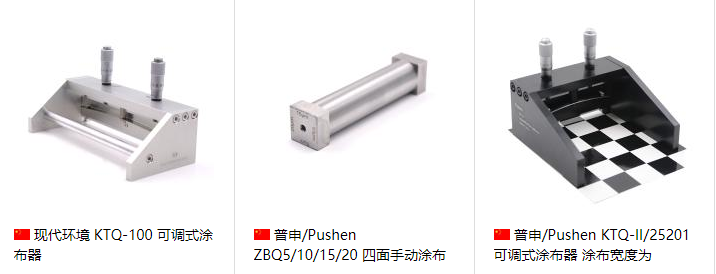
Wet Film Thickness, WFT, is the measured thickness of any liquid-based wet coating. When applying the coating, the applicator should use a wet Film Thickness Gauge to ensure that the measurements represent the calculated wet film before significant solvent evaporation occurs. Even a slight delay in taking wet film thickness measurements can result in falsely low readings as the solvent may have evaporated from the film before the measurement is obtained, which is why WFT gauges are largely considered Film Applicators The reason for the tool rather than the checker gauge.
Why is WFT important? Measuring the WFT of a coating enables the applicator to adjust gun speed, number of sprays and gun adjustments (if possible) or select another spray head to apply the correct amount of coating to achieve the specified dry film thickness.
What is the relationship between WFT and production? time is money. The need to use build-up coatings or worse, the need to reduce thickness (by sanding) hampers production and reduces profitability. While under-thickness can usually be corrected by adding more coats, over-thickness can lead to solvent entrapment, flow and sag, and, if not corrected, can lead to sticking problems. Each of these events can negatively impact project schedules. Perhaps even more important to remember: The performance attributes of most coatings are based on achieving a specified dry coating thickness, and applying the correct wet film thickness can help meet this requirement. Measuring wet film thickness during application immediately identifies the need for in-process adjustments by the applicator.
How to calculate WFT? Paint manufacturers can indicate the wet film thickness range to be applied to achieve the desired dry film on the Product Data Sheet (PDS). However, many manufacturers only list the suggested DFT because the amount of thinner that the contractor will add is unknown, and that amount affects the target WFT. Specifications usually list the desired end result (DFT), not the means/methods to achieve it (WFT). A wet film thickness target (or range) can be calculated. The equations used to calculate the WFT are shown, with and without thinner addition. The dry film thickness range (per coat) is extracted from the specification or the paint manufacturer's PDS (whichever is the governing document), and the volume solids content is listed on the PDS.
What are the volume solids in the paint? An expression of the film-forming component of the S content of a coating in Volume Solids, or the solvent left after evaporation of the material from the applied coating. On a very basic level, paint contains solvents, resins, pigments and additives. The volume solids content is the non-volatile percent of the formulation and will remain on the surface after the coating has dried and cured.
no thinner:
Wet film thickness (WFT) = dry film thickness (DFT) ÷ volume percent solids
example:
Specified DFT = 3-5 mils
Volume Solids = 65% (0.65)
WFT = 3÷0.65 = 4.6 mils; 5÷0.65 = 7.7 mils
Based on this example, if the applicator applies 5 to 8 mils WFT, then a specified DFT of 3-5 mils should be achieved.
The equation used to calculate the target WFT for adding thinner in the shop or field requires that the volumetric solids content of the coating (as fabricated) be adjusted based on the volume of thinner added, as a percentage of the total volume of the coating.
thinner:
WFT = DFT ÷ (volume solid content ÷ 100% + % of added diluent)
example:
Specified DFT = 3-5 mils
Volume Solids = 65%
Thinner by volume = 20% (eg add 2 gallons of thinner to 10 gallons of mixed paint)
Step 1: (0.65÷1.20) = 0.54, or 54% adjusted volume solids based on 20% diluent addition
Step 2: 3 ÷ (0.54) = 5.6 mils 5 ÷ (0.54) = 9.3 mils
Based on this example, if the applicator applies 6 to 10 mils WFT, you should achieve a specified DFT of 3-5 mils, even if it is 20% thinner, which is part of the wet film rather than the dry film.
How to measure WFT? Wet Film Thickness Gauges are used to monitor the thickness of applied wet coatings to achieve a specified dry film thickness. They measure all types of wet organic coatings such as paints, varnishes and lacquers on flat or curved smooth surfaces. The units of measurement for these strain gauges are usually microns (μm) or mils. Wet film thickness is measured according to ASTM D4414, Notch Gages Standard Practice for Measuring Wet Film Thickness. Pictured is a gage typically used to measure WFT.
How to use WFT gage? Using a WFT meter is very simple. First, verify that the notches (teeth) are clean and free of any dried paint. Immediately insert the end of the gage vertically into the wet coating. Both end teeth will penetrate down to contact the underlying surface and will be wetted by the coating. Remove the gage and read the highest wetting step. If none of the numbered notches contains wet coating, rotate the gage head to the lower WFT range and re-measure. If all numbered notches contain wet coating, rotate the head of the gage to a higher WFT range and re-measure. A diagram depicting the correct use of the WFT gage is shown. The teeth of the gauge need to be wiped off after each reading.
What units are used when measuring WFT? Typical units of measurement are mils and microns. A mil is a unit of length equal to one thousandth (10 -3 ) of an inch (0.0254 mm). A micron is a unit of measurement equal to a length of 0.001 mm, or approximately 0.000039 inches. Its symbol is μm. 25.4 microns equals 1 mil.
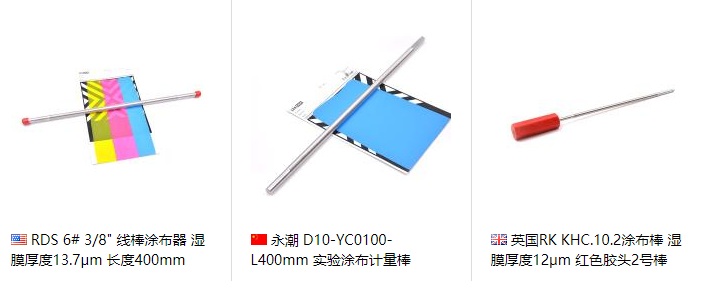
Conclusion: Calculating and properly measuring wet film thickness can reduce rework, increase productivity, and help ensure that coatings are applied correctly. The importance of proper use of a WFT gauge by a Film Applicator to achieve the desired dry film thickness cannot be overemphasized.


