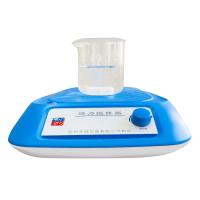
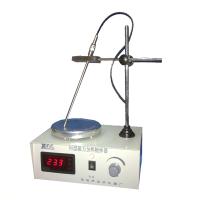
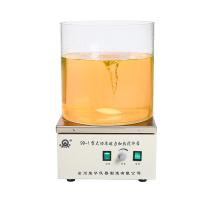
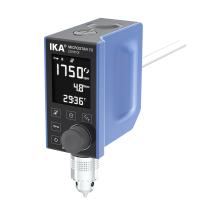
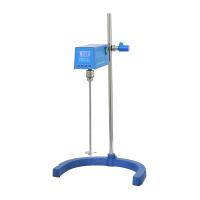
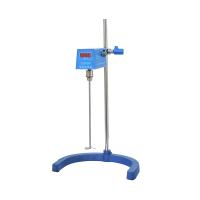
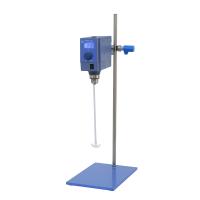
The agitator is actually an instrument that allows liquid and gas media to be forced to convect and mix uniformly. In general, the size, size and rotational speed of the stirrer have an influence on the distribution of the stirring power between the bulk flow and the turbulent pulsations. Usually, when the laboratory wants to prepare a small amount of specific grease or needs to develop a new grease, it usually needs to use a beaker container to prepare tens of grams or even one or two kilograms of grease. However, in this case, the mixing operation will have a certain impact on product quality and experimental results. In the traditional way in the past, people usually use stirring rod or paddle type or screw type electric agitator, but there is a problem that the effect of this type of agitator is not satisfactory. When preparing thick viscous grease, The problem becomes more prominent.
In order to prepare a small amount of special grease or to develop new grease, it is often necessary to use a beaker as a container in the laboratory to prepare tens of grams to one or two kilograms of grease. At this time, the mixing operation has a considerable impact on product quality and test results. In the past, people used stirring rods or paddle or spiral electric agitators, but the effects of these agitators were relatively poor, and the problem became more prominent when preparing viscous grease.
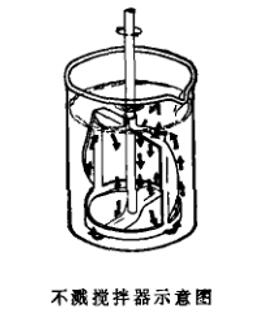
According to a paper reported at the 42nd Annual Meeting of the American Grease Society, they adopted a liquid agitator with a novel structure, the so-called splash-freestirrer, and the effect is very satisfactory. It is especially suitable for a small amount of lubrication. Stirring and mixing of fats. The structure and fluid circulation of this novel agitator are shown in the figure. During the mixing operation, the material is not easy to splash out, thereby increasing the filling capacity of the container. Due to the high mixing efficiency, the chemical reaction is relatively complete. This agitator does a great job of stirring the entire material from top to bottom even at low speeds. In addition, the agitator is mounted very close to the bottom of the vessel, thereby avoiding overheating and under-blending problems near the shaft, which are common problems with other agitators.
The application of this new type of stirring device can provide the grease required for normal production evaluation tests without the need for time-consuming extended tests. They used this mixer to prepare a variety of lubricating greases such as soap, polyurea, calcium-based compound grease, and dye thickener, and the results were very good.