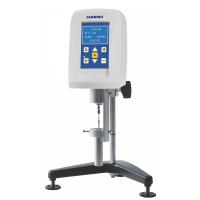
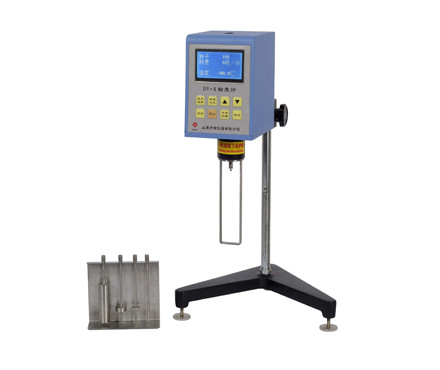
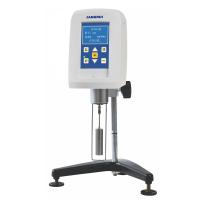
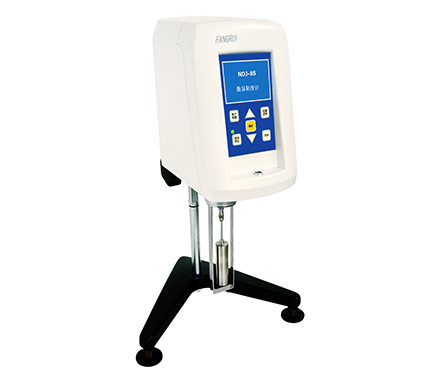
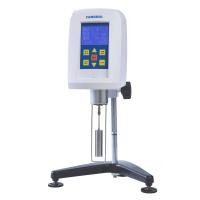
The viscosity of a liquid is a measure of the ability of the interaction between liquid molecules to hinder the relative movement between molecules. The viscometer is used to measure the conditional viscosity of the paint, that is, the amount of a certain amount of paint that flows out of a hole with a specified diameter at a certain temperature. The time is expressed in seconds. The viscometer is suitable for measuring paint products with a viscosity of not less than 20 seconds (based on this viscometer), and paint products with higher viscosity that need to be heated for measurement according to product standards.
Viscometer It is suitable for laboratories and factories to measure the viscosity of various Newtonian liquids and the apparent viscosity of non-Newtonian liquids. If a custom-made special drum is used together with a standard drum, it can measure the rheological properties of non-Newtonian liquids. . The instrument can measure the viscosity of petroleum, resin, paint, ink, paste, cosmetics, cream, asphalt, etc. For liquids with different viscosities, three different measuring accessories can be selected for measurement.
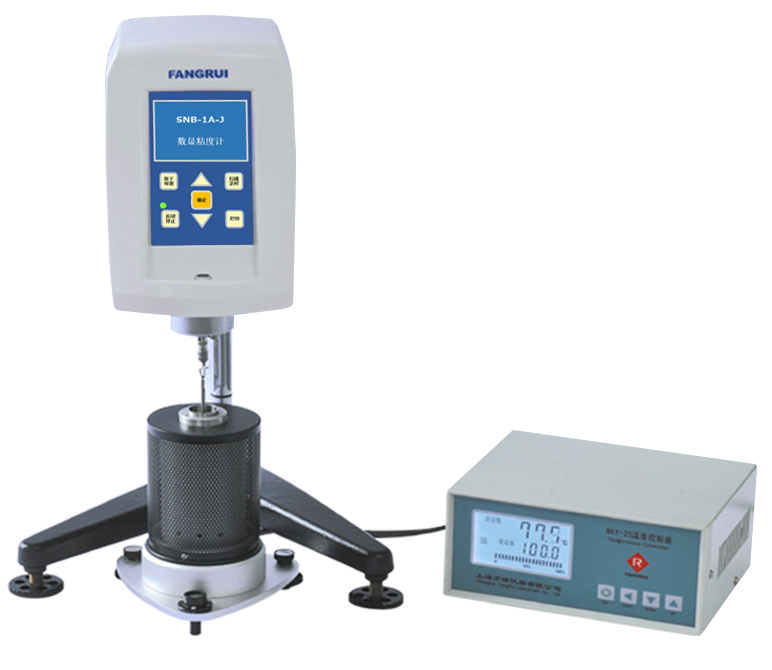
According to the measurement principle of the viscometer, in order to obtain accurate and reliable measurement data, the following points need to be paid attention to:
1. The performance index of the viscometer needs to meet the requirements of the national metrology verification regulations. The instrument in use should be periodically verified, and if necessary (the instrument is frequently used or in a qualified critical state), an intermediate self-inspection should be carried out to ensure that its measurement performance is qualified and the coefficient error is within the allowable range, otherwise accurate data cannot be obtained.
2. Pay special attention to the temperature of the measured liquid. Many users ignore this point and think it doesn’t matter if the temperature is slightly different. Our experiments have proved that: when the temperature deviation is 0.5°C, the viscosity value deviation of some liquids exceeds 5%. The temperature deviation has a great influence on the viscosity, and the viscosity decreases when the temperature rises. Therefore, special attention should be paid to keeping the temperature of the liquid to be measured constant near the specified temperature point, and it is best not to exceed 0.1°C for the measurement.
How to use the viscometer:
1. Clean the viscometer and adjust the two leveling feet until the water bubble at the top of the rotary viscometer is in the center;
2. Install the viscometer rotor protection frame on the Rotational Viscometer;
3. Screw the selected rotor into the connecting screw;
4. Plug in the power supply and turn on the switch button behind the viscometer;
5. Input the selected rotor number, and each time you press the rotor key, the rotor number displayed on the screen will change accordingly until the viscometer screen displays the selected rotor number;
6. Select the speed, press the "speed" key to set the speed, and press the TAB key to move to the tens, ones and tenths of the current displayed speed step by step. After selection, press ;
Press the number increase key or minus to set the speed of the tens, ones and ten digits. After the speed is set, press the speed key to confirm;
7. Turn the knob of the lifting frame to make the viscometer drop slowly, and the rotor is gradually immersed in the liquid to be measured until the mark on the rotor is level with the liquid level, and adjust the position of the viscometer to the level;
8. Press the measurement key, the stepper motor starts to rotate, and after a certain time, the current rotor, the viscosity value at this speed and the scale of the percent meter can be measured at the same time;
9. During the measurement process, if the viscometer needs to change the rotor, you can directly press the reset button;
10. After the measurement is completed, press the reset button and turn off the power switch at the same time;
11. Turn the knob of the lifting frame to make the viscometer rise slowly, and take out the measurement sample;
12. Remove the rotor of the cone-plate viscometer, and clean the rotor, instrument and test bench.