I used to think liquids were very simple things. Is that what you think? liquid
not so fast. Let's look at three properties of liquids and see if we change our perspective.
At CSC, we study the consistency, surface tension and viscosity of liquids.
As an indicator of consistency, sometimes defined as thickness or run, we use the Bostwick Consistometer. Producers of ketchup, soups, sauces, paints, liquid mixtures, etc. use the properties of Consistency to check the quality of their incoming and finished products.
Surface tension is the property of resistance to external forces on a surface and is something we measure with a duNouy ring tensiometer. Research and development projects for coatings, adhesives and surfactants use these measurements. Surface tension changes are fundamental in monitoring processes such as parts cleaning and electroplating.
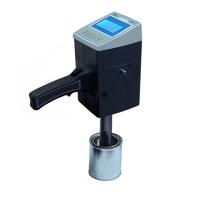
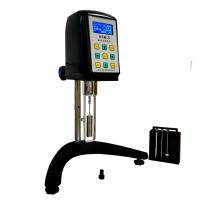
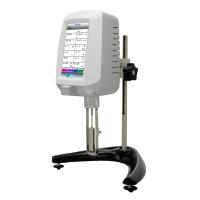
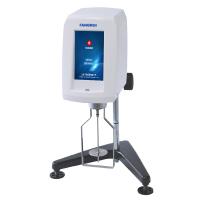
Viscosity, the measure of a liquid's resistance to flow, is the third liquid quality we use. This property is important in many foods, especially where flow is important. For pancake syrup, for example, the effectiveness of petroleum compounds depends on the viscosity as well as the design features of the liquid handling system.
We are constantly being asked how these attributes relate to each other. There are few factors that correlate among these attributes. First, there is the general impression of thickness - a liquid with higher viscosity usually means relatively higher consistency, but not necessarily higher surface tension. All three properties show an inverse relationship with temperature as temperature increases.
Aside from these associations, no across-the-board correlations exist.
This is due to the reasons behind each property. Consistency is a measure of how a liquid material responds to gravity. Surface tension, the resistance of a surface to external forces, is a result of molecular attraction and the level of hydrogen bonding. Viscosity's resistance to flow is a combination of molecular size and molecular shape.
Because of these differences, correlation or conversion of readings between properties of consistency, surface tension and viscosity is not possible except for liquids with very similar molecular structures, shapes and attractive forces. Some studies on selected alkanes have shown a linear relationship between the logarithm of surface tension and the inverse of viscosity, but for a narrow range of molecular structures.
So we need an answer - there is no general correlation between viscosity and consistency, viscosity and surface tension, or surface tension and consistency.
Measuring consistency and surface tension is simple, requiring only a fixed temperature to ensure consistent readings from test to test. Check out the video.
How to conduct a Bostwick Conformance Test
How to Perform a Surface Tension Test
Measuring viscosity adds several complications. First, there are several types of responses to the movement of liquids. Then there is the relationship between force and speed of movement.
Viscosity, because resistance to flow has two key aspects. The first is to measure the force required to move layers of liquid relative to each other. The second complication comes from the speed at which layers are moved.
When dealing with viscosity, two new terms come into play. The force required to move the liquid is called the shear stress, and the speed of movement is called the shear rate. The ratio of shear stress to shear rate (shear stress/shear rate) is the basis for the term viscosity.
Adding these two factors (force and velocity) starts to complicate the development of viscosity measurement. Also, there are different kinds of liquids. There are fluids whose viscosity remains constant at any velocity or shear rate, fluids whose viscosity decreases with velocity, another (as you might have guessed) that increases with shear rate, others include fluids whose viscosity changes over time With a given velocity and fluid, where the viscosity changes with velocity, but doesn't even start moving until a certain level of force is applied.
The first type is known as a Newtonian fluid: water, hydrocarbons, mineral oil, molasses, and resins are examples. A Newtonian fluid of this viscosity does not change with changes in rpm/velocity.
The second type falls into a class called non-Newtonian, and within that class there are several types of non-Newtonian fluids, some examples include.
Groups of fluids in which velocity increases and viscosity decreases are called shear thinning or pseudoplastic; for example, ketchup, paint, nail polish, and polymer solutions.
Next is a liquid that increases in viscosity with increasing speed, called Dilatant (almost like a dandy - Dilettante) or Shear Thickening; this includes silica, ethylene glycol, cornstarch solutions, and some slurries.
A liquid that undergoes a change in viscosity as a constant stress over time is called T thixotropic, less viscous if it decreases, or R heopctic if it increases. Examples include inks, clays, and drilling muds.
ketchup is a plastic liquid
Finally, some fluids require a certain amount of pressure before they can flow, called plastics. This type includes gels, latex paints, lotions and toothpastes. (Just to complicate matters, the fluid can be plastic and another non-Newtonian fluid, usually pseudoplastic or thixotropic.)
Viscosity measurement = concise anthropomorphism, right?
These details of the basic two-phase measurement requirements (stress and velocity) of viscosity and the complex behavior of different fluid classes hopefully illustrate that the lack of a direct correlation between viscosity and surface tension and consistency is based on these fundamental differences. Three properties of liquids.
I hope this helps shed light on why there is no general correlation between these three properties, and that the requirements of the instruments that measure them are significantly different.
Now you can probably understand why I keep getting confused about the promise of this test device.