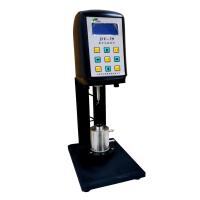
Is your viscometer nearing the end of its life? Do you feel your recipe for 'trial and error' rheology is becoming obsolete? Do you have a long-standing product performance question that you think rheology might have the answer to?
If the answer to any of these questions is yes, then the user may need to evaluate the capabilities of a modern rheometer versus a low-cost viscometer.
The design and functionality of rheometers has advanced significantly over the past decade. Modern instruments have a wide range of test functions included in the software, making them accessible to novice users. These systems facilitate the industrial application of rheology and provide more cost-effectiveness than viscometers can, from research and development, formulation to production. This article discusses the top five measurements made by rheometers that make them superior to viscometers.
Wider measurement range - expand your viscosity flow curve
The wider measurement range enables relevant data to be obtained by exposing samples to conditions similar to those applied during product manufacture or use. For many industrial products, viscosity is a key performance-defining parameter.
The viscosity of a Newtonian fluid is independent of the applied shear rate, such as water. Conversely, non-Newtonian materials exhibit lower viscosity at higher shear rates (shear thinning), or less generally exhibit an increase in viscosity with applied shear rate (shear thickening). Knowing the properties of a material under the conditions of a routine application helps to understand its behavior during use or handling. Obtaining this information is a challenging task for non-Newtonian materials compared to Newtonian materials.
Generating a flow curve, which is a plot of viscosity as a function of shear rate or shear stress, is one of the easiest ways to analyze viscosity. The sample can be subjected to different shear stresses and the resulting shear rate measured at each applied stress or sample can be subjected to a controlled shear rate and the resulting shear stress measured. A more comprehensive flow profile can be produced using a rotational rheometer because it is able to cover a wider range of shear rates and stresses than a Rotational Viscometer. Specifically, data can be generated at extremely low shear rates relative to storage and movement under gravity (Fig. 1).

Figure 1. By spanning a wider range of shear rates than viscometers, rotational rheometers are able to provide data directly related to more processes.
eye surgery
Opthalmic viscosurgical devices (OVDs) are gels or viscoelastic solutions applied during ophthalmic surgery. They are usually aqueous polymer solutions consisting of one or more of the following ingredients: chondroitin sulfate, hyaluronic acid, and/or methylcellulose. The ISO 15798:2013 standard covering OVDs recommends rheological measurements because product rheology has an impact on in-use performance. The behavior of the fluid in the anterior chamber and when administered into the eye through a cannula can be determined by performing steady state tests at shear rates of 0.001-100 s −1 . Typical Rotational Viscometers cannot go into the lower end of this range.
Flow curve data for three OVD formulations, each with different concentrations of hyaluronic acid (15 mg/ml, 18 mg/ml and 25 mg/ml), are shown in Figure 2. Malvern Panalytical' Kinexus rotational rheometer For the measurement of stability the state viscosity at different shear rates at 25 °C was measured using a cone and plate measurement geometry. The samples exhibited similar shear thinning behavior, but more concentrated solutions exhibited higher viscosities. Interestingly, all samples exhibit Newtonian behavior at very low shear rates. This characteristic cannot be detected with a viscometer. It revealed that OVD does not have a gel-like structure when the eye is at rest, but remains fluid.

Figure 2. Equilibrium flow curve data showing the shear thinning behavior of 25 mg/ml (#), 18 mg/ml (+) and 15 mg/ml () HA solutions, and their Newtonian behavior at very low shear Typical ratio at rest of the trending eye.
Correlative Yield Stress Measurements - Generate accurate data for every sample type
The consumer appeal of many products depends on their yield stress, which is the input stress required to break down any solid-like (network) structures in the product and make them flow. Accurate and relevant measurement of yield stress using the proper technique facilitates faster and more efficient formulations. After viscosity, yield stress is probably the most routinely measured rheological property because many consumer products have value derived from it.
Many cosmetics and many food products, such as yogurt, mayonnaise, ketchup, are rich and thick in a pan or on a plate (while still). However, cosmetics can be easily applied on the skin, or food can be easily dispensed because they have a more liquid-like behavior when shear is applied. Yield stress and yield strain (the strain at which yielding occurs) are also used as measures of strength and brittleness, respectively.
Yield stress varies with temperature and the timescale of applied stress or deformation. There are various techniques that can be used to measure yield stress. By applying a wide range of these methods, rotational rheometers can provide more relevant yield stress data than Rotational Viscometers. Applying a stress ramp is one of the easiest ways to stress control a rotational rheometer. The method involves subjecting the sample to gradually increasing stress, measuring the resulting strain, and calculating the peak viscosity (Figure 3). The effect of time scale on the measured values can be assessed by carefully controlling the stress slope or by taking measurements at different slopes.

Figure 3. Applying a stress ramp to a sample with yield stress, detecting the point at which the viscosity passes a maximum, the structure in the sample begins to break down, and the material begins to flow in liquid form. The stress at which this happens is the yield stress.
Oscillatory testing can also be used to generate yield stress data through amplitude sweeps. In an amplitude sweep, the sample is subjected to a sinusoidal strain or stress distribution of steadily increasing amplitude. When the material microstructure is intact, the elastic modulus G' remains constant with strain or stress, but above the yield stress, a rapid drop in elastic modulus is observed when the structure fails.
The region where G' is constant is called the linear viscoelastic region (LVER). The edge point of LVER can be thought of as defining the yield point, although some define it as the stress or strain at which G' crosses G', although this is less desirable. Typically, the true yield point occurs somewhere between these two transition points, and when plotted against strain, this can be correlated with the peak of the elastic stress (the stress component of G').

Figure 4. Amplitude scans identify the LVER of a sample that exhibits solid-like behavior; longer LVERs indicate larger structures in the sample.
no dripping ketchup
Stress ramp test data for three ketchup samples (value, supermarket own brand and brand name) are shown in Figure 5. A Kinexus rotational rheometer from Malvern Panalytical was used to perform the tests on a 40 mm sawtooth parallel plate geometry. The results showed that each sample exhibited a yield stress, with the branded product showing the largest structure with the highest yield stress of 22Pa. This means that branded products will require more force to dispense, but will be satisfactorily drip-free during use.

Figure 5. The high yield stress of branded ketchup (red) relative to supermarket (blue) and value (green) alternatives indicates larger structure and indicates that it is less prone to spreading or dripping on a plate before use.