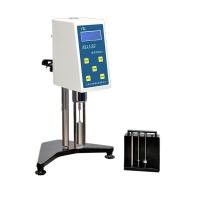
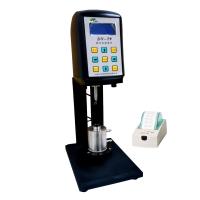
In order to effectively ensure the accuracy of the viscometer, its performance indicators need to meet the requirements of the National Metrology Verification Regulations. The instruments in use must undergo periodic verification. Its measurement performance is qualified, and the coefficient error is within the allowable range, otherwise accurate data cannot be obtained; in addition, special attention should be paid to the temperature of the liquid to be measured. Many users ignore this point and think that it does not matter if the temperature is slightly different. When the deviation is 0.5°C, the deviation of the viscosity value of some liquids exceeds 5%. The temperature deviation has a great influence on the viscosity. Do not exceed 0.1°C.
In addition, we can take a series of measures to further reduce the deviation of the viscometer in use, including:
1. Selection of the outer cylinder: for the double-cylinder Rotational Viscometer, you must read the instructions carefully, and different rotors match different outer cylinders. cylinder, otherwise the measurement results will be greatly deviated. For a single-cylinder rotary viscometer, in principle, the outer cylinder radius is required to be infinite, and the actual measurement requires that the inner diameter of the outer cylinder, that is, the measuring container, is not less than a certain size. Experiments have proved that, especially when the No. 1 rotor is used, if the inner diameter of the container is too small, it will cause a large measurement error.
2. The temperature of the liquid to be tested: Experiments have shown that when the temperature deviation is 0.5°C, the viscosity value deviation of some liquids exceeds 5%, and the temperature deviation has a great influence on the viscosity. The temperature is kept constant near the specified temperature point, and should not exceed 0.1°C for accurate measurement.
3. The performance indicators must meet the level of the national metrology verification regulations: the instrument should be regularly calibrated, and if necessary, an intermediate self-inspection should be carried out to ensure that its measurement performance is qualified, and the coefficient error is within the allowable range, otherwise accurate data cannot be obtained.
4. Frequency correction: The nominal frequency of domestic instruments is 50Hz, and the current power supply frequency in my country is also 50Hz. We use a frequency meter to test that the variability is less than 0.5%, so frequency correction is not required for general measurement. However, for some instruments in Japan, Europe and the United States, the nominal frequency is 60Hz, and frequency correction is required, otherwise a 20% error will occur. The correction formula is: actual viscosity = indicated viscosity × nominal frequency ÷ actual frequency.
5. Correctly select the rotor or adjust the speed so that the indication value is between 20 and 90 divisions: this type of instrument uses a dial plus pointer to read, and its stability and reading deviation are combined to have 0.5 divisions. If the reading is too small, such as 5 Near the grid, the relative error caused is more than 10%. If the appropriate rotor or rotating speed is selected to make the reading at 50 grids, then the relative error can be reduced to 1%. If the indication value is above 90 grids, the torque generated by the hairspring will be too large, which will easily cause creep and damage the hairspring, so the rotor and speed must be correctly selected.