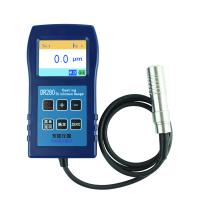
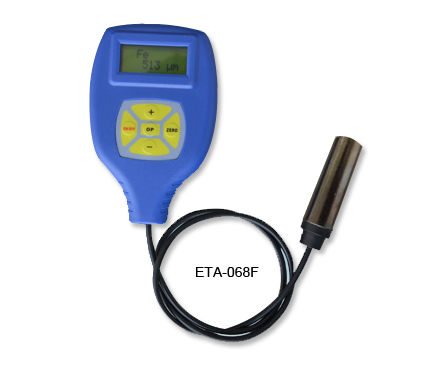
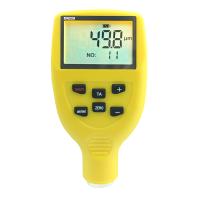
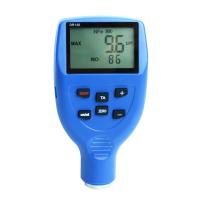
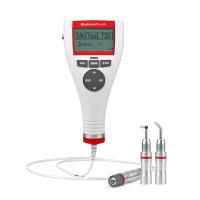
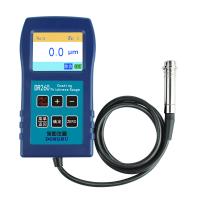
Coating Thickness Gauges are widely used in industrial production thickness measurement, including steel plate thickness, coil belt thickness, etc. Of course, they are also used in laboratory precision measurement, including aerospace, scientific research and development and other fields. So. What kind of failures will occur in the daily application of the coating Thickness Gauge? How to solve it? This article specifically explains the working principle and common faults of the coating Thickness Gauge. What is a Thickness Gauge? A Thickness Gauge is actually an instrument used to detect the thickness of an object. Widely used in industrial production thickness measurement. This type of coating Thickness Gauge can be roughly divided into the following categories according to the different measurement methods: radioactive Thickness Gauges that use α-ray, β-ray, and y-ray penetration characteristics; ultrasonic Thickness Gauges that use ultrasonic frequency changes; and The eddy current Thickness Gauge adopts the eddy current principle; there are also capacitive Thickness Gauges, etc.
Dry goods | Coating Thickness Gauge working principle and FAQ summary

Guess you like it
Relevant knowledge
- 1Nondestructive measurement Coating thickness
- 2Principle, application and selection of traffic coatings Coating Thickness Gauge
- 3Principle, Application and Selection of Eddy current Coating Thickness Gauge
- 4Principle, Application and Type Selection of Electronic Coating Thickness Gauge
- 5Explore the principle, application and selection of phosphating layer Coating Thickness Gauge
- 6Principle, Application and Type Selection Analysis of Chrome Coating Thickness Gauge
- 7Principle, Application and Selection of Coating Thickness Gauge for inner wall of small pipe
- 8Basic principle and application scenario of steel Coating Thickness Gauge
- 9Principle and Application Analysis of Coating Thickness Gauge