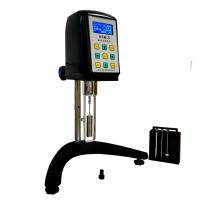
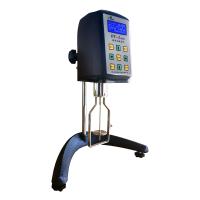
1) Viscosity measurement skills
Like many precision instruments, proper operation helps to increase the efficiency of the digital viscometer. The introduction of each operation step can be found in the operation manual , and this section does not repeat these parts. This section will provide some advice and guidance, read these complete basic instructions, you can go further to complete many accurate measurements.
2) Keep records
During the viscosity measurement procedure, we recommend that data recording is required. This includes the type of digital viscometer, type of spindle (including accessories), speed, percent torque, sample well size, whether to use a protective frame, etc. We recommend making yourself a record sheet that accompanies the viscosity measurement.
3) Rotor and protective frame
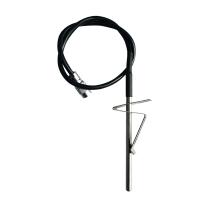
Each spindle needs to be inspected before use, if the spindle has corroded or changed shape, the measured viscosity will not be accurate. When you find that the new rotor is defective or damaged in shape, please contact us to get a new rotor. If you need to use it in a special environment, we have 316L stainless steel rotors to choose from. In addition , rotors of special materials can also be customized. Before installing the spindle to the digital viscometer, the protective frame needs to be installed first. A protective frame protects the rotor and defines fluid boundary conditions. When installing the rotor, please pay attention to lock it correctly in the left helical direction. To avoid damage to the bearings, gently lift the rotor attachment screw when installing the rotor. After installing the rotor, please do not hit the inner wall of the sample container, so as not to damage the alignment of the bearings. In addition, when the No. 1 or No. 2 rotor is used , the protective frame is not installed, which has a great influence , and the protective frame needs to be used at any time. If the situation does not allow the use of a protective frame, this needs to be noted in the results, and then another comparative experiment is done to correct the error of the data.
4) Select the speed of the rotor
使用一个适当的转子与转速,才可能得到一个正确的粘度值。刚开始做粘度测试时,选择转子与转速的更好方法是试误法,调整使粘度计的百分计标度在 20%到 90%之间或 10%到90%之间(以仪器报警界限为准),当百分计标度在这个范围内测量精度可以得到保证。如果百分计标度超过 90%,请选择一个较慢的转速或较小的转子。相反地,如果百分计标度小于10%或 20%,请选择一个较高的转速或较大的转子。例如 LDV-2+PRO 数字式粘度计的1 号转子在60RPM 时最大量程为 100mPa·s。在该组合下测量很好的范围即为20mPa·s 到 90mPa·s。如果样品的粘度为 150mPa.s,需要另外选择转子转速组合以符合可测范围。然而如果样品是50mPa·s 左右,这样的组合就十分适合。经过前面这样的准备,就能够很适当地选择转子与转速。在测量多组粘度数据时,必须要做同样的动作以选择适当的转子与转速。在有些时候,用户需要测量流体的流变特性,需要改变转速以切换剪切速率,这时请选择一个可以符合全部测量范围的转子。
5)样品槽大小
We recommend that the inner diameter of the sample tank should be 70mm or larger when measuring viscosity . Usually a 400ml beaker container is sufficient. Using a beaker will result in a larger measurement value, especially when using No. 1 and No. 2 spindles, the error is very obvious. When using a smaller sample cell, it is easy to note this in the results and ignore possible calibration errors. The correlation between these data is correct as long as the same .
6) Sample status
In order to obtain accurate measurement results, it is necessary to avoid air bubbles . If there are air bubbles, resolve the problem by tapping the sample well or using a vacuum . The sample needs to be kept at a constant and uniform temperature, check the different areas in the sample chamber to determine if the temperature is uniform. Note that the sample, rotor and protective frame need to reach the predetermined temperature before reading the data . We can use a dedicated viscosity measurement constant temperature Water Tank to make the system temperature meet the requirements. Please contact us for the selection of a special constant temperature Water Tank for viscosity measurement . Operation at high temperatures (over 100°C) requires the use of heater accessories. The homogeneity of the sample is also a very important factor, especially in some dispersed systems where sedimentation may occur. In some cases, simple agitation before measuring data can prevent the system from settling, but it needs to be confirmed that such agitation will not affect the viscosity of the sample.
7) The immersion condition of the rotor
The spindle needs to be immersed in the sample up to the mark, an incorrect position will result in incorrect viscosity data. In some fluids, the sample changes . To avoid this situation, we recommend inserting the spindle at different positions on the sample and moving it horizontally to the center of the sample well before connecting the spindle to the viscometer.
8) Read data
Before operating the viscometer, it is necessary to make sure that the viscometer is securely fixed on a table with a certain height. Select the combination of rotor and speed, start measurement, make it reach a stable state and take readings. However, the momentum gained during the acceleration of the rotor may cause the reading to jump around the stable reading. Under normal conditions, you just need to wait a reasonable amount of time for the reading to stabilize. A more reproducible method is to allow the rotor to rotate for a certain period before reading the data. You may find that even if you wait for a certain period of time, the reading will not be stable but will keep jumping. This is often caused by the non-Newtonian nature of the fluid. If the reading continues to increase or decrease, the properties of the fluid may have changed over time, in which case additional skill is required to obtain the correct viscosity value. The torque display of the digital viscometer may still have a 0.1% or 0.3% runout even after steady state is achieved. In this case , just read the averaged data. Larger jumps may be caused by other reasons.
9) Correction
We are often very concerned about the accuracy of viscometers. Here are some tests that can help us understand the condition of a viscometer:
(A) Bearing damage will result in incorrect and reproducible viscometer readings. Alternate testing of the following
1. The power switch of the digital viscometer is turned on, but the motor does not rotate.
2. Turn the rotor connecting screw 15 degrees, and release it to make it rotate automatically.
3. If it can rotate smoothly every time, it means that there is no problem with the bearing.
Press the measurement key, the viscosity value should be 0mPa·s.
If the connecting screw turns slowly or jerky, it means that the viscometer is not working well and needs to be repaired.
(B)最后可以使用标准粘度样品校正粘度计。According to操作手册,小心测量这些标准粘度样品。尼润公司提供的标准粘度样品(误差范围在±1%内)是一个十分称心的选择。由于可能会有不能预期的流体行为,我们并不建议使用其它流体做为校正用。
(C)如果粘度计可以通过以上全部的测试,那么此粘度计的表现应该会令人满意的。如果仍然觉得测量出的数据不合理,请与我们尼润公司联系。
10)重新校正数字式粘度计
在许多环境下,使用尼润公司粘度计测量粘度时,某些时候,测试条件不允许使用 400ml 烧杯容器或更大的容器,而是直接使用装流体的现有容器;而某些时候,为了避免额外的清洗,还会不使用保护框架。
以上这些状况都会影响粘度数据的准确性。如果想获得精确的粘度数据,都需要重新校正粘度计。而当粘度计是用来做品质控制时,下面步骤可以建立控制的方法,操作者此时并不需要知道样品真正的粘度,而只关心一个相对的值。
(1.) 将样品放于同一个样品槽中,并且同样使用保护框架或不使用保护框架。注意需要使用同样的转子与转速,并且保持样品在同样的温度下。
(2.) 记下新的读数,作为新的参考点。
11)数字式粘度计的保养
数字式粘度计拥有很高可靠性和可控性。但为了避免一些潜在的问题,一些操作要点还是值得使用者牢记:
(A) The adaptability of the viscometer to the external environment is extremely small. Good instrument performance requires eliminating all unnecessary friction that may affect instrument sensitivity; good cleaning habits are required; and care needs to be taken to avoid dust, fumes, liquids, and other forms of contamination from entering the viscometer. If it is necessary to operate the instrument in a contaminated environment , we recommend using an extended rotor or cleaning kit to reduce contamination from entering the system.
(B) Do not install a rotor with fluid attached to it.
(C) Do not expose the viscometer to an environment of 75°C. When it is necessary to measure the viscosity of samples at high temperature , it is recommended to use the extended spindle or the attached heating accessories.
(D) Avoid inserting and squeezing the rotor joint from the side or below, because the connecting screw can protect the center and bearing of the rotor, and such rough action will damage or make the connecting screw insensitive . When accessing or removing a rotor, always remember to slightly lift the rotor attachment screw, do not knock the rotor into the sample well and do not pull directly on the rotor or rotor connector.
12) Find the problem and repair the fault
A product manual is attached to the viscometer, which describes in detail how to use the instrument and precautions. The following lists some common problems encountered when using the viscometer , and attaches the possible causes and suggested repair methods. The rotor cannot turn
■ Make sure the viscometer is plugged in.
■ Check the voltage used by the viscometer (115V, 220V): it needs to match the voltage on the wall socket.
■ Make sure the power switch is in the ON position.
■ Make sure the RPM is set correctly and at your desired RPM, press the Measure key. When the rotor turns, the rotor shakes or the trajectory of the rotor appears to bend
■ Make sure the rotor is tight on the connecting screw joint.
■ Check that the rotor is straight; if it is bent, replace it.
■ Check the viscometer connecting screw and rotor joint joint area and threads for dust; if so, remove it.
■ Check threads for abrasive wear; if threads are worn, have unit repaired.
■ Check if the rotors are spinning or shaking in the same circle. When measuring the horizontal movement distance of the rotor in the air from the bottom of the rotor, we allow a deviation .
■ Check the viscometer joint for bends; if so, send the unit for repair. If the error of the equipment is out of range, the instrument needs to be sent for repair.
■ Adjust the horizontal position of the instrument at the middle of the level at any time.
![Digital viscometer usage skills [must read dry goods] with picture 1](http://img.nbchao.com/upload/editor/image/20191008/1570506698208048490.png)