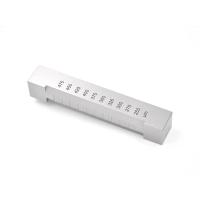
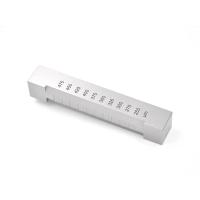
The wet paint film produced by most application methods of coatings is rough and needs to be leveled. The leveling of the paint film is not good, there will be brush marks when brushing, orange peel when spraying, and rolling marks when sticking. Because spraying is important in industry, orange peel is important. The ridges formed by the paint mist particles on the surface of the paint film are somewhat like orange peels. These ridges are larger than the spray point and are called orange peels. Paints containing highly volatile solvents are most prone to orange peel when sprayed. Coatings often use mixed solvents with fast and slow volatilization.

The combination of fast and slow volatilizing solvents is often used for spraying baking paint, which has two effects: During CD spraying, before the paint mist reaches the workpiece, most of the fast volatilizing solvents have evaporated, increasing the viscosity of the coating and reducing the tendency of the wet paint film. The slow-evaporating solvent allows enough time for the wet paint film to level off, and the air mixed in the wet paint film can also escape, minimizing the possibility of popping holes during baking. @The volatility of the solvent is very low, the wet paint film can maintain low viscosity for a long time, the paint can be fully leveled by surface tension, and a smooth paint film can be obtained, but the paint film on the convex part of the rough substrate surface is too thin. Because the surface tension increases with the decrease of temperature, the surface tension of the solvent is usually lower than that of the resin, so when the solvent volatilizes, the surface temperature of the paint film decreases and the concentration increases, which will increase the surface tension. It is easy to be volatile, and the viscosity in the center is still low, which is driven by the surface tension gradient of the paint. The paint with low surface tension covers the surface of the substrate with high surface tension to achieve a uniform paint film, but the paint film is uneven with the unevenness of the substrate surface. , that is, not smooth. With a combination of fast and slow evaporating solvents, a paint film with reasonable flatness and no thin spots can be obtained.
The change of surface tension during solvent evaporation affects leveling, because the higher the surface tension, the easier the leveling of the paint film. Water-diluted coatings contain fast-volatile solvents (such as isobutanol). Because the surface tension of water is large and that of isobutanol is small, isobutanol volatilizes faster than water, which increases the relative proportion of water in the mixed solvent. The surface tension of the system gradually increases, which can promote leveling. When the solvent with slow volatilization (such as ethylene glycol monocaproyl) is contained, the relative proportion of water will gradually decrease due to the volatilization of the solvent, and the surface tension will also decrease accordingly, which is unfavorable for leveling.
The leveling of the actual paint film is a dynamic process. In addition to the surface tension, the smaller the surface roughness of the wet paint film, the lower the viscosity of the paint, and the thicker the wet paint film, the faster the leveling, but the paint with fast leveling is usually easy Sag occurs. Drooping is the downward flow of the wet paint film under its own gravity, that is, the downward flow of the wet paint film.