Hardness can be understood as the resistance of the paint film to another object with greater hardness acting on its surface. This action usually takes the form of indentation, scratching, and collision. Therefore, the hardness measurement methods of the coating film are also divided into indentation hardness method, scratch hardness method, and pendulum damping hardness method. These three methods express different types of resistance of the coating film, each representing a different stress-strain relationship. The unit of hardness is the same as the modulus, which is the force per unit area (N/m2). When stating hardness and halo values, state how the force was applied (elongation, shear, bending, or compression), the rate at which the stress was applied, and the temperature.
Indentation hardness
Indentation hardness is a static test of viscoelasticity. The shape of the indentation hardness-temperature curve and the tensile mold scene-temperature curve are very similar, and the stone represented is also the same. This fully demonstrates that the indentation hardness test is actually the modulus-temperature behavior of the paint film.
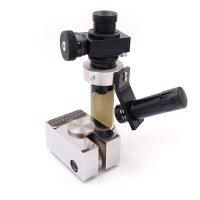
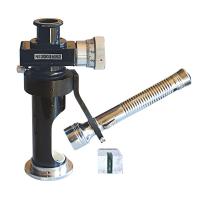
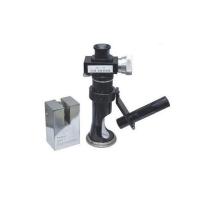
The test method of indentation hardness is to use the indentation head to press the paint film under a certain gravity for a certain period of time. Raise the indentation head, use the calibrated
The microscope measures the length or area left on the membrane. The indentation length of colored paint is easy to judge. There are various types of test instruments.
my country's national standard GB 9275 88 "Buchholz indentation test for paints and varnishes" stipulates that Buchholz (Buchholz) indentation Tester is used to test the hardness of the coating film. The measured indentation length represents the resistance of the coating to indentation by the indenter, and the result is expressed as indentation resistance.