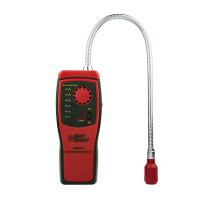
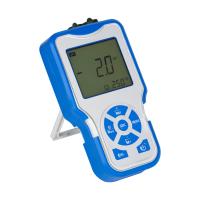
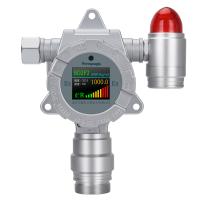
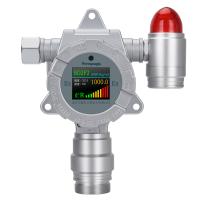
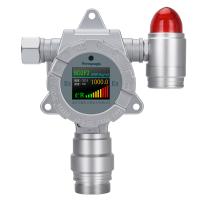
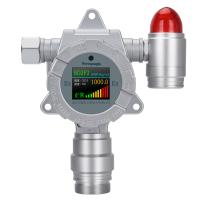
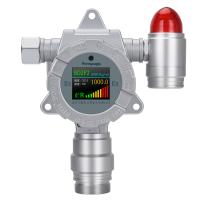
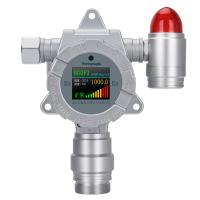
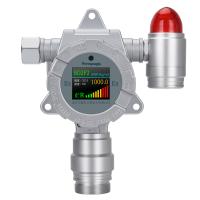
The gas sensor is the main device used to check the gas composition and concentration. The working principles of the gas sensor include semiconductor, catalytic combustion, thermal conductivity, electrochemical, infrared and photoion. The various working principles of the gas sensor are introduced as follows:
1. Semiconductor gas sensor
It is made by using some metal oxide semiconductor materials, and at a certain temperature, the electrical conductivity changes with the change of the ambient gas composition.
2. Catalytic combustion gas sensor
This sensor prepares a high temperature resistant catalyst layer on the surface of the platinum resistor. At a certain temperature, the combustible gas is catalytically burned on its surface. The combustion is caused by the temperature increase of the platinum resistor, and the resistance changes. The change value is a function of the concentration of the combustible gas.
3. Thermal conductivity gas sensor
Each gas has its own specific thermal conductivity. When the thermal conductivity of two or more gases is quite different, the thermal conductivity element can be used to distinguish the content of one of the components.
4. Electrochemical gas sensor
A proper part of the flammable, toxic and harmful gases are electrochemically active and can be electrochemically oxidized or restored. Using these responses, it is possible to distinguish gas components and check gas concentrations. There are many subclasses of electrochemical gas sensors
(1) Primary battery-type gas sensors (also known as: Gavoni battery-type gas sensors, also known as fuel cell-type gas sensors, and self-conscious battery-type gas sensors), their principle is similar to that of dry batteries, only the battery Carbon-manganese electrodes are replaced by gas electrodes. This kind of gas sensor can be applied in a narrow range and has many constraints.
(2) Stable potential electrolytic cell type gas sensor, this kind of sensor is very effective for detecting restorative gas, its principle is different from that of the original battery type sensor, its electrochemical reaction is generated under the forced current, it is a A true coulometric sensor. This sensor is the mainstream sensor for toxic and harmful gas inspection.
(3) Concentration battery type gas sensor, the electrochemically active gas will consciously form a concentration electromotive force on both sides of the electrochemical cell, and the magnitude of the electromotive force is related to the concentration of the gas. The successful example of this sensor is the oxygen used in cars. sensor, solid electrolyte carbon dioxide sensor.
(4) Limiting current type gas sensor, there is a sensor for measuring oxygen concentration, which uses the principle that the limiting current in the electrochemical cell is related to the carrier concentration to prepare an oxygen concentration sensor, which is used for oxygen inspection of cars and oxygen concentration inspection in molten steel .
5. Infrared sensor
Belonging to the precision sensor, it has quite good measurement pertinence, and currently mainly detects low-carbon chain hydrocarbons and CO2.
6. Photoion sensor PID
There is an ultraviolet light source, and the positive and negative ions produced by the chemical substances under its excitation can be easily detected by the Detector. Ionization occurs when molecules absorb high-energy ultraviolet light, and the molecules generate negative electrons under this excitation and form positive ions. The current generated by these ionized particles is amplified by the Detector, and the concentration of PMM level can be displayed on the meter. These ions quickly recombine after passing through the electrodes to become the original organic molecules.