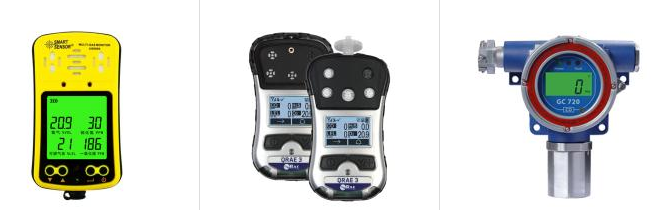
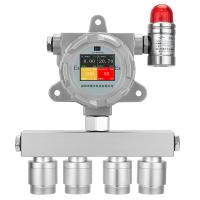
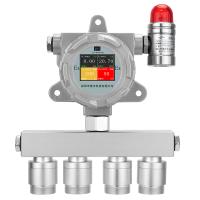
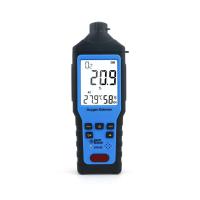
If you work in the food and beverage industry, especially breweries and food packaging, you may need an oxygen monitor. However, if you work in a laboratory, oxygen monitoring is required.
inert gas and nitrogen
Inert gases and nitrogen displace oxygen in the atmosphere, which means a gas leak can drop oxygen to dangerous levels. Ordinary air consists of 20.9% oxygen. Drops to 10% are enough to cause loss of consciousness.
Inert gases, such as neon, argon, and helium, as well as nitrogen, are used as carrier gases because they are non-reactive.
For the same reason, the reactions are usually carried out under inert gas. Liquid nitrogen is used for cryogenic examination and preservation of specimens.
A tragic incident occurred in 2011 when a scientist was found dead in a laboratory after using liquid nitrogen to freeze blood samples.
High levels of oxygen also need to be monitored
Oxygen enrichment (oxygen with an oxygen content greater than 20.9 percent) is used in procedures such as gas production and gas mixing.
However, oxygen enrichment increases the flammability of any combustibles in the area, creating a potential fire hazard. Even increasing the oxygen to 24% is enough to start a fire.
Enriched oxygen can also be toxic, with high levels causing nerve and brain damage.
You can't gauge oxygen levels in the atmosphere just by smell, sight, or taste. This means if the oxygen levels are too high or too low, you won't know until it's too late.
The oxygen Detector will provide audio and visual prompts when oxygen levels fall below or exceed acceptable levels. This will give you time to vacate the lab before any dangerous side effects occur, or trigger the ventilation system or shut off the inert gas/nitrogen supply.