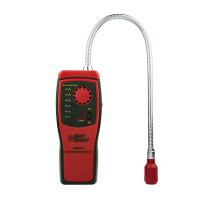
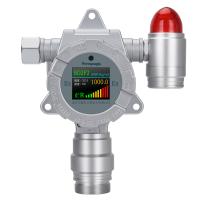
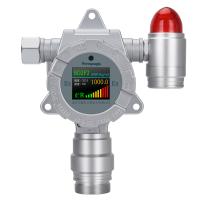
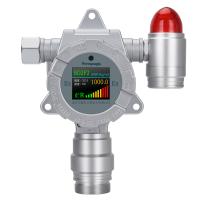
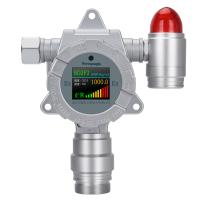
Calibrating a Gas Detector includes adjusting zero and sensitivity.
To zero, I recommend using a bottle of regenerated air (20.9% O2) free of any gases or other impurities. For oxygen (O2) or carbon dioxide (CO2) Detectors, nitrogen is required because air naturally contains 20.9% oxygen and 300 to 500 ppm CO2.

Before adjusting the sensitivity, please read the following suggestions.
Electrochemical, catalytic and semiconductor cells require oxygen to function. For example, a catalytic cell designed to detect explosive gases requires at least 10 percent oxygen in the air. A semiconductor cell needs at least 18% oxygen, otherwise it will underestimate the amount of gas. Therefore, it is important that the excipient of the bottle used is air and not nitrogen.
Where possible, the Detector should be calibrated with the gas to be detected. Although equivalent for catalytic Detectors (bottled gases of all substances do not exist), infrared Detectors must not be calibrated with gases other than the target gas. In this case, testing can only be done with interfering gases (for example, an infrared Detector that would be calibrated at the factory with gasoline and then tested with propane).
Propane, butane, or pentane is generally recommended for hydrocarbon detection (0-100% LIE range), although hydrogen Detectors should be calibrated exclusively with hydrogen and methane Detectors with methane.
We recommend using standard gas concentrations between 20% and 80% of the Detector range (inclusive) and/or closer to the alarm threshold.
Example: A 0 to 1000 ppm CO Detector. The recommended calibration gas is carbon monoxide at concentrations in air between 200 and 800 ppm (inclusive). Although the response is linear over the entire range (calibration at a single point is sufficient), I always recommend getting as close as possible to the set threshold for the alarm. Also, if the alarm is set to 500 ppm, I recommend using this concentration as the test gas. Likewise, if the alarm is set to 100 ppm, I'd recommend a bottle of 100 ppm CO in air, even though a 0 to 300 ppm air Detector seems more appropriate.