With businesses constrained by budget, it can be difficult to purchase a gas detection system that can provide the highest level of safety for the facility and its employees. However, as in other regions, technological advancements are advancing rapidly, and gas monitoring equipment is less expensive than it has been in years past. Therefore, companies have many options when it comes to choosing. So, whether your company has a big or small budget for industrial security, here are some tips you can use when choosing the right gas detection system for your plant:
Portable Monitoring Device
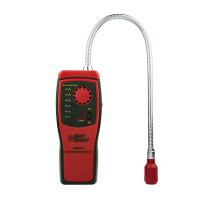
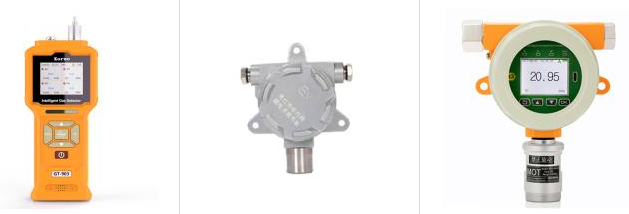
If you have confined spaces and other isolated areas of your factory, warehouse, laboratory, or offshore rig, purchasing a portable Gas Analyzer and monitor may be beneficial to you. Although small, these monitors are good options for companies on a budget, but they can still perform most of the functions associated with larger fixed surveillance systems. When it may not be possible to purchase a large number of fixed monitors, they are a good choice for workers to use when doing equipment installation and repairs.
Check various functions
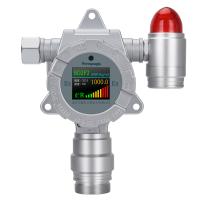
When selecting the correct gas detection system for any facility, always make sure you understand not only the needs associated with your particular work environment, but also the capabilities on any display being considered. For example, it is often better to purchase gas monitoring instruments that include multiple alarm systems. Not only will this allow them to be installed in different work environments, but it will also provide a higher level of safety as they will contain flashing lights, strobe lights and sirens that can alert workers to impending danger.
wireless monitoring system
As wireless technology enters most of today's gas detection instruments, one of the nice outcomes is the reduced cost of these detection systems. At the same time, having wireless capabilities now allows these inspection instruments to be easily linked with the company's wireless network, allowing these instruments to also be linked to mobile devices such as tablets and smartphones. In this way, real-time data can be sent to these devices, giving engineers, managers and technicians easy, constant access to new data, which is critical if an emergency situation arises and requires quick decision-making.
calibration mode
To ensure that gas detection systems are always able to transmit accurate and reliable data 24/7, most systems are equipped with electronics that enable them to perform self-calibration and can also be calibrated by engineers located at monitoring centers. By performing self-calibration, the system can quickly adapt to changing operating conditions, which is often of paramount importance in emergency situations. Meanwhile, if a failure or emergency requires additional intervention, engineers can analyze data from the system, re-establish new parameters, and calibrate instruments from their monitoring center.